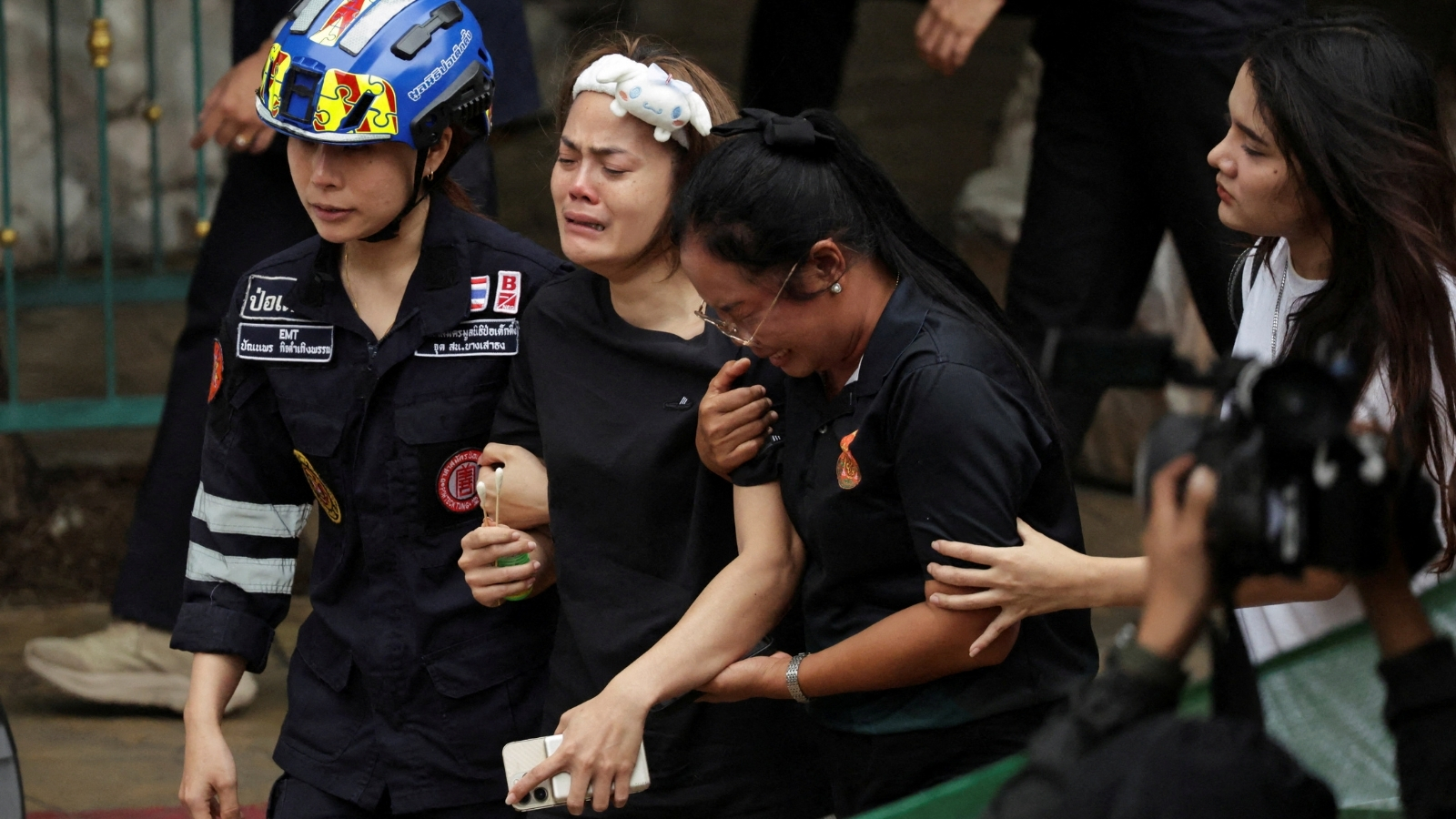
The rain in Southeast Asia does not always fall gently. Sometimes, it arrives with the heavy, blunt force of a falling slate, erasing the horizon and turning the red dust of the schoolyard into slick, dark mud. On a Tuesday that began like any other, the routine of morning assembly dissolved into something else entirely. Something broken.
We look for monsters because monsters are easy to file away. We want the sharp teeth, the sudden break, the absolute darkness that separates them from us. But human behavior rarely snaps clean. It frays first. Thread by thread, day by day, until the fabric can no longer hold its own weight.
To understand what happened in that classroom, we have to look past the smoke and the sirens. We have to look at the silence that preceded them.
The Weight of a Name
Every community has a corner where the light does not quite reach. In this case, it was a young life defined early by exclusion. Isolation is a slow poison. When a child is pushed to the margins, the world ceases to be a place of shared rules and becomes an adversarial landscape.
(Note: While specific psychological evaluations remain confidential, behavioral patterns documented by criminologists consistently point to acute alienation as a primary catalyst in youth violence.)
Consider what happens when a human being is rendered invisible. First, they try to shout. When shouting fails, they try to disappear. And when disappearance is no longer an option, some choose to make the world stop and look, no matter the cost.
The boy at the center of the tragedy was described by neighbors as quiet. Too quiet. The kind of quiet that people mistake for peace when it is actually pressure building behind a dam. He was bullied. Day after day, the small, sharp cuts of peer rejection chipped away at his sense of self. Schools are supposed to be crucibles of growth, but too often, they are testing grounds for cruelty.
The Iron Artifact
We must talk about the weapon. In modern crises, the tool of destruction often becomes the protagonist of the debate, overshadowing the human hand that grips it.
Guns do not appear by magic. They are acquired, hidden, and carried. In this instance, an obsession had taken root. Imagine an adolescent mind latching onto a cold, heavy piece of steel, viewing it not as an instrument of murder, but as an equalizer. Power is intoxicating to the powerless. When you feel entirely helpless, the weight of a firearm in your hand feels deceptively like agency.
We know the facts. The weapon was accessible. The obsession was deep, festering in digital echo chambers and late-night daydreams where the bullied boy finally became the one holding the cards. But an obsession does not form in a vacuum. It requires fuel, and that fuel is constant, unaddressed humiliation.
The Anatomy of the Breaking Point
There is a moment in every tragedy where the path could have turned. A teacher pausing at a desk. A peer noticing a tremor in a voice. A parent looking up from a screen to meet a hollow gaze.
We missed those moments. Society is built for efficiency, not empathy. We process children through systems designed for testing outcomes rather than nurturing souls. When a child begins to unravel, the system often responds with punishment rather than inquiry. Detention instead of dialogue. Suspension instead of support.
And so the pressure mounted.
When the doors to the school finally opened to violence, it was not a sudden impulse. It was the culmination of months, perhaps years, of silent suffering meeting lethal means. The shots echoed through halls meant for laughter and learning, shattering lives in a matter of seconds. Families were altered forever. A community was forced to look into a mirror and ask a terrifying question: How did we not see this coming?
The Aftermath of Silence
The headlines have faded now. The news cycle, insatiable and swift, has moved on to the next disaster, the next political maneuver, the next sensational headline.
Yet, for the parents who tie shoes that will never be worn again, time has stopped. They live in the eternal present of that Tuesday afternoon. They search their memories for signs they missed, words they should have said, defenses they should have built.
The true cost of such violence is not just measured in the casualty count, though that alone is unbearable. It is measured in the erosion of trust. A school should be a sanctuary. When it becomes a site of bloodshed, the foundational contract between society and its youngest members is breached.
We cannot legislate away every dark thought. We cannot police every troubled mind. But we can change how we respond to the quiet ones. We can stop waiting for the explosion and start paying attention to the cracks.
The rain continues to fall on the red earth, washing away the remnants of a day that changed everything, leaving behind only the damp, heavy quiet of what might have been.