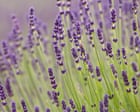
Horticultural preference is rarely driven by spontaneous aesthetic whims. When a specific chromatic profile dominates residential cultivation across a nation, the phenomenon is the output of intersecting environmental variables, consumer psychology, and supply chain efficiencies. The ascendance of purple as the favored visual register among British gardeners reflects an optimization strategy balancing visual weight, ecological functionality, and maintenance costs against constrained garden footprints.
Understanding why violet, lavender, and deep indigo varieties saturate domestic plots requires dismantling the core drivers of plant selection. Gardeners operating within the United Kingdom face specific edaphic, climatic, and spatial constraints. The choices they make on nursery floors represent rational economic and biological allocations of time, capital, and space.
The Chromatic Advantage of Cool Spectrums
Light quality dictates visual perception. The characteristically overcast, diffused light of the British Isles alters how color values register within confined boundaries. High-saturation warm colors, such as cadmium reds and intense yellows, demand direct, high-intensity sunlight to render correctly. Under heavy cloud cover, these hues often appear harsh or garish, failing to integrate with naturalistic planting schemes.
Cool chromatic values, positioned at the shorter wavelength end of the visible spectrum, behave differently under ambient, indirect illumination. Violet and dark blue pigments absorb longer wavelengths while reflecting shorter ones, maintaining visual integrity during low-light conditions. This optical property allows purple flora to retain depth and saturation on overcast afternoons when warmer tones wash out.
The human eye possesses a higher density of rods than cones in the peripheral retina, making it acutely sensitive to shifts in blue-green and violet gradients under dim conditions. Consequently, a border anchored by dark foliage and lavender inflorescences projects visual depth, making small suburban plots appear more expansive than their physical boundaries dictate. This optical recession effect is a primary mechanical driver for its high adoption rate in urban and suburban developments where plot sizes are shrinking.
Physiological Resilience and Pollinator Efficiency
From an agronomic perspective, the proliferation of dark-hued cultivars is tied to secondary metabolite production. Anthocyanins, the water-soluble flavonoid pigments responsible for red, purple, and blue colorations in plants, serve distinct biological functions beyond aesthetic signaling.
These compounds act as internal physiological filters. Anthocyanins absorb high-energy blue-green and ultraviolet light, protecting leaf and petal tissues from photoinhibition and cellular damage during sudden temperature shifts—a frequent occurrence in British spring and autumn cycles. Varieties rich in these pigments often exhibit enhanced tolerance to cold stress and variable moisture availability compared to their non-pigmented counterparts.
Pollinator dynamics reinforce this biological selection. Insect vision operates differently from human trichromacy; bees and other key pollinators are blind to true red wavelengths but possess high sensitivity in the ultraviolet and blue-violet ranges. Purple flowers often feature ultraviolet nectar guides—patterns invisible to the human eye but starkly visible to foraging insects.
The evolutionary feedback loop is direct:
- High anthocyanin concentrations signal reliable nectar and pollen rewards to target vectors.
- Pollination efficiency rises, maximizing seed set and reproductive success.
- Breeders selectively propagate these traits, creating commercially robust lines that outperform yellow or white variants in mixed-ecosystem resilience.
The Economics of Domestic Maintenance
Gardening behavior is constrained by available labor hours. The modern demographic profile of the British gardener skews toward time-poor professionals who demand high visual yield per unit of maintenance effort.
Perennials native to Mediterranean and temperate zones—such as Lavandula, Salvia, Nepeta, and Perovskia—dominate the purple palette. These genera share physiological adaptations designed for resource conservation:
- Small, narrow, or pubescent leaves that reduce transpirational water loss.
- Deep root systems capable of extracting moisture from lower soil strata during seasonal dry spells.
- Resistance to common fungal pathogens due to improved air circulation around upright structural stems.
Contrast this with high-maintenance color schemes relying on bedding annuals or complex tropicals. Traditional displays demand continuous deadheading, heavy irrigation, and rigorous soil amendment to prevent nutrient depletion. Purple-dominant perennial schemes shift the economic model of garden upkeep from active operational expenditure to passive asset appreciation. Once established, these plants require minimal intervention, lowering the total cost of ownership over a multi-year lifecycle.
Spatial Architecture and Urban Microclimates
The average size of new-build residential gardens in the UK has contracted steadily over the past three decades. High-density housing developments substitute sprawling lawns for compact patios, raised beds, and boundary-hugging borders.
In confined spaces, chromatic chaos induces visual fatigue. Saturated polychromatic planting schemes create cognitive friction, drawing the eye erratically across small areas and accentuating spatial limitations. Monochromatic or analogous color schemes—specifically those utilizing gradients from pale lilac to near-black maroon—impose visual order.
Urban heat island effects further alter the microclimate of contemporary gardens. Cities and suburban enclaves trap ambient heat, elevating baseline temperatures and altering soil moisture retention. Plants adapted to dry, mineral-rich soils thrive in these altered urban niches. Because many purple-flowering taxa originate from arid or semi-arid regions, they tolerate the desiccating winds and reflected heat of modern patio environments better than moisture-loving woodland species.
Supply Chain Realities and Horticultural Propagation
Commercial availability dictates consumer choice just as much as aesthetic preference. The dominance of purple is reinforced by commercial nursery logistics and propagation efficiencies.
Propagators favor species that exhibit high strike rates from cuttings and rapid growth cycles in containerized production lines. Lamiaceae family members—mints, lavenders, sages, and catmints—propagate reliably through vegetative cloning, ensuring high yields and uniform crop output for wholesale distributors.
Retail garden centers operate under tight floor-space constraints and seasonal inventory turnover demands. Plants that display well in the point-of-sale stage—specifically those showing early bud color or strong structural form while still in two-liter pots—receive prime merchandising placement. Hardy herbaceous perennials in the cool spectrum meet these criteria consistently. They ship well, resist transport stress, and maintain shelf life longer than tender annuals.
The Structural Limits of the Trend
Despite its systemic advantages, reliance on a single chromatic dominance carries inherent ecological and operational risks.
Monoculture planting, even when defined by color rather than species, reduces biodiversity. A landscape saturated exclusively with Lamiaceae and similar nectar-rich taxa can create temporal food deserts for pollinators whose active emergence cycles do not align with mid-summer perennial peaks. Furthermore, over-reliance on drought-tolerant species leaves gardens vulnerable to unseasonal, prolonged saturation events—a growing hazard given shifting precipitation patterns characterized by intense, episodic rainfall.
Drainage failure represents the primary point of failure for Mediterranean-derived purple perennials in heavy British clay soils. Without proactive soil conditioning using grit and organic matter, root rot remains a persistent threat during wet winters, regardless of summer resilience.
Strategic Capital Allocation for Future Planting
Transitioning a garden layout toward high-performance, cool-spectrum dominant designs requires a systematic approach to resource deployment rather than superficial aesthetic updates.
Soil remediation must precede plant selection. Heavy clay matrices require structural amendment with coarse aggregate to ensure the rapid percolation necessary for drought-adapted perennials to survive winter dormancy. Planting density should prioritize root establishment over immediate visual impact; spacing specimens to allow mature air circulation prevents the fungal outbreaks that plague dense, poorly ventilated borders.
Integration of structural evergreens—such as dark-leaved conifers or box alternatives—alongside herbaceous purple perennials prevents winter structural collapse when deciduous foliage dies back. This balances seasonal volatility and maintains the visual depth that underpins the functional utility of the palette.
Deploy capital toward high-turnover perennials with proven vegetative stability, staggering bloom times from early spring alliums through late-season salvias. This eliminates maintenance bottlenecks, optimizes pollinator interaction networks, and secures architectural consistency regardless of regional weather fluctuations.