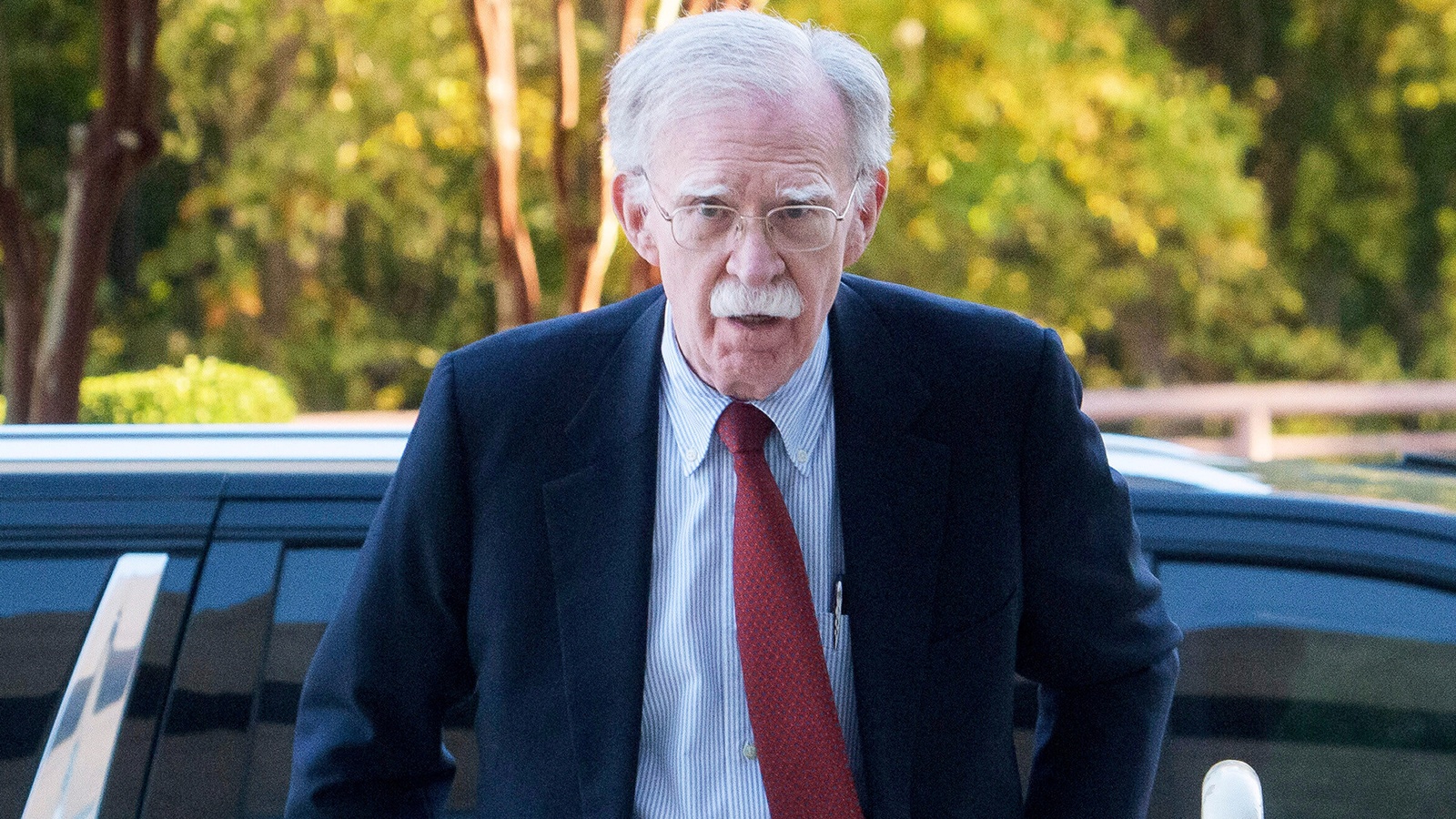
The decision of former National Security Adviser John Bolton to enter a guilty plea to a single count of retaining classified information represents a calculated surrender designed to mitigate absolute legal exposure. Faced with an 18-count federal indictment returned in October 2025 by a Maryland grand jury—comprising eight counts of transmitting national defense information and 10 counts of retaining it—Bolton chose to capitulate rather than risk a trial. This choice provides a structural case study in federal criminal defense, illustrating how high-level state officials navigate the asymmetric power of the Department of Justice when administrative habits collide with the Espionage Act.
The underlying mechanics of the plea agreement demonstrate a classic risk-asymmetry reduction framework:
- Charge Count Compression: The Department of Justice agreed to collapse 18 felony counts into a single count of unauthorized retention of national security information. Because each original felony count carried a statutory maximum of 10 years in prison, Bolton’s theoretical exposure was compressed from a maximum of 180 years down to a statutory cap of five years (60 months).
- Liability Firewalls: The agreement isolates Bolton's culpability to his personal electronic journal entries rather than the contents of his published 2020 memoir, The Room Where It Happened. By establishing this distinction, the defense insulated the commercial revenues of the book from additional civil asset forfeiture or direct copyright clawback actions linked to criminal misconduct.
- Asymmetric Financial Penalties: Bolton agreed to a $2.25 million fine. This massive financial penalty acts as a structural substitute for incarceration. In federal sentencing dynamics, a multi-million dollar fine coupled with a plea to a single count often signals a judicial compromise where fiscal restitution offsets the institutional demand for prison time.
The Asymmetric Exposure of Digital Diaries
The structural vulnerability in Bolton’s operational security stemmed from a fundamental misunderstanding of how the Espionage Act treats personal observations containing classified intelligence. The prosecution’s 26-page indictment detailed a systemic failure to segregate personal narrative from state secrets.
Between April 2018 and August 2025, Bolton compiled more than 1,000 pages of digital, diary-like entries documenting his day-to-day interactions at the apex of executive decision-making. These entries were not mere scheduling logs. They contained typed transcriptions of handwritten notes detailing highly classified intelligence, including:
- Minute-by-minute accounts of meetings with foreign heads of state and high-ranking domestic national security officials.
- Direct references to Sensitive Compartmented Information (SCI) derived from highly guarded intelligence collection sources and methods.
- Granular operational details concerning a foreign adversary’s missile launch plans and U.S. government blueprints for covert action.
The primary exposure mechanism was the transmission method. Bolton utilized commercial, non-governmental messaging applications and personal commercial email accounts (including Google and AOL) to transmit these dense, unencrypted logs to two unauthorized individuals—subsequently identified as his wife and daughter.
[Executive Briefing / SCI Material]
               │
               ▼ (Manual Transcription)
    [Personal Digital Diary]
               │
               ▼ (Unsecured Commercial Email / App)
     [Unauthorized Recipients] ───► [External Compromise: Iranian Cyber Actor]
By transferring state secrets from a classified environment into a personal, internet-connected architecture, Bolton created an immediate, actionable breach of 18 U.S.C. § 793(e). The statutory text does not require proof of an intent to injure the United States; it requires only that an individual possessing national defense information willfully retains it or delivers it to someone not entitled to receive it.
The Iranian Hack and the Discovery Loophole
A critical catalyst for the Department of Justice’s prosecution was an external security breach that stripped Bolton of plausible deniability. Between September 2019 and July 2021, an offensive cyber actor state-sponsored by Iran compromised Bolton’s personal email infrastructure.
The adversary successfully exfiltrated the 1,000-page archive of digital diaries stored on the commercial servers. The hack culminated in July 2021 when the adversary sent Bolton a coercive transmission, threatening to leak the unredacted sections of his diaries if he failed to cooperate. While a representative for Bolton reported the cyber intrusion to the Federal Bureau of Investigation in July 2021, the notification omitted a vital operational fact: that the breached repository contained active, highly classified national defense data.
This omission created a severe investigative feedback loop. When the FBI subsequently executed search warrants at Bolton’s Maryland residence and Washington, D.C. office in August 2025, forensic analysts recovered physical printouts and local digital copies of the identical diaries that had been exposed to foreign intelligence services.
The evidentiary reality became insurmountable for the defense. The prosecution possessed definitive forensic proof that:
- Classified data had been migrated to an unclassified, commercial network.
- The data had been explicitly transmitted to unauthorized third parties.
- An adversarial nation-state had successfully exfiltrated the material.
Faced with these technical realities, a defense built on the absence of harm or "administrative oversight" was rendered legally non-viable.
Institutional Autonomy vs. Political Retribution
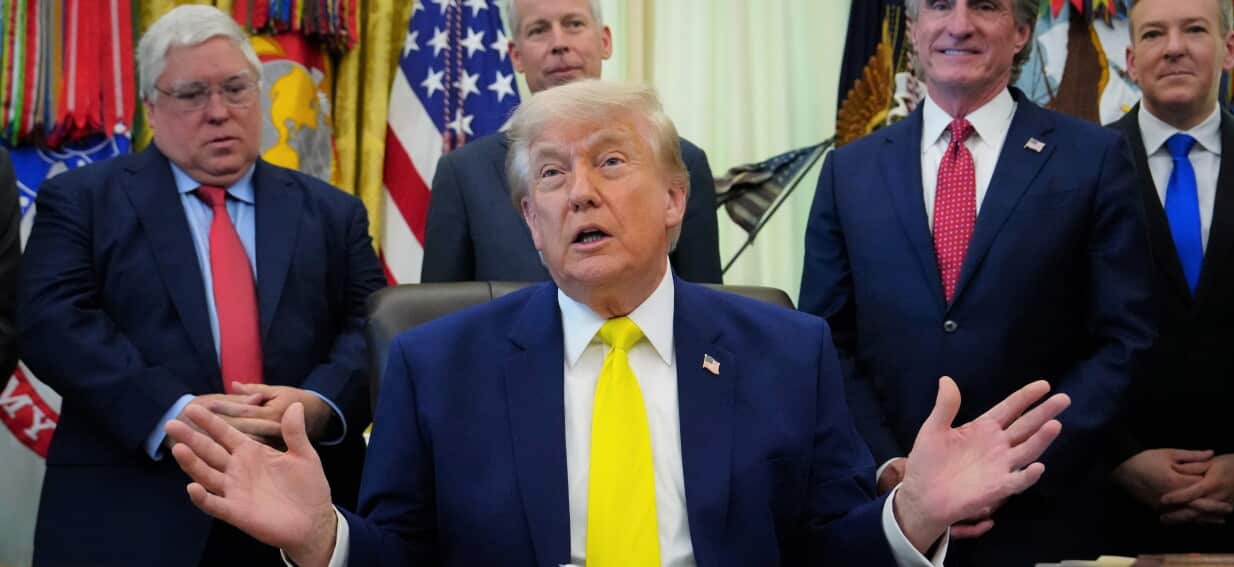
An analytical reading of the case requires distinguishing between the political environment surrounding the prosecution and the institutional incentives of the career prosecutors who managed it. Bolton and his allies argued that the indictment was part of an executive effort by President Donald Trump to weaponize the Department of Justice against prominent critics. This argument gained superficial traction because the indictment dropped shortly after separate federal actions against other public adversaries of the administration, including former FBI Director James Comey and New York Attorney General Letitia James.
However, the legal architectures of these cases differed fundamentally. While courts quickly dismissed the actions against Comey and James due to structural and evidentiary defects, Bolton’s case maintained deep institutional backing from career national security prosecutors within the Department of Justice. The charges were secured by veteran prosecutor Thomas Sullivan and validated by Kelly O. Hayes, the U.S. Attorney for the District of Maryland.
This institutional consensus stems from a bureaucratic mandate to preserve the integrity of the clear-classification system. The National Security Council’s pre-publication review process had previously warned Bolton in 2020 that his initial drafts contained significant quantities of classified material. Although Bolton settled a civil suit with the Biden-era Department of Justice in June 2021—agreeing to return all remaining classified material—the forensic discovery of the unencrypted diaries during the 2025 FBI raid demonstrated that he had retained alternative copies of the restricted material.
Career prosecutors viewed this as a direct challenge to the enforcement mechanism of non-disclosure agreements signed by cleared officials. Allowing a former cabinet-level official to bypass security protocols via the mechanism of a personal diary would establish a precedent that undermines the entire classification architecture.
The Strategic Settlement Playbook
The upcoming re-arraignment scheduled for June 26, 2026, before U.S. District Judge Theodore Chuang in Greenbelt, Maryland, will execute a carefully calibrated legal exchange. By opting to plead guilty to a single count of retaining national defense information, Bolton’s legal team is relying on a specific set of judicial sentencing tendencies.
While Judge Chuang retains ultimate statutory authority to impose a prison sentence of up to five years, federal sentencing guidelines emphasize several mitigating factors that favor a non-custodial sentence in this scenario:
- The Absence of Espionage Intent: The prosecution's factual proffer does not allege that Bolton intentionally transferred information to a foreign adversary or sold state secrets for financial gain. The dissemination was restricted to family members for historical compilation purposes.
- Acceptance of Responsibility: Under USSG § 3E1.1, entering a timely plea prior to trial entry grants a mandatory reduction in the defendant's offense level, significantly lowering the advised sentencing range.
- The Restitution Metric: The agreement to pay a $2.25 million fine acts as a powerful punitive substitute. In complex white-collar and national security retention cases involving aging public officials, federal judges frequently lean toward massive financial sanctions and probation over active incarceration, provided there is no evidence of active treason.
The long-term implication of this plea deal extends beyond Bolton's personal liberty. It establishes a clear legal standard for modern statecraft: personal diaries, digital notes, and memoirs do not enjoy an exemption from the strict enforcement of national security classification statutes. Any executive official who records classified briefings in a private journal, regardless of intent, creates immediate criminal liability the moment that data crosses into the unclassified commercial digital ecosystem.
The following video analysis contextualizes how federal prosecutors approach the handling of classified materials and the strategic calculations behind high-profile plea agreements: John Bolton expected to plead guilty for retaining national security information. This broadcast outlines the specific mechanisms of the electronic journal entries and the multi-million dollar financial penalties that define the resolution of this case.