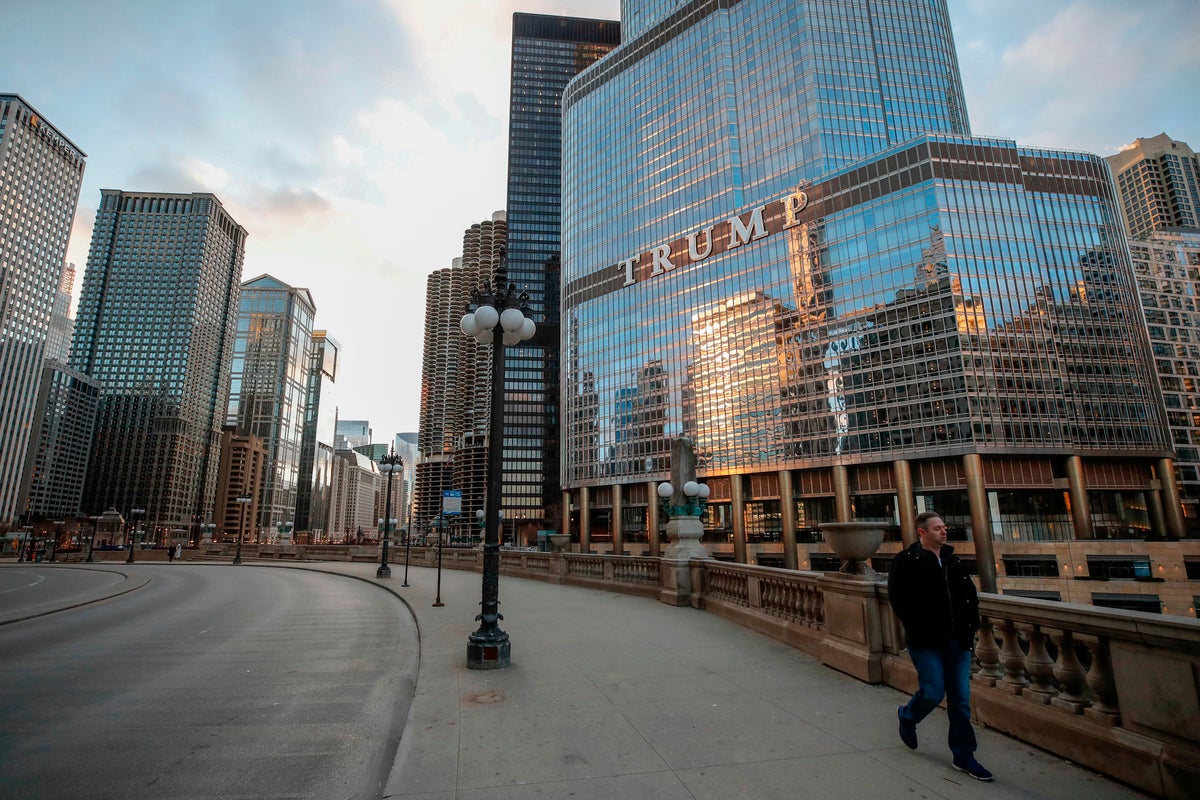
Digital petitions seeking to alter urban geography reveal a structural miscalculation regarding how municipal power and real estate assets intersect. The grass-roots initiative to rename the section of North Wabash Avenue adjacent to Chicago's Trump International Hotel & Tower to "Barack Obama Avenue" exemplifies this disconnect. While the petition has accumulated over 23,000 signatures, it operates on a fundamentally flawed understanding of municipal asset management, the economics of real estate branding, and the strict legislative framework governing municipal logistics.
To evaluate why these initiatives rarely move past the digital awareness phase, it is necessary to deconstruct the operational machinery behind street renamings, the corporate asset liabilities at stake, and the strategic trade-offs inherent to symbolic political friction.
The Dual Framework of Municipal Designation: Honorary vs. Structural
A core failure of standard media reporting on street-naming petitions is the conflation of an honorary street designation with a structural street renaming. Municipalities partition these actions into two distinct regulatory pathways, each carrying vastly different operational friction coefficients.
+-----------------------------------------------------------------+
|                    MUNICIPAL STREET CO-NAMING                   |
+-----------------------------------------------------------------+
                                  |
         +------------------------+------------------------+
         |                                                 |
         v                                                 v
+--------------------------------+               +--------------------------------+
|       HONORARY DESIGNATION     |               |       STRUCTURAL RENAMING      |
+--------------------------------+               +--------------------------------+
| • Secondary signage overlay    |               | • Permanent database revision  |
| • Zero baseline address changes|               | • Complete postal modification |
| • Negligible friction          |               | • High compliance cost         |
| • Low political opposition     |               | • Systemic logistical upheaval |
+--------------------------------+               +--------------------------------+
1. Honorary Street Co-Naming
This mechanism applies a secondary, symbolic name to a geographic zone without altering the underlying postal infrastructure. The existing street name remains intact for emergency services, utility mapping, and commercial mailing addresses. Because the intervention is limited to manufacturing and mounting physical signage overlays, the administrative cost function is negligible. This minimizes institutional resistance within city councils.
2. Structural Street Renaming
This action permanently deletes a street name from the municipal grid and replaces it across all official databases. A structural change alters the legal situs of every real estate asset on that grid corridor. The regulatory burden requires extensive inter-agency coordination among emergency response dispatchers, postal services, utility operators, and tax assessment offices.
The petition targeting the Wabash Avenue address of Trump Tower demands a structural renaming rather than a symbolic overlay. The explicit strategic objective of the campaign is to force a private commercial entity to print the name of a political rival on its corporate correspondence, marketing materials, and digital touchpoints. By demanding a structural change, the campaign shifts out of the low-friction realm of symbolic civic honors and into a high-friction landscape of administrative, legal, and economic resistance.
The Logistical Cost Function of Postal Disruption
A structural address change generates a cascade of compliance costs that municipal governments are poorly equipped to absorb or enforce against non-consenting property owners. The economic friction of a structural renaming is distributed across three primary vectors:
- Emergency Service Latency: Computer-Aided Dispatch (CAD) systems utilized by police, fire, and medical teams require synchronized updates. For a high-density downtown corridor like Chicago's Loop or Near North Side, any lag in database propagation across legacy state and federal emergency networks introduces localized dispatch latency risks.
- Corporate Administrative Overhead: For a mixed-use skyscraper containing luxury hotel operations, commercial retail, and private residential condominiums, changing the legal address triggers a mandatory overhaul of corporate documentation. This includes updating property titles, deeds, employment contracts, liquor licenses, health department permits, and financial instruments.
- Logistical System Recalibration: Global supply chains, freight delivery routing engines, and private courier databases (such as FedEx, UPS, and DHL) rely on standardized address validation APIs. A sudden structural shift forces private entities to shoulder the cost of updating internal database systems to avoid localized routing failures.
Because municipal codes generally seek to minimize administrative burdens on local businesses and property owners, city councils maintain a high baseline bias against structural changes unless a broad consensus among the affected property owners is reached.
Real Estate Value Dynamics and Branding Insulation
From a pure corporate strategy perspective, the management of a premium real estate asset relies heavily on branding isolation. Super-tall mixed-use developments use physical addresses as a core component of their premium positioning strategy.
When a political renaming campaign targets an asset's address, it seeks to dilute the property's brand equity by introducing reputational dissonance. The logic assumes that forcing a political brand juxtaposition will lower the asset's market value or damage its tenancy rates.
However, corporate real estate assets possess powerful defense mechanisms against local municipal adjustments. For example, properties frequently bypass street-level naming entirely by anchoring their identities to alternative, highly stable geographic designations, plazas, or proprietary branding.
+-------------------------------------------------------------------------+
|                  REAL ESTATE ASSET BRAND INSULATION                     |
+-------------------------------------------------------------------------+
                                      |
         +----------------------------+----------------------------+
         |                                                         |
         v                                                         v
+----------------------------------+              +----------------------------------+
|    GEOGRAPHIC DECOUPLING STRATEGY|              |  PROPRIETARY DESIGNATION SHIFT   |
+----------------------------------+              +----------------------------------+
| Abandon street-level branding to |              | Transition asset identity to a   |
| neutralize municipal address     |              | self-contained corporate plaza   |
| changes.                         |              | identifier.                      |
|                                  |              |                                  |
| Example: "One International      |              | Example: "Trump International    |
| Plaza" instead of "123 Wabash".  |              | Plaza" as the primary address.   |
+----------------------------------+              +----------------------------------+
If a city council successfully executes a structural address change, the targeted corporate entity can mitigate the impact by severing its public-facing marketing from the legal street address. High-end real estate routinely utilizes vanity identifiers or self-contained plaza designations to maintain branding control. This tactical flexibility significantly reduces the leverage a digital petition can exert over a private asset's market value.
The Legislative Gatekeepers: Aldermanic Prerogative and Council Moratoriums
The primary bottleneck for any public renaming campaign is the structure of municipal legislative power. In Chicago, this is governed by the unwritten but rigidly enforced system of aldermanic prerogative. This framework grants individual members of the City Council de facto veto power over zoning, land use, and street naming within their respective wards.
A digital petition signed by a distributed, global online base carries little transactional value within this localized legislative framework. Ward leaders prioritize the preferences of localized real estate developers, commercial tenants, and registered ward voters over non-resident digital signatures. If the alderman of the ward containing the asset opposes the initiative due to local economic pushback or administrative friction, the proposal is effectively dead on arrival.
Furthermore, metro councils often insulate themselves from symbolic political disputes by enacting strict structural constraints, such as:
- Moratoriums on High-Density Districts: Certain high-traffic downtown commercial zones operate under permanent or semi-permanent naming moratoriums to protect tourism signage consistency and prevent retail disruption.
- Posthumous Requirements: Municipal naming protocols frequently dictate that streets can only be structurally named after deceased individuals, often requiring a mandatory waiting period of two to five years post-mortem. This rule protects municipal infrastructure from being weaponized during ongoing political careers.
- Proportional Property Owner Consent: Many municipal code structures require a verified supermajority (e.g., 67% or 75%) of physical property owners along the affected corridor to sign off on a structural change before it can be introduced on the council floor.
The Strategic Play: Capitalizing on the Political Friction Point
Because the legal, logistical, and legislative barriers make the structural renaming of a major urban corridor highly improbable, the campaign's true utility is found entirely within the mechanics of asymmetric symbolic warfare. The core value of the petition does not lie in its stated goal, but rather in its ability to force a zero-cost reputational tax on a political target.
The optimal play for organizers of these campaigns is to pivot away from a structural renaming strategy and focus exclusively on securing an honorary co-naming designation.
An honorary designation bypasses corporate legal challenges, eliminates the administrative cost burden for the city, and requires a significantly lower threshold for legislative approval. By aiming for a dual-signage framework, the campaign achieves its primary objective—visual, permanent political juxtaposition—while systematically neutralizing every logical, economic, and bureaucratic argument that the targeted asset owners could use to block it.