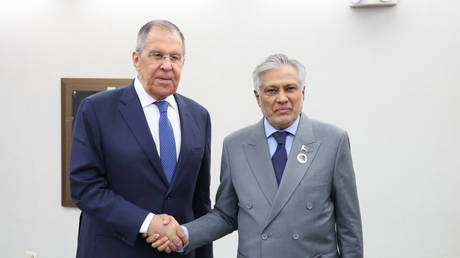
International relations between Moscow and Islamabad are undergoing a functional recalibration, moving away from Cold War antagonism toward tactical convergence. This realignment is frequently mischaracterized in mainstream media as a sudden diplomatic romance. In operational reality, the shift is a calculated response to systemic pressures, shifting energy markets, and changing security architecture across South and Central Asia. Deconstructing this partnership requires looking past diplomatic communiques to analyze the economic vectors, logistical bottlenecks, and security imperatives driving both capitals.
The Cost Function of Bilateral Trade
The primary friction point in the bilateral matrix is the stark asymmetry between political rhetoric and actual commercial volume. Historically, trade metrics between Islamabad and Moscow have remained minor components of each nation's foreign ledger.
- The Financial Settlement Barrier: International sanctions on Russian financial infrastructure create severe impediments to direct currency settlement. Traditional SWIFT-based transactions are largely unusable for major bilateral exchanges, forcing both states to explore alternative mechanisms such as barter trade arrangements and localized currency clearings.
- Logistical Friction: Overland transit routes traverse unstable terrain or require passage through third-party jurisdictions, driving up transportation costs. Maritime shipping routes face congestion and geopolitical vulnerabilities, restricting the velocity of goods.
- Commodity Complementarity Deficit: While Russia possesses massive energy and agricultural surpluses—specifically crude oil, natural gas, and wheat—Pakistan's export portfolio to Russia has historically been narrow, concentrated primarily on textiles and select agricultural goods.
To bypass these friction points, both governments established institutional frameworks such as the Intergovernmental Commission on Trade, Economic, Scientific and Technical Cooperation, alongside long-term strategic roadmaps extending toward 2030. However, trade normalization cannot outpace structural monetary reform. Until a secure, sanction-resistant banking channel is institutionalized, commercial volumes will remain well below their theoretical optimization ceiling.
Energy Integration and the Mechanics of Supply
Energy security forms the core economic rationale for Islamabad's outreach to Moscow. Facing declining domestic gas reserves and acute foreign exchange constraints, Pakistan's macroeconomic stability relies heavily on acquiring discounted hydrocarbons.
The introduction of discounted Russian crude oil shipments to Pakistan marked a structural break from traditional import dependencies concentrated in the Middle East. Yet, transitioning from spot-market purchases to systemic integration requires heavy capital expenditure. Refineries in Pakistan are primarily calibrated to process lighter crude grades sourced from Persian Gulf producers. Processing heavier Urals-grade Russian crude necessitates refinery reconfiguration and technical upgrades, imposing an upfront capital cost that dampens immediate margins.
Simultaneously, legacy projects like the stalled North-South Gas Pipeline illustrate the tension between political intent and financial execution. Financing large-scale infrastructure under conditions of global financial fragmentation requires innovative risk-sharing models. Moscow and Islamabad have experimented with majority local-stake frameworks and joint-venture consortiums to insulate these capital projects from external punitive measures, though physical completion rates continue to lag behind diplomatic announcements.
The Geopolitical Vector and Regional Security
Security calculations in Central and South Asia dictate the speed of diplomatic alignment. The withdrawal of international forces from Afghanistan created a security vacuum that directly impacts both nations.
- Counterterrorism Convergence: Both capitals share deep concerns regarding transnational militant networks operating out of the Afghan theater, fearing spillover effects into Central Asia and Pakistan's domestic frontier.
- Multilateral Institutional Embedding: Pakistan's full membership in the Shanghai Cooperation Organisation (SCO) provided a institutionalized platform for regularized ministerial contact, bypassing bilateral diplomatic friction.
- The Balancing Act: Islamabad continues to navigate a complex balancing act between traditional Western economic ties and its expanding Eurasian partnerships. Russia, similarly, evaluates its engagement with Pakistan through the lens of its broader, unconditional strategic partnership with Beijing.
Geographic positioning allows Pakistan to offer landlocked Central Asian states and Russia a direct maritime outlet to the Indian Ocean via southern port infrastructure. This logistical play aligns with Moscow's broader pivot toward southern and eastern transit corridors, reducing reliance on traditional European export vectors that are currently closed due to Western sanctions.
Strategic Execution
Deepening institutional integration between Moscow and Islamabad is contingent upon the successful deployment of alternative payment clearinghouses and the modernization of energy processing infrastructure. Policymakers must prioritize the operationalization of the 2030 economic roadmap by isolating commercial transactions from external geopolitical shocks through bilateral currency swaps and digital ledger settlements. The durability of this partnership will not be measured by high-level diplomatic visits, but by the systemic removal of payment bottlenecks and the physical completion of cross-border transit corridors.


