The dressing room smells of deep-heat rub, damp jersey fabric, and an oppressive, suffocating silence. It is a silence so heavy it vibrates. Outside, eighty thousand people are screaming, their voices filtering through the concrete underbelly of the stadium like a distant, angry ocean. But inside here, nobody moves. A player sits with his head buried in his hands, the mud on his boots slowly drying and flaking off onto the pristine tiled floor. He did not lose a game today. He lost a four-year obsession.
Football at the highest level is not a sport. Not really. It is an emotional meat grinder that chews up years of sacrifice and spits out a binary result: euphoria or devastation. We look at the World Cup and see the glittering trophy, the confetti, the manufactured joy of the victors. We watch the highlight reels. But the true soul of the tournament lives in the shadows just outside the spotlight. It lives in the pride of those who won, yes, but more profoundly, it lives in the pundonor—the fierce, desperate honor—of those who were vanquished.
To understand the World Cup is to understand that the scoreboard is a liar. It tells you who scored more goals, but it tells you nothing about what it cost them to try.
The Weight of a Nation on Eleven Pairs of Shoulders
Consider a kid from a working-class neighborhood in Buenos Aires, or a village outside Dakar. By the time he wears his country’s shirt on the world stage, he is no longer just a athlete. He is a vessel for the collective anxieties, hopes, and validation of millions of people.
When he steps onto the pitch, that weight attaches to his ankles.
The human brain is not wired to handle the psychological whiplash of a tournament knockout match. For ninety minutes, a player operates in a state of hyper-arousal. Adrenaline floods the system. The heart rate hovers near its maximum. Every sensory input is magnified—the blinding glare of the floodlights, the tactical shouts drowned out by the roar of the crowd, the precise texture of the grass underfoot.
Then, the final whistle blows.
In a fraction of a second, the universe splits in two. For the winners, the sudden release of tension triggers a massive dopamine surge. They run, they laugh, they pile on top of each other in a chaotic heap of limbs. But for the losers, the drop is catastrophic. The cortisol levels spike. The body, suddenly deprived of the adrenaline that kept the exhaustion at bay, collapses.
It is a physical and emotional eviction. One minute you live in the penthouse of global possibility; the next, you are out on the street, staring at the wreckage of a dream.
The Invisible Stakes of the Underdog
We love to romanticize the defeated. We talk about "noble losers" and celebrate teams that "left everything on the pitch." But there is a distinct difference between a team that loses because they were outclassed, and a team that loses after pushing past their absolute human limits.
Let us look at the teams that arrive at the World Cup knowing they will not lift the trophy. The football purists call them "minnows." It is a patronizing term that diminishes the fierce dignity of their presence. For these nations, the stakes are entirely different. They are not playing for immortality; they are playing for existence. They are playing so that the rest of the world has to pronounce their names correctly, if only for a weekend.
When a team like that holds a powerhouse to a draw, or scores a single, chaotic goal before eventually succumbing to a loss, the reaction in the dressing room is not despair. It is a quiet, burning pride.
I remember watching a veteran defender from a small island nation after a heavy group-stage defeat. He didn't cry. He stood at the tunnel entrance, his jersey torn at the collar, swapping shirts with a world-famous striker who earned more in a week than the defender’s entire hometown earned in a year. The defender held that swapped jersey like a relic. He had proved he belonged on the same patch of grass. That is pundonor. It is the realization that dignity cannot be taken from you unless you surrender it yourself.
The Anatomy of the Victor’s Guilt
There is a strange, rarely discussed phenomenon that happens to the winners in the immediate aftermath of a brutal match. Call it the victor's hangover.
Once the initial explosion of joy subsides, and the players are walking back across the pitch, they inevitably cross paths with the men they just defeated. In that moment, the tribalism of the ninety minutes evaporates. What remains is the shared understanding of the trade. They look at their opponents and see a mirror image of their own exhaustion, their own fears, their own sacrifices.
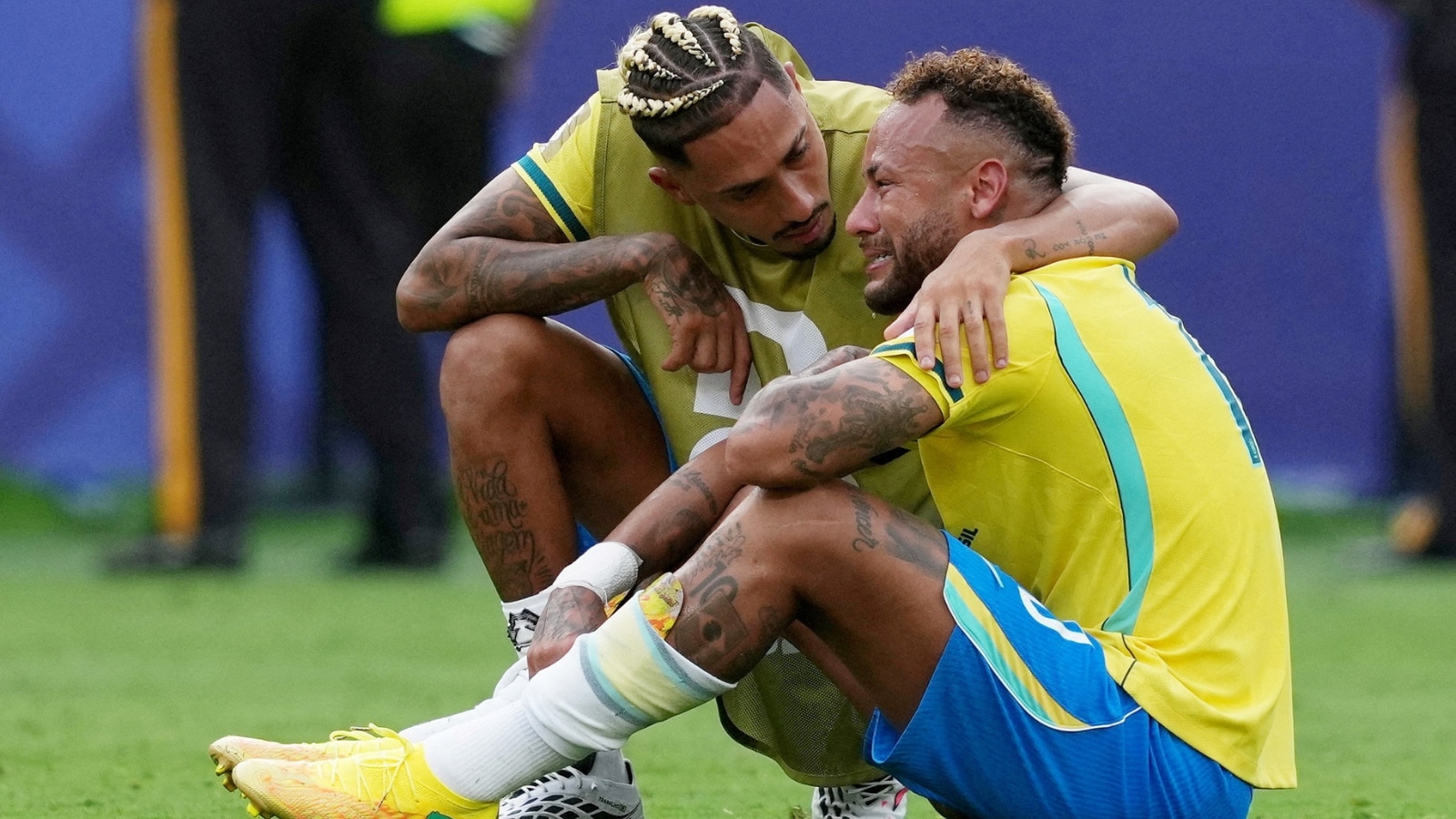
Watch closely next time a major tournament match ends. Before the winners go to celebrate with their fans, the best of them will seek out the broken players on the turf. They pull them up by the hands. They offer a brief, fierce embrace. They whisper words that the television cameras will never catch.
This is not performative sportsmanship. It is an acknowledgment of a shared ordeal. The winner knows that the margin between their current ecstasy and the opponent’s despair was a deflected shot, a slippery patch of turf, a referee's split-second decision. They recognize that their glory was built directly upon the heartbreak of another human being.
Why We Cannot Look Away
Why do we do this to ourselves? Why do billions of people tune in to watch twenty-two people chase a piece of synthetic leather, knowing that for half of them, the story ends in tears?
We watch because football is the only arena left in modern life where human emotion is entirely unscripted and raw. In a world of curated social media feeds, corporate PR statements, and carefully managed public personas, the World Cup forces men and women to show us exactly who they are when the pressure strips away everything else.
We see the vanity melt away. We see the multi-millionaire superstars reduced to sobbing children on national television. We see the unheralded substitutes become national heroes overnight. It is a concentrated dose of the human condition, compressed into a ninety-minute window.
The voices of the World Cup are not just the commentators shouting into their microphones, or the analysts breaking down tactical formations on a digital whiteboard. The true voices are the silent ones. The gasp of a crowd before a penalty kick. The collective intake of breath when a shot hits the woodwork. The guttural cry of a player whose muscles have seized up in the one hundred and twentieth minute of play, but who still throws his body in front of a speeding ball because his country is watching.
When the tournament ends, the stadiums are emptied, and the workers dismantle the temporary stages, the stats will go into the record books. The goals will be counted. The winners will have their names etched into silver.
But the real legacy of the tournament remains in the invisible energy of those titanic struggles. It is found in the stubborn refusal to give up when the odds are impossible, and the quiet grace of accepting defeat when the battle is lost. It is the realization that in the grand theatre of the world, victory is fleeting, but the dignity with which you fight is permanent.
The drying mud on the dressing room floor is swept away, but the marks left on the soul remain forever.