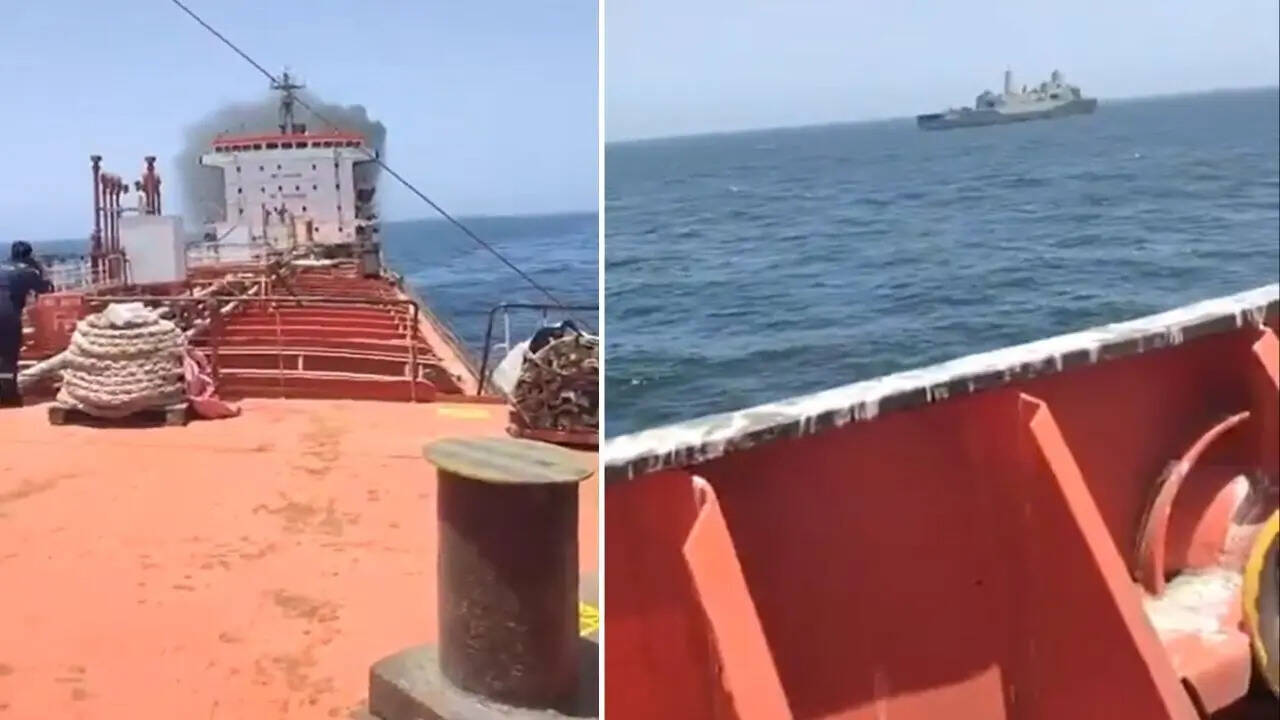
Commercial shipping operations in the Middle East have transitioned from navigating conventional piracy hazards to surviving targeted, kinetic military actions within critical maritime chokepoints. This operational shift is demonstrated by the June 2026 kinetic attack on the Madagascar-flagged oil tanker MT Marivex south of the Strait of Hormuz. The incident resulted in an engine room explosion and subsequent fire, endangering its complement of 24 Indian seafarers. To insulate global supply chains from structural disruptions, maritime operators and sovereign states must move beyond reactive distress management and adopt an objective framework based on geopolitical risk modeling, international maritime law, and proactive tactical defense.
Understanding the operational environment requires breaking down the core mechanisms that transform localized military escalations into global logistical bottlenecks. For commercial shipping companies, regional states, and labor organizations like the Forward Seamen's Union of India (FSUI), evaluating maritime security demands a systematic approach to structural risks.
The Tri-Border Maritime Security Framework
Evaluating the vulnerability of a commercial transit through the Gulf of Oman or the Strait of Hormuz relies on analyzing three distinct, interacting variables.
Flag State Jurisdiction and Regulatory Gaps
The regulatory structure of international shipping introduces vulnerabilities through the use of open registries. The MT Marivex operates under a Madagascar flag, yet its human capital is entirely Indian. When kinetic disruptions occur, this asymmetry slows down coordinated state interventions. The flag state bears the primary legal responsibility under the United Nations Convention on the Law of the Sea (UNCLOS) to provide protections and conduct investigations. However, open registries often lack the naval power required to project force or execute deep-sea rescues in high-conflict zones. This shifts the operational burden of emergency response onto the seafarers' home country or nearby littoral states like Oman.
Proximate Kinetic Volatility
The geographic positioning of a vessel relative to maritime chokepoints determines its risk exposure. The attack on the MT Marivex occurred at co-ordinates 20°57.07'N, 059°08.13'E, positioning the vessel south of Muscat while it was en route to the Omani port of Duqm.
[Strait of Hormuz]
       |
       v
[Gulf of Oman] ---> (MT Marivex attacked south of Muscat: 20°57.07'N, 059°08.13'E)
       |
       v
[Arabian Sea / Indian Ocean]
This location sits just outside the immediate boundaries of the Strait of Hormuz but remains entirely within the strike radius of modern asymmetric warfare systems, including unmanned aerial vehicles (UAVs) and anti-ship cruise missiles (ASCMs). The incident directly coincided with renewed hostilities between Israel and Iran, demonstrating that the geographic boundaries of maritime conflict zones extend well beyond strict legal definitions of international straits.
Ballast Versus Loaded Vulnerability Profiles
The physical nature of a vessel's cargo dictates its structural resilience to kinetic impacts. At the time of the attack, the MT Marivex was operating in a ballast condition, meaning it carried no commercial oil cargo. From a risk perspective, a tanker in ballast presents a dual-profile:
- Lower Environmental Escalation Risk: The absence of crude or refined petroleum eliminates the threat of large-scale environmental contamination or an uncontrolled surface fire fed by cargo.
- Higher Structural Vulnerability to Explosions: Empty cargo tanks accumulate volatile hydrocarbon vapors if they are not thoroughly purged with inert gas systems. When a missile or drone penetrates the hull, these spaces can experience secondary explosions that threaten the vessel's structural integrity.
In this specific incident, the initial kinetic impact struck the engine room, disabling the ship's primary propulsion and power generation. This vulnerability highlights the exact target selection seen in modern asymmetric maritime warfare, where attackers prioritize neutralizing a vessel's mechanical systems over sinking the hull outright.
Supply Chain Interruption Mechanisms
When an attack occurs in a critical transit lane, the direct damage to the ship represents only the first layer of economic loss. The broader systemic impact flows through a defined economic cost function, affecting stakeholders far from the site of the detonation.
The primary mechanism driving up costs is the immediate repricing of maritime risk by global marine underwriters. Following a confirmed attack near the Strait of Hormuz, War Risk Additional Premiums (WRAPs) rise sharply. Underwriters apply these surcharges to any vessel entering a designated high-risk area, typically defined by the Joint War Committee (JWC). For a standard large crude carrier, a sharp increase in war risk premiums can add tens of thousands of dollars per day to standard operating costs. This expense must be absorbed by the charterer or passed down to the end consumer.
The second disruption mechanism comes from structural rerouting decisions. When risk thresholds are crossed, ship operators choose to bypass high-risk corridors entirely. For vessels traveling between Asia and Europe, avoiding Middle Eastern chokepoints means rejecting the short route through the Suez Canal in favor of traveling around the Cape of Good Hope. This detour extends transit times by 10 to 14 days and increases fuel consumption by hundreds of metric tons per voyage. The result is a sharp contraction in global shipping capacity, which drives up spot freight rates across unrelated trade lanes.
The final element of the cost function involves labor costs and crew retention. Seafarers navigating these high-risk areas require hazard pay, which often amounts to a 100% premium on their base wages during transit. When attacks increase, maritime unions demand total transit bans or expanded rights for crews to leave their ships at safe ports prior to entering high-risk zones. This dynamic complicates crew logistics and increases operational friction for international shipping lines.
The Strategic Balance of Maritime Interventions
Sovereign states use a mix of defensive, diplomatic, and operational tools to protect their commercial interests and citizens at sea. Each strategy has distinct operational limits.
Escort Operations and Naval Commitments
The most direct response to maritime threats is the deployment of naval assets for commercial escorts, a strategy India executes through the Indian Navy's ongoing presence in the region. This approach relies on placing guided-missile destroyers or frigates along high-risk shipping lanes to detect and intercept incoming airborne threats.
The structural limitation of this strategy is its high resource demands. It requires a massive number of naval assets to protect a continuous stream of commercial traffic. Since military escorts cannot cover every commercial ship, navies must rely on group transits or prioritize vessels flying their own national flag. This leaves open-registry vessels, like the MT Marivex, vulnerable to asymmetric strikes when they operate outside protected naval convoys.
Real-Time Communications Networks
To manage crises effectively, maritime authorities use specialized communications networks. India's Ministry of Ports, Shipping and Waterways operates a specialized control room through the Directorate General of Shipping (DG Shipping), which manages tens of thousands of communications from seafarers and their families during crises.
These networks are critical for gathering real-time tracking data and passing distress messages to naval forces on the ground. However, their value is inherently reactive. Communications systems can confirm an attack and orchestrate post-incident rescues, but they cannot prevent a high-speed missile or drone strike from hitting a vulnerable merchant ship.
Regional Maritime Diplomacy
The third approach relies on bilateral security frameworks and regional maritime diplomacy. In the case of the MT Marivex, the Indian Embassy in Muscat established direct contact with the crew, while past incidents—such as the rescue of the crew from the Indian dhow Haji Ali—relied on the Omani Coast Guard.
These cross-border safety agreements are vital for handling the immediate aftermath of an attack, such as providing medical treatment, handling emergency port entry, and facilitating repatriation. The clear limit here is that diplomatic partnerships cannot alter the underlying geopolitical tensions that cause these attacks in the first place, leaving commercial ships exposed to wider regional conflicts.
Actionable Risk-Mitigation Tactics
To protect crews and maintain operational continuity during periods of heightened regional conflict, maritime companies must update their security plans.
First, operators must enforce strict technical protocols for empty transits. This means ensuring that cargo tanks are completely filled with inert gas to keep oxygen levels well below explosive thresholds, reducing the risk of secondary detonations if a hull is penetrated.
Second, shipping companies should run detailed security reviews that look at ownership ties, port histories, and previous charters to identify vessels that might be targeted because of perceived links to nations involved in regional conflicts.
Finally, ship masters must use advanced defensive measures, such as turning off Automatic Identification System (AIS) transponders in high-risk zones to prevent targeting, installing physical hull protection, and scheduling movements to pass through high-risk chokepoints during periods of low visibility. Taking these steps moves security from a reactive rescue model to a proactive, defensive strategy.