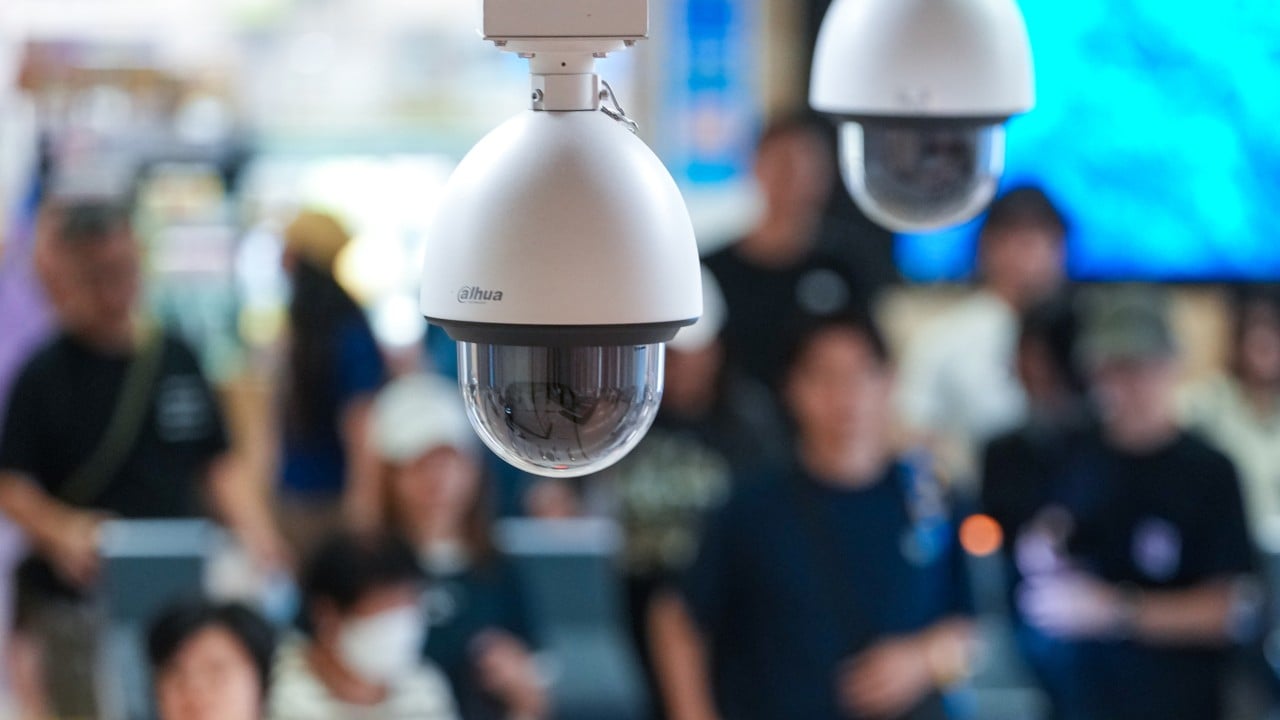
Connecting privately owned commercial camera arrays to a state policing network transforms isolated loss-prevention hardware into a continuous urban tracking grid. When a security chief announces plans to link shopping mall closed-circuit television systems with police surveillance infrastructure, the core operational shift is not merely adding more lenses; it is eliminating the jurisdictional and technical boundary between private commercial space and public enforcement. To evaluate what this integration actually changes—and what standard news coverage misses—this analysis breaks down the architecture, cost mechanics, causal chains, and strategic trade-offs behind linking mall CCTV feeds to a police surveillance network.
The blueprint rests on four analytical moves: mapping the baseline reporting logic, defining the technical and economic layers of camera federation, tracing second-order operational effects, and evaluating real-world friction points that limit total visibility. You might also find this connected article useful: The Morning the Office Went Quiet.
Deconstructing Standard Coverage of Police CCTV Integration
Typical reporting on security chief announcements treats public-private camera integration as a linear upgrade: more cameras equals faster investigations and safer public spaces. That framing leaves three critical dimensions unexamined.
First, standard coverage conflates camera existence with actionability. A shopping center may operate hundreds of fixed or pan-tilt-zoom cameras, yet many record locally at low frame rates, point at static corridors, or lack synchronized timestamps. Linking raw streams to a police network does not automatically make footage searchable, clear, or useful during a fast-moving incident. As highlighted in recent articles by TechCrunch, the effects are widespread.
Second, news summaries rarely separate known operational facts from educated hypotheses. An official announcement establishes policy intent and institutional direction. Claims that integration will deter crime, accelerate suspect tracking, or reduce response times remain hypotheses until tested against bandwidth limits, operator workload, legal standards, and criminal adaptation.
Third, conventional reporting treats private property operators as passive suppliers of video. In practice, commercial landlords balance foot traffic, tenant satisfaction, liability exposure, and capital expenditure. When private retail cameras become nodes in a state monitoring system, incentives between property managers and law enforcement diverge in ways that reshape how spaces are designed and patrolled.
The Architecture of Federated Surveillance
Linking mall CCTV systems to a municipal or territory-wide police surveillance network is best understood through three structural layers: edge capture, transport and indexing, and command correlation.
Edge Capture and Optical Reality
At the physical edge, cameras convert light into digital video streams. Optical quality depends on sensor size, low-light sensitivity, lens focal length, mounting height, and motion blur. In high-density retail environments, overhead angles often capture the crown of a head rather than a usable facial profile, and glass storefronts introduce glare and reflections.
A critical distinction separates passive recording from real-time analytical ingestion. Local digital or network video recorders frequently overwrite footage after days or weeks and are accessed retroactively after an incident is reported. Real-time integration requires continuous encoding, stable power, and reliable network uplinks so live feeds reach authorized terminals without dropping frames during peak hours.
Transport, Bandwidth, and Indexing
Moving high-definition video from dense commercial complexes to a central or distributed police network imposes strict engineering constraints. Uncompressed or high-bitrate streams from dozens or hundreds of cameras per mall consume substantial uplink capacity. Operators must choose between transmitting full streams selectively, pushing lower-resolution proxy feeds with high-resolution on-demand pull, or running edge analytics before transmission.
Indexing determines whether video becomes intelligence or stays a digital archive. Without metadata—such as camera location IDs, calibrated clocks, zone tags, and event triggers—operators face the needle-in-a-haystack bottleneck: having more video while lacking the human hours to watch it.
Command Correlation and Jurisdictional Handoff
The third layer governs how police analysts and response units use the feed. When mall cameras connect to a broader surveillance network, a suspect moving from a transit concourse into a retail atrium and out onto a city street crosses from public thoroughfares into semi-public commercial corridors.
Seamless handoff requires consistent map coordinates, clear escalation protocols between mall security control rooms and police dispatchers, and unambiguous rules on who controls camera movement when both private guards and police officers need visibility at the same time.
The Cost Function of Public-Private Camera Integration
A rigorous evaluation replaces vague talk of "efficiency" with a practical cost function. Every additional camera feed integrated into a police surveillance network carries recurring costs across four variables:
- Bandwidth and compute cost: Continuous streaming, transcoding, storage retention, and any automated detection or indexing scale with camera count, resolution, frame rate, and hours of active operation.
- Cognitive and staffing cost: Human attention is scarce. Adding feeds without corresponding triage rules or alert filtering increases operator fatigue and raises the risk of missed anomalies.
- Maintenance and calibration cost: Dust on domes, drifted focus, misconfigured network time protocols, and hardware failures degrade system value quietly unless routine health checks are enforced.
- Governance and compliance cost: Logging access, preventing unauthorized viewing, managing data retention windows, and handling legal requests require audit trails and technical controls.
The operational lesson from practitioners who run large camera estates is straightforward: ingest cost is recurring, whereas hardware installation is mostly upfront. A network that prioritizes maximum camera count over stream health, metadata hygiene, and operator workflow often accumulates "dark" or low-utility feeds that cost money to maintain without improving incident outcomes.
Cause-and-Effect Chains Standard Reporting Misses
Connecting mall CCTV networks to police infrastructure triggers several cascading mechanisms that rarely appear in headline coverage.
Compression of Investigation Lag
When an incident occurs inside a shopping complex, traditional workflows require police to contact mall management, wait for security staff to locate the relevant recorder, export clips, and transfer files. Each handoff adds latency while a suspect can exit the building, board transit, or change clothing.
Direct network linkage shortens the path from event detection to visual verification. Faster visual confirmation can compress dispatch decision time and help officers narrow search perimeters before a subject disperses into surrounding streets. However, speed gains only materialize if dispatchers can pinpoint the exact camera and timestamp immediately rather than scrubbing through hours of unindexed footage.
Spatial Displacement and Target Hardening
Hardening one node in an urban environment rarely erases underlying behavior in isolation; instead, it often shifts activity along paths of least resistance. If major malls gain tighter visual coverage and faster police linkage, opportunistic offenders or illicit operators may shift toward smaller arcades, unlinked side alleys, residential podiums, or late-night transit exits outside the integrated footprint.
At the same time, predictable camera placement creates blind-spot learning. Repeat offenders quickly map sightlines, escalators, service corridors, and dead angles. Camera coverage changes spatial behavior most reliably when paired with physical access controls, lighting, and rapid response rather than acting as a standalone deterrent.
Divergence Between Retail Experience and Enforcement Priorities
Shopping malls are commercial ecosystems designed to maximize dwell time, browsing comfort, and brand perception. Police networks are designed to detect threats, investigate offenses, and maintain public order.
When mall cameras feed into a police system, tension can emerge over priorities. A mall operator may want cameras focused on entrances, cash points, and high-value displays to prevent theft and slip-and-fall claims, while police may prioritize concourses, exits, stairwells, and exterior approaches to track movement patterns. Furthermore, visible surveillance and heightened enforcement presence can reassure some shoppers while making others feel scrutinized, creating a trade-off between perceived safety and retail atmosphere.
Data Quality Decay Over Time
A common failure mode in multi-site camera programs is gradual entropy. After initial launch attention fades, firmware updates lag, network switches get reconfigured during store renovations, and cameras are nudged or obstructed by seasonal displays or signage.
Without continuous telemetry monitoring—tracking packet loss, frame drops, offline duration, and storage health—the network can look large on paper while suffering silent blind spots in practice. Integration amplifies this risk because police workflows may assume a feed is live and reliable when it is actually frozen or misaligned.
Operational Trade-Offs and Practical Limitations
Even well-engineered camera integration faces hard boundaries that no software patch completely removes.
Occlusion is a physical constant in crowded retail spaces. Crowds, pillars, hanging banners, umbrellas, and moving escalators routinely block line of sight at the exact moment clarity matters most. Adding more cameras helps only up to the point where overlapping angles reduce occlusions without creating redundant visual clutter.
False positives and alert fatigue pose a severe operational hazard if automated analytics are layered onto live streams. Every low-confidence alert consumes analyst attention. If operators are flooded with routine movements—crowded queues, reflections, shadows, or harmless loitering—they risk treating genuine alerts with skepticism or delay.
Legal, privacy, and chain-of-custody standards also constrain how footage can be used. Video intended for evidentiary use must be protected against tampering, accurately timestamped, and accessed strictly within authorized scope. If access logs are weak or retention rules are inconsistent across private and public systems, evidentiary value can be challenged or compromised.
Strategic Play for Decision-Makers
Treat camera linkage not as a finished security milestone, but as an ongoing data-reliability and workflow-triage program. Before expanding feed counts or connecting additional commercial properties, mandate three concrete controls: enforce automated stream-health and clock-synchronization telemetry across every connected camera, require standardized location and zone metadata so operators can jump to an exact spot in seconds rather than searching manually, and run regular red-team drills that measure end-to-end time from a simulated incident to verified visual tracking across the mall-to-street boundary.