The transformation of the former Most coal mine in the Czech Republic into Lake Most represents a massive intervention in post-industrial geography. Transforming 309 hectares of sterile extraction voids into a stable aquatic ecosystem requires a precise combination of hydro-engineering, geomechanical stabilization, and chemical neutralization. Standard media coverage typically reduces this multi-decade engineering project to a narrative of natural recovery. The reality relies on rigorous structural intervention, massive water allocation mechanics, and long-term risk mitigation strategies that dictate whether a reclaimed void stabilizes or collapses into a toxic acidic sump.
The Geotechnical Baseline and the Extraction Void
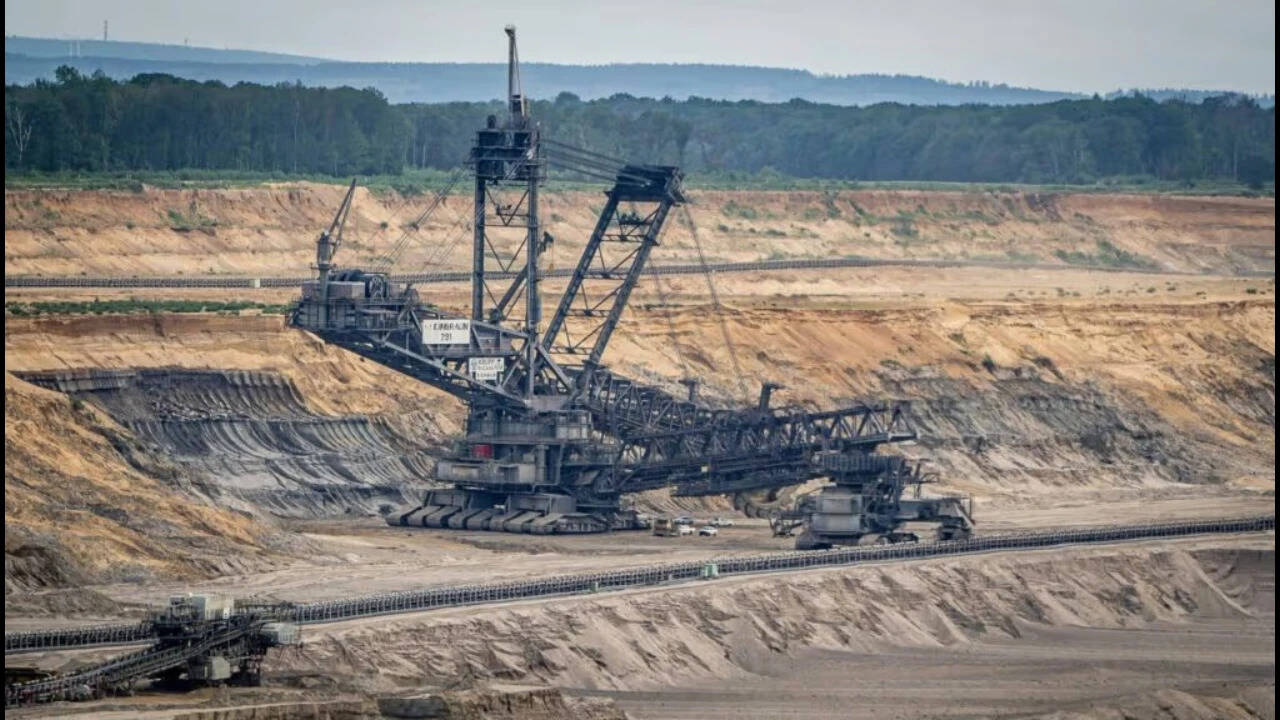
Open-pit extraction leaves behind a structural deficit. When millions of tons of lignite and overburden are stripped from a basin, the surrounding earth loses its lateral support. In the case of the Most mine, the immediate challenge was not merely aesthetic, but fundamentally geomechanical. The excavation created an unstable bowl vulnerable to massive landslides, slope failures, and spontaneous combustion of residual carbon layers exposed to atmospheric oxygen.
Rehabilitation requires a strict sequence of stabilization protocols. First, engineers must profile the highwalls to safe angles of repose, reducing the potential for catastrophic slope failure. This involves terracing, grading, and compacting unstable spoil heaps. Second, the residual toxic compounds trapped within the exposed geological strata must be sealed or neutralized. Lignite deposits frequently contain high concentrations of iron sulfides. When exposed to air and water, these minerals oxidize, producing sulfuric acid and driving heavy metals into solution. This process generates acid mine drainage, the primary vector of ecological collapse in post-mining landscapes.
Addressing acid mine drainage demands an active chemical buffering strategy. Left unmanaged, an empty pit filled with precipitation would morph into a concentrated acid bath, permanently deadening the surrounding watershed. The Most project avoided this trajectory through careful management of the initial water-filling phase, introducing controlled alkaline inputs to maintain pH stability from the outset.
The Hydro-Engineering Mechanics of Filling a Basin
Filling a 309-hectare void cannot be left to natural precipitation runoff. A catchment basin of that scale, left to local rainfall, would take centuries to reach equilibrium, during which evaporation rates would concentrate pollutants and render the water table volatile. Accelerated filling requires an engineered diversion of external water resources.
For Lake Most, the primary water source was the nearby Ohře River, channeled via an extensive network of pipelines and pumping stations. This infusion of water served a dual purpose. It accelerated the hydraulic head required to stabilize the toe of the surrounding slopes, and it diluted incoming chemical loads. The rate of water injection had to be meticulously calibrated against the geomechanical absorption rate of the surrounding soils. Rapid saturation of dry, unstable clay and silt layers can induce liquefaction, causing the banks to slough inward and destabilize the entire engineering project.
The hydrological mechanics involve three distinct phases:
- The Saturated Seepage Phase: Water infiltrates the base layers, gradually filling the pore spaces of the compacted overburden and establishing a stable internal water table that matches the external design level.
- The Thermal and Stratification Phase: As depth increases, the water body establishes seasonal thermal stratification, separating into distinct epilimnion and hypolimnion layers, which alters chemical solubility and biological oxygen demand.
- The Outflow Equilibrium Phase: The system reaches a dynamic balance where evaporation, seepage, and controlled discharge or overflow maintain a stable surface elevation, preventing uncontrolled flooding of adjacent infrastructure.
The Economic and Spatial Redevelopment Function
Reclaiming a post-industrial landscape is fundamentally an economic restructuring exercise. The conversion of the Most mine from an industrial liability into a recreational and ecological asset shifts the local real estate and municipal valuation profile. Land that generated zero tax revenue and imposed continuous environmental monitoring costs becomes a catalyst for regional diversification.
However, treating ecological rehabilitation as a pure amenity play misdiagnoses the risk matrix. The capital expenditure required for earthmoving, water diversion infrastructure, bank reinforcement, and water quality monitoring represents a long-term municipal investment with deferred returns. The financial justification depends on preventing externalized costs. Unreclaimed mines leach heavy metals into regional aquifers, depress adjacent property values, and demand perpetual emergency stabilization funds.
The economic shift relies on asset conversion efficiency. By capping the toxic material beneath a permanent water column, oxygen is cut off, halting the oxidation of residual sulfides. The water column acts as an engineered seal, vastly cheaper to maintain than perpetual chemical treatment plants scrubbing runoff from an exposed dry pit.
Ecological Succession and the Limits of Natural Recovery
A common misconception in environmental reporting is that nature simply reclaims abandoned sites without human assistance. In reality, Lake Most is a managed ecosystem. The aquatic flora and fauna establishing themselves within and around the lake are filtered through strict environmental tolerances.
Phytoplankton and zooplankton dynamics must be monitored to prevent eutrophication, a risk driven by agricultural runoff from surrounding catchments mixing with the nutrient-poor waters of the former mine. Furthermore, the shoreline stabilization efforts require deliberate planting of specific root structures that can bind loose soils while tolerating fluctuating water levels.
The biological metrics of the lake indicate successful neutralization, but they also highlight the limits of the intervention. The water is clear, largely due to the absence of fine suspended coal dust, which settled quickly or was bound during the filling process. Yet, the ecosystem remains artificial in its baseline parameters. It lacks the complex, ancient tributary networks of a natural glacial or tectonic lake. Every input, output, and biological introduction is bounded by the original geometry of the excavation.
Long-Term Monitoring and Failure Modes
The completion of the filling phase does not conclude the engineering lifecycle of Lake Most. Post-project monitoring focuses on continuous tracking of slope stability, water table fluctuations, and heavy metal accumulation in bottom sediments.
The primary structural risk is deferred slope creep. Decades after filling, slow saturation of deep-seated clay layers can trigger delayed landslides along the highwalls. To counter this, geotechnical engineers deploy inclinometers and piezometers embedded deep within the perimeter strata to measure subsurface displacement and pore water pressure in real time.
Another critical variable is climatic stress. Extended drought periods lower the water level, exposing vulnerable, sulfur-rich banks to atmospheric oxidation once more. This sudden re-exposure can restart acid mine drainage cycles, threatening the newly established biological communities. Consequently, water level management must incorporate contingency planning for severe weather anomalies, balancing flood retention capacity with drought preservation minimums.
Deploy automated monitoring arrays along the perimeter highwalls to track subsurface displacement vectors, and establish a dynamic water exchange protocol with the Ohře River to buffer against seasonal evaporation deficits and maintain baseline pH neutralization parameters.