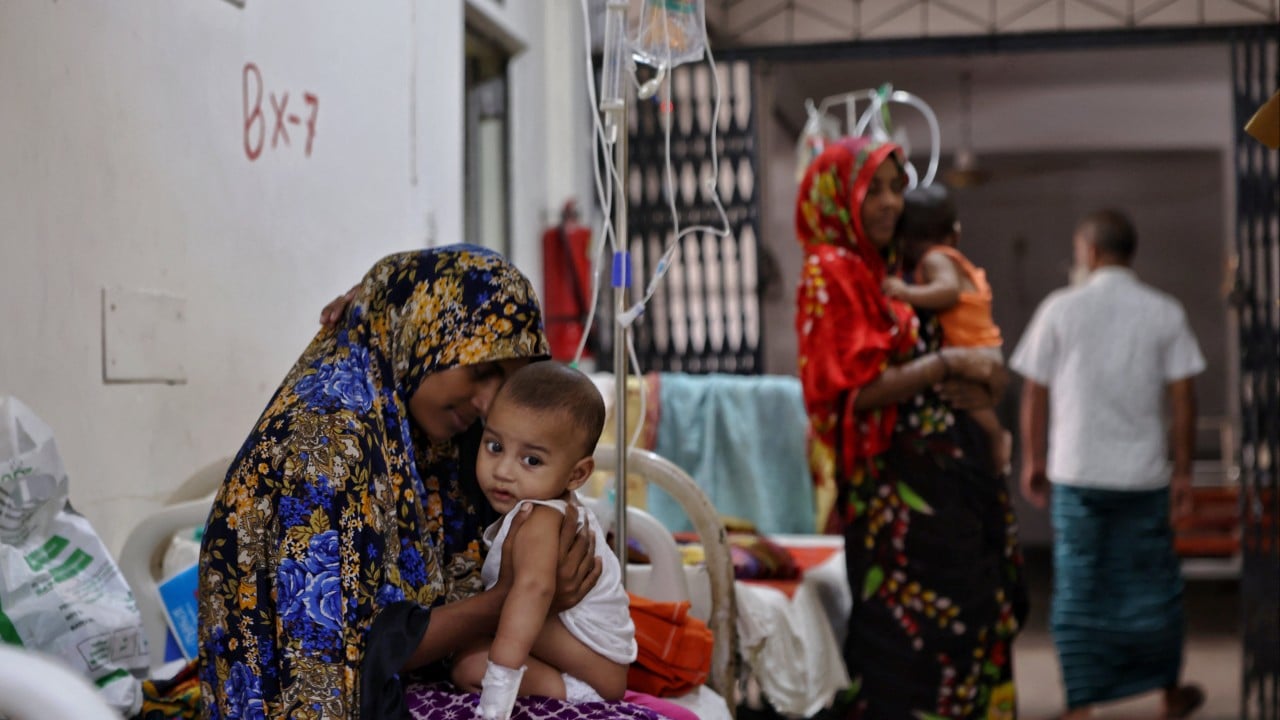
Epidemiological crises rarely materialize as sudden shocks. Instead, they operate as compound interest equations of administrative failure, where minor policy friction points compound over quarters until an entire national immune shield collapses. The ongoing measles epidemic in Bangladesh, which has crossed the grim threshold of one thousand deaths alongside over 180,000 suspected cases, is a textbook case of structural decay. Media narratives frequently reduce such public health catastrophes to isolated tragedies or simple logistical bottlenecks. A rigorous operational audit reveals a far more complex system failure driven by three primary vectors: institutional disruption during political transition, procurement policy friction, and cohort vulnerability accumulation.
To deconstruct how a nation that once approached disease elimination became the epicenter of the world's worst ongoing measles surge, one must analyze the baseline transmission dynamics of measles morbillivirus. Measles maintains a basic reproduction number, known as R0, between 12 and 18. This exceptionally high transmissibility means that herd immunity thresholds must remain strictly above 95 percent with a two-dose vaccine regimen to prevent sustained community transmission. When routine administrative processes falter, small pockets of unimmunized infants rapidly aggregate into high-density infection networks. You might also find this connected story useful: The Invisible Smoke That Claims Our Tomorrows.
The primary driver of the current crisis is the systematic erosion of routine immunization schedules across 2024 and 2025. Political upheaval, marked by widespread civil unrest and the ousting of former Prime Minister Sheikh Hasina, created a prolonged vacuum in public sector operational capacity. During this window, scheduled nationwide measles-rubella immunization campaigns were postponed or outright canceled.
From an operational standpoint, immunization delivery relies on continuous supply chains, cold-chain maintenance, and community health worker mobility. When governance structures fracture, three critical failure points emerge simultaneously: As discussed in recent reports by WebMD, the effects are widespread.
- Field-level outreach workers face safety risks and mobility restrictions, halting door-to-door tracking.
- Central procurement committees experience leadership turnover, paralyzing vaccine re-order cycles.
- Public trust degrades, leading to increased hesitancy and decreased clinic attendance even when doses are physically present.
This multi-quarter administrative paralysis generated a massive accumulation of susceptible birth cohorts. Children who missed their scheduled first dose at nine months aged into the secondary window without baseline protection, creating an unusually large pool of immunologically naive hosts.
Compounding this structural gap were acute administrative missteps within the interim government's healthcare procurement framework. Health ministry reports indicate that abrupt modifications to vaccine procurement protocols triggered severe supply bottlenecks. In public health logistics, procurement is not a transactional purchase order; it is a timed pipeline requiring months of advance forecasting, quality assurance, and cold-chain allocation.
When procurement channels are disrupted, the recovery time is non-linear. Procuring emergency vaccine stockpiles requires navigating international supply constraints, UNICEF allocation queues, and import compliance. By the time emergency mass vaccination campaigns were initiated in April, the virus had already saturated dense urban settlements and rural sub-districts alike.
Hospital capacity utilization metrics further illuminate the severity of the systemic load. Facilities such as Dhaka Shishu Hospital experienced catastrophic overcrowding, operating at nearly double their design capacity. This operational strain introduces secondary mortality risks. When pediatric wards are congested beyond capacity, nosocomial transmission rates spike, and clinical staff face critical shortages of essential supportive inputs, such as pediatric saline and respiratory support tools.
Furthermore, nutritional status acts as a primary compounding variable in measles mortality rates. Children suffering from baseline malnutrition possess compromised cellular immunity, transforming a self-limiting viral infection into a multi-organ systemic crisis characterized by severe secondary lower respiratory tract infections and systemic inflammation. Over 80 percent of the severe cases concentrated in children under the age of five reflect this intersection of viral virulence and underlying nutritional deficits.
Addressing a systemic immunization failure of this magnitude requires moving beyond reactive emergency vaccination drives. While the deployment of catch-up campaigns across high-transmission upazilas is a necessary tactical intervention, long-term stabilization depends on structural rebuilding.
Health authorities must decouple foundational immunization supply chains from political transitions by institutionalizing independent procurement buffers and automated re-order triggers. Restoring herd immunity above the 95 percent threshold across all administrative districts demands an aggressive, verified door-to-door sweep targeting children who missed doses over the past twenty-four months, backed by continuous supply chain auditing to ensure cold-chain integrity from port of entry to the last-mile clinic.