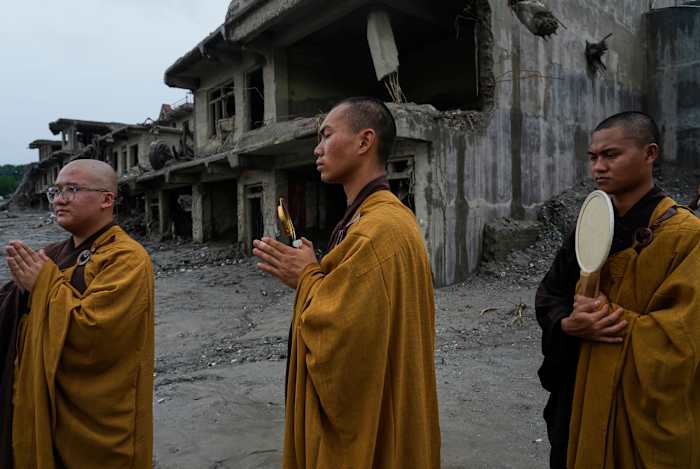
Natural disasters in high-altitude convergence zones do not operate as random acts of meteorological malice; they execute precise mechanical failures within complex geographic and industrial architectures. When an ice-and-rock avalanche collapsed near the Nepal-Tibet border on August 26, the resulting cataclysm bypassed standard monsoon models, translating high-altitude cryospheric instability into downstream devastation. Official figures cite a confirmed death toll exceeding 1,300 people, with nearly 5,000 individuals remaining unaccounted for across regional drainage basins. Navigating this operational failure requires shifting away from superficial disaster reporting toward a structural dissection of cryospheric risk, hydraulic velocity, and the institutional vulnerabilities exposed by concentrated infrastructure development in fragile river corridors.
The Mechanics of Cryospheric Surge
Standard hydrological forecasting relies on predictable precipitation curves and seasonal snowmelt metrics. The August 26 event invalidated these baseline assumptions through an instantaneous mass-movement dynamic. A high-altitude ice-and-rock avalanche introduced millions of tons of solid material directly into narrow alpine channels, creating an immediate damming and subsequent breaching effect that unleashed a high-density debris flow down the Bhotekoshi River basin.
This phenomenon operates under fluid dynamics distinct from standard water flooding. A debris flow acts as a high-density slurry, multiplying kinetic energy through sheer mass and increasing basal shear stress on riverbanks. The wave front travels at velocities that defy standard early-warning response times, carrying boulders, glacial silt, and uprooted timber. Because the initial kinetic release registered structural shockwaves comparable to seismic events, traditional river-gauge sensors failed instantly, creating an informational blackout between the high-altitude origin zone and populated downstream valleys.
The Infrastructure Vulnerability Matrix
Economic development in the Himalayas increasingly relies on linear infrastructure projects sited directly within high-hazard river corridors. The concentration of twelve major hydropower projects along the affected river systems transformed industrial sites into primary structural traps.
- Subsurface Enclosure Risk: Hydropower tunneling creates subterranean networks that function as hydraulic traps during flash flood events. When slurry breaches intake structures, tunnels fill under high pressure, instantly cutting off egress routes for operational crews. Approximately 500 workers were trapped within subterranean passages across multiple sites.
- Linear Asset Fragility: Roads, transmission lines, and suspension bridges share the same narrow topographical benches as rivers. The destruction of these access corridors immediately isolates operational zones, preventing heavy machinery deployment and severing tactical lines of communication for search-and-rescue units.
- Cross-Border Cascade Effects: The geographic origin of the disaster in the Tibet Autonomous Region demonstrated the systemic risk of transboundary water management. Upstream instability propagates downstream across political boundaries faster than diplomatic or tactical coordination protocols can execute joint responses.
The Forensic Identification Bottleneck
Mass-casualty events characterized by high-velocity debris flows create severe post-disaster forensic hurdles. Traditional identification methods—visual recognition, personal effects, and dental records—break down when bodies are subjected to prolonged high-abrasion transport in mud slurry.
Recovered remains frequently exhibit fragmentation, advanced decomposition, and immersion-induced tissue degradation. With hundreds of bodies recovered missing limbs or structural integrity, authorities faced an immediate forensic capacity crisis. The administrative response required pivoting from rapid visual handovers to systematic DNA collection protocols.
The forensic workflow establishes a strict operational queue:
- Triage and Temporary Interment: Unidentified remains undergo initial documentation before temporary burial to prevent biohazards while preserving biological evidence.
- Biological Sampling: Forensic teams extract DNA profiles from recovered remains and cross-reference them against biological samples submitted by families at centralized facilities such as the Nepal Police Hospital.
- Verification Drag: The temporal lag between DNA extraction, laboratory amplification, and database matching extends the mourning cycle, preventing families from achieving legal and spiritual closure through traditional rites.
Structural Re-engineering of Alpine Risk Mitigation
Preventing future catastrophic loss requires abandoning reactive disaster management in favor of predictive cryospheric monitoring. High-altitude glacial lakes and unstable rock-ice slopes must be integrated into real-time telemetry networks that monitor slope displacement and internal water pressure before structural failure occurs.
Industrial operators within vulnerable river basins must decouple worker safety protocols from standard civil engineering assumptions. Hydropower facility design standards must incorporate automated flood-gate isolation valves, pressurized air-pocket refuges within tunneling networks, and rapid-deployment acoustic sensors capable of detecting upstream mass movements seconds before impact. Transitioning from post-disaster body recovery to predictive cryospheric containment represents the only viable strategic adjustment for high-risk mountain economies.