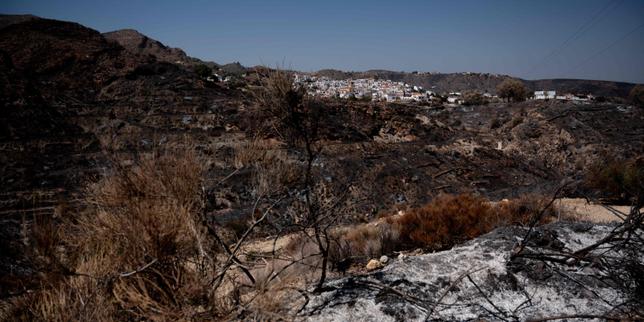
The fatal convergence of high-velocity thermal winds, low fuel moisture, and complex exurban topography near Los Gallardos, Andalusia, has resulted in 13 confirmed fatalities, exposing deep systemic vulnerabilities in rural-urban interface evacuation protocols. Traditional disaster reporting frames wildland fires as unavoidable natural tragedies. A cold forensic analysis of the July 2026 Almería inferno reveals a predictable mechanical failure. The catastrophic breakdown occurred at the intersection of three specific vectors: a severe atmospheric drying event, a decentralized foreign-resident demographic, and the structural failure of regional emergency communication networks.
To prevent future mass-fatality incidents in Mediterranean ecosystems, it is necessary to move past the superficial body-count narrative and dissect the precise systemic factors that transformed a localized ignition into a lethal geographic choke point. You might also find this similar coverage useful: The Man Who Bought the Seventh Fleet.
The Thermal Fluid Dynamics of the Almería Ignition
The Los Gallardos fire, which consumed over 7,000 hectares of scrub and wooded topography, was driven by a classic adiabatic heating mechanism common to the Iberian peninsula’s southeastern coast. When intense continental air masses descend over the Baetic Cordillera toward the Mediterranean, the air compresses and heats rapidly. This generates a localized microclimate characterized by relative humidity levels below 10% and sustained wind gusts exceeding 50 kilometers per hour.
This thermal profile alters the fuel chemistry of the regional flora. The local ecosystem, dominated by Pinus halepensis and pyrophytic Mediterranean scrub (garrigue), reaches a critical ignition threshold where moisture content drops below volatile chemical limits. Under these conditions, the rate of fire spread increases exponentially rather than linearly. As reported in latest reports by Associated Press, the results are widespread.
The fire’s energy output overrode local suppression capabilities within the first 90 minutes of ignition. Spotting—where windborne embers bypass defensive lines to ignite new blazes—occurred up to two kilometers ahead of the main fire front. This behavior effectively converted a linear threat into a multidirectional trap, rendering standard defensive perimeters useless and isolating rural hamlets before heavy aerial water-bombing assets could establish structural protection.
The Geography of the Exurban Trap
The high proportion of international casualties—including British, Belgian, French, and American nationals—highlights a critical vulnerability in modern wildland-urban interfaces (WUI). The affected zone near Los Gallardos and Bédar is characterized by a fragmented settlement pattern. Unlike concentrated urban centers, these areas consist of isolated villas, narrow gravel access routes, and low-density housing integrated directly into volatile fuels.
This spatial layout creates an evacuation bottleneck due to three specific infrastructure limitations:
- Dead-End Topography: Many residential arterial roads in the Almería hills follow ridge lines or canyon bottoms, terminating in single-access cul-de-sacs. When a fast-moving fire front cuts across the primary egress road, residents face complete physical isolation.
- The Velocity Disconnect: The speed of human recognition, decision-making, and vehicle staging operates on a lag of 30 to 45 minutes. When the rate of fire spread exceeds 5 kilometers per hour in steep terrain, the fire outpaces the physical capacity of a vehicle convoy to navigate narrow, winding tracks. Forensic evidence from the scene indicates that multiple victims were caught either on foot or within vehicles when their escape routes hit impassable topographical barriers.
- Fuel Proximity to Structures: The lack of mandatory, enforced defensible space zones around these properties meant that intense radiant heat transfer occurred directly against building envelopes, forcing residents to evacuate into an active fire storm rather than sheltering in place.
The Breakdown of Information Routing
The primary failure point in the Los Gallardos incident was not the speed of the fire, but the failure of the emergency alert transmission loop. Testimony from survivors indicates that no proactive, localized evacuation orders reached residents before the fire front compromised physical escape routes.
[Ignition] ──> [Rapid Fire Spread] ──> [Communication Lag] ──> [Late/No Warning] ──> [Improvised Evacuation] ──> [Topographical Choke Point] ──> [Casualties]
This communication failure stems from an outdated approach to disaster notification. Regional emergency management relied on broadcast alerts and traditional media channels rather than localized, geofenced mobile alerts. For an international demographic, this vulnerability is compounded by language barriers. Standard Spanish-language radio or television broadcasts fail to reach foreign-national retirees and tourists who are not integrated into local media networks.
Furthermore, cellular network infrastructure in rural Andalusia lacks localized redundancy. As the fire front progressed, it destroyed overhead telecommunications lines and overloaded local cellular towers through sudden spikes in data traffic. This created an informational vacuum. Residents, unaware of the fire’s precise trajectory, made ad-hoc evacuation choices. Fleeing downward into valleys where smoke accumulated and wind speeds accelerated proved fatal for those who bypassed safer, cleared high-ground positions.
Forensic Identification and Consular Friction
The post-incident recovery operations managed by Spain’s forensic services data unit (CID) highlight the logistical difficulties of managing multi-national mass casualty events in decentralized jurisdictions. The identification process relies almost entirely on comparative DNA profiling and dental records due to extreme thermal damage to the victims.
This process introduces administrative delays. Gathering reference samples from the home countries of British, Belgian, and French victims requires active coordination across multiple consular offices and international police agencies. The institutional friction of verifying missing persons across open European borders complicates the timeline, leaving families in prolonged uncertainty while local authorities process unverified genetic profiles.
Structural Adjustments for High-Risk Fire Zones
The Los Gallardos disaster shows that standard wildland firefighting strategies are insufficient when applied to unplanned exurban developments. Mitigating this risk requires a shift from reactive suppression to structural engineering and hard geographic mandates.
First, regional governments must implement strict, legally binding zoning laws that mandate a minimum 30-meter cleared fuel break around all structures in wildland-urban interfaces. Property owners who fail to maintain these clearings must face immediate financial penalties or property condemnation, as unmaintained plots put entire valley communities at risk.
Second, the evacuation paradigm must change from optional flight to automated, hard-trigger alerts. Emergency systems must deploy multi-lingual, satellite-backed geofenced SMS notifications that trigger automatically when an active fire crosses specific geographic coordinates. If access roads are compromised, these alerts must explicitly direct residents to designated, hardened survival zones within the community—such as underground concrete structures or cleared heli-pads—instead of permitting ad-hoc vehicle evacuations onto narrow, combustible mountain roads.
The expanding footprint of Mediterranean desertification means that the climatic profiles observed in Almería are becoming the baseline for southern Europe. Without a systematic overhaul of exurban infrastructure and communication routing, the expansion of vulnerable international populations into high-fuel zones will continue to generate predictable, preventable tragedies.