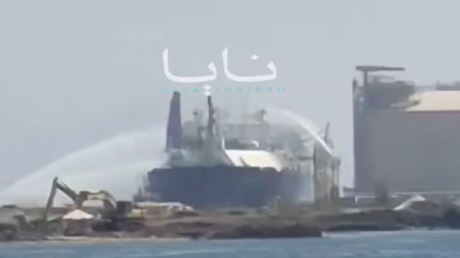
Geopolitical posturing during periods of asymmetric military contact relies on predictable signaling mechanisms, yet the structural mechanics governing retaliatory thresholds are frequently miscalculated by external commentators. When kinetic actions target sovereign or proxy assets—specifically strikes against United States military installations and energy logistics infrastructure—the resulting political rhetoric often centers on binary outcomes of war versus peace. This framing obscures the actual calculus driving state actors. Strategic decision-making in these scenarios operates through a constrained optimization problem where leaders must balance domestic political credibility, international deterrence posture, and the avoidance of unintended horizontal escalation.
Evaluating the architecture of modern retaliatory cycles requires abandoning emotional narratives and examining three core variables: the asymmetric cost function of proxy warfare, the degradation of red-line credibility, and the economic friction introduced by targeting resource supply chains.
The Asymmetric Cost Function of Proxy Warfare
Traditional models of deterrence assume symmetric actors operating within mutually understood parameters of escalation dominance. Modern conflicts involving state-backed non-state actors or targeted regional strikes invalidate this assumption. The aggressor actor typically absorbs low-cost operational friction while imposing high financial and political costs on the defender.
[Aggressor: Low-Cost Asymmetric Action] ---> [High-Friction Defense: Interception, Base Repair, Political Capital]
When military installations or gas tankers experience kinetic disruption, the primary vector of damage is not merely physical asset destruction. The true metric of loss is the expenditure of defensive resources. Intercepting incoming vectors requires deploying high-cost interceptor missiles against low-cost kinetic delivery systems. This creates an unsustainable economic asymmetry.
- Resource Depletion: Defensive missile inventories face finite replenishment rates, whereas cheap projectile production scales linearly with industrial baseline capacity.
- Logistical Friction: Energy infrastructure attacks introduce immediate supply chain shocks, shifting market prices and imposing macroeconomic penalties on global trade partners.
- Deterrence Decay: Failing to respond proportionally signals a tolerance for baseline attrition, effectively lowering the threshold for subsequent attacks.
The Mechanics of Retaliatory Signaling
Political declarations warning that it is "our turn" to strike back function as verbal compensation for previous deterrence failures. In game-theoretic terms, repeated unpunished provocations lead to cheap talk equilibria, where threats lose signaling value because the receiver calculates zero probability of execution.
To restore credibility, a state must alter the payoff matrix of the opposing actor. This requires shifting from a reactive defense model to an offensive deterrence-by-denial and deterrence-by-punishment framework.
The execution of this shift relies on identifying high-value nodes within the adversary's operational network. These nodes are categorized into command infrastructure, financial routing mechanisms, and logistical supply lines. Striking these nodes is not an act of emotional vengeance, but a calculated calibration designed to re-establish the cost of provocation above the utility threshold of the aggressor.
Economic Ripple Effects and Energy Logistics
Targeting gas tankers and energy transit corridors introduces immediate macroeconomic vulnerabilities that extend far beyond regional security dynamics. Energy markets function on forward-looking risk premiums. When kinetic actions threaten maritime choke points or primary extraction hubs, insurance underwriters immediately reprice risk, driving up global shipping and fuel costs.
The mechanism unfolds through distinct phases:
- Immediate Risk Realignment: Spot markets react to physical supply disruptions or perceived threats to transit lanes.
- Insurance Premium Inflation: Maritime transit through high-risk zones incurs exponential increases in hull and cargo insurance rates.
- Consumer Price Transmission: Higher logistics costs cascade into industrial manufacturing and domestic utility pricing, converting localized military friction into generalized inflation.
State actors calculating the utility of a counter-strike must factor these economic externalities into their operational planning. A kinetic response that successfully deters future military attacks but destabilizes global energy markets achieves tactical success while inducing strategic failure.
Operational Execution Parameters
Executing a calibrated response requires strict adherence to proportionality and timing. Delayed responses weaken the cognitive link between the initial provocation and the retributive action, rendering the punishment ineffective as a deterrent tool. Conversely, immediate, unmeasured over-reaction risks triggering an unmanageable cascade of horizontal escalation that pulls secondary regional powers into the conflict matrix.
The operational objective remains precise: re-establishing equilibrium through targeted disruption that exceeds the adversary's expected gains from continued aggression, while maintaining sufficient diplomatic off-ramps to prevent systemic regional war. Decision-makers must prioritize structural leverage over rhetorical escalation, utilizing precise economic and military instruments to force a recalculation in hostile capitals.