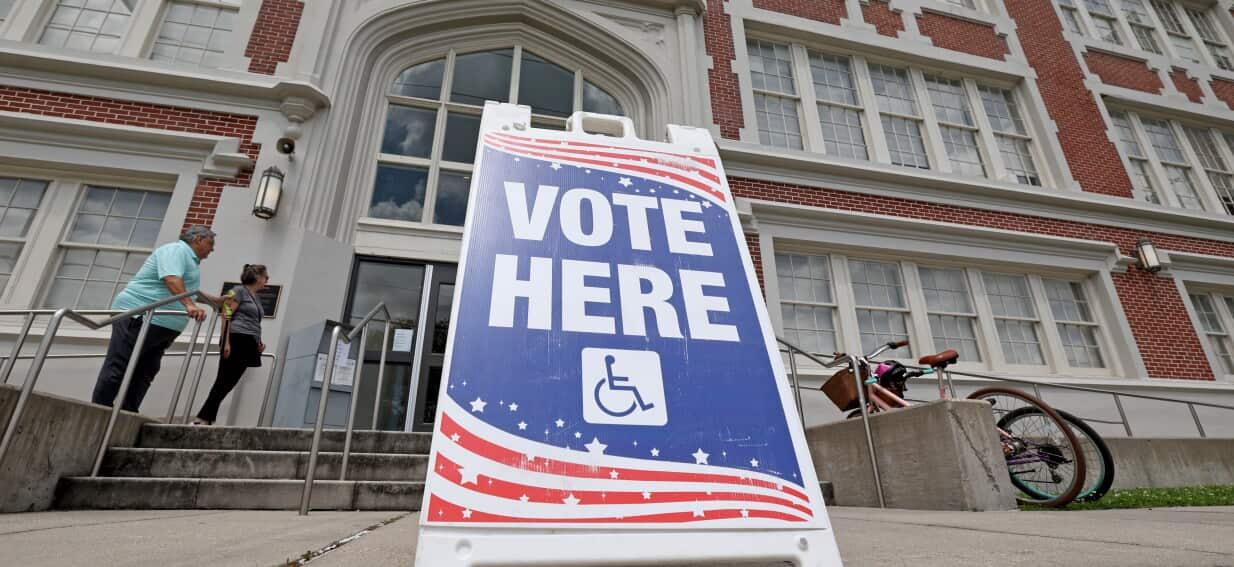
Election night is a media construct rather than a legal deadline, and when a midterm race remains uncalled for weeks, the delay is rarely the product of administrative failure or fraud. Instead, prolonged certification timelines are the predictable output of statutory ballot-processing rules, narrow vote margins, and mandatory post-election verification protocols colliding within specific jurisdictions. Understanding why a single congressional or statewide race drags into late November or December requires mapping the operational bottlenecks of state election law rather than relying on cable news speculation.
The Structural Drivers of Delayed Tabulation
When a race cannot be called on election night, the delay stems from three distinct variables: the volume of non-precinct ballots, the statutory sequence of verification, and the statistical margin between the top two candidates. A race only stalls when high ballot volume intersects with a margin smaller than the pool of uncounted votes. For a more detailed analysis into this area, we recommend: this related article.
1. Statutory Processing Bottlenecks
State legislatures dictate the exact hour election officials may begin opening, verifying, and scanning mail-in and absentee ballots. These rules create two fundamentally different operational models across the United States.
- Pre-Canvass States: Jurisdictions such as Florida and Arizona allow election boards to verify signatures, open envelopes, and feed ballots into tabulators weeks before Election Day. Results are stored digitally and released seconds after polls close.
- Election-Day Canvass States: Jurisdictions such as Pennsylvania and Wisconsin prohibit officials from touching mail-in ballots until the morning of Election Day. When hundreds of thousands of mail ballots arrive in a single county, human labor becomes the primary constraint. Clerks must slice open outer secrecy envelopes, extract inner ballots, flatten creased paper so optical scanners do not jam, and verify voter eligibility one by one.
In a high-turnout midterm cycle, a single urban county processing 300,000 mail ballots under an Election-Day canvass rule faces an insurmountable physical queue. The machines can scan thousands of sheets per hour, but human hands must prepare every sheet before it touches a scanner. For additional context on the matter, detailed reporting can also be found on Reuters.
2. The Postmark Window and Transit Latency
A second variable is the statutory receipt deadline for mail ballots. While many states require ballots to arrive by the close of polls on Election Day, roughly twenty states—including California, Washington, New York, and Illinois—accept ballots that are postmarked on or before Election Day, provided they arrive within a specific grace period.
These grace periods range from three days to over two weeks. In California, county registrars must wait seven days for domestic mail ballots postmarked on Election Day to clear the United States Postal Service network. Military and overseas ballots covered by the Uniformed and Overseas Citizens Absentee Voting Act (UOCAVA) carry even longer transit windows, often extending ten to fourteen days past the election.
Decision desks at major news networks operate on strict statistical certainty thresholds. A network will not project a winner if the remaining pool of uncounted ballots—combined with the theoretical maximum of ballots still in transit—exceeds the leading candidate's margin. If Candidate A leads by 4,000 votes, and 15,000 ballots remain in postmark transit or curing queues, the race remains mathematically uncallable regardless of historical precinct trends.
The Three-Stage Verification Pipeline
Once polls close, election administration shifts from ballot collection to forensic auditing. A delayed race is usually stuck in one of three sequential queues that cannot be rushed without violating state law.
Stage One: Signature Verification and Ballot Curing
Every mail-in ballot requires a voter signature on the outer envelope. Election workers—often working in bipartisan pairs or utilizing automated signature-recognition software backed by human review—compare the envelope signature against the voter's registration file.
Discrepancies trigger a "cure" process. Signatures change over time due to age, injury, or hurried writing on a tablet screen at the Department of Motor Vehicles. Rather than immediately discarding a mismatched ballot, many states notify the voter via mail, phone, or email, granting them a statutory window—often five to eight days post-election—to submit an affidavit and identification confirming their identity. Until that cure deadline expires, the final vote total remains fluid.
Stage Two: Provisional Ballot Adjudication
Provisional ballots act as a fail-safe mechanism under the Help America Vote Act of 2002. When a voter arrives at a polling place and their eligibility is in question—for example, they requested a mail ballot they never returned, moved precincts without updating their registration, or lacked required identification—they cast a provisional ballot.
Unlike standard ballots, provisional ballots are sealed in special envelopes and set aside. Election boards cannot count them until the entire statewide voter registration database is updated with check-in logs from every precinct. Officials must verify that the voter did not cast a ballot elsewhere in the state before opening the provisional envelope. This cross-referencing cannot begin until the days following the election, adding another mandatory layer of latency to tight races.
Stage Three: Duplication of Damaged Ballots
Optical scan tabulators require pristine paper. Ballots damaged in transit, stained with coffee, torn during envelope extraction, or marked with pens that bleed through the paper cannot pass through high-speed scanners.
To record the voter's intent, bipartisan adjudication teams must manually inspect the damaged ballot and transcribe the exact selections onto a fresh, blank ballot. Both the original damaged ballot and the duplicate are assigned matching serial numbers for audit trails. In races with hundreds of thousands of mail ballots, even a 1% damage rate creates thousands of ballots requiring manual two-person transcription.
The Mathematical Thresholds of Recounts and Runoffs
Even after every valid ballot is adjudicated and scanned, two legal mechanisms can extend the timeline by another month: mandatory recounts and runoff elections.
Automatic Recount Triggers
Most states mandate an automatic, taxpayer-funded recount when the margin between the top two candidates falls below a specific percentage, typically 0.5% or 0.25% of total votes cast.
- Machine Retabulation: Officials re-feed all paper ballots through calibrated optical scanners to verify the initial electronic tally.
- Full Hand Recount: If the margin is microscopic—often below 0.1%—or if a candidate posts a bond to fund a manual review, bipartisan teams physically inspect and tally every ballot by hand.
A district-wide hand recount of 300,000 congressional ballots requires weeks of logistics, secure facility monitoring, and legal observation by party attorneys. During this period, the race remains officially unsettled, and the incoming member of Congress cannot be certified by the state's Secretary of State.
Top-Two and Majority-Vote Runoffs
In jurisdictions requiring a candidate to clear an absolute majority (50% plus one vote) to win outright—such as Georgia or Louisiana—the presence of a third-party candidate drawing just 2% of the vote can prevent a winner from emerging in November.
When no candidate crosses the 50% threshold, state law triggers a runoff election four to nine weeks later. Similarly, states utilizing nonpartisan top-two primaries or ranked-choice voting (such as Alaska and Maine) require complete tabulation of every last mail and provisional ballot before executing instant-runoff elimination rounds. You cannot eliminate the third-place candidate and redistribute their second-choice votes until 100% of valid first-choice ballots are in the system.
Operational Limitations of Speed-Focused Reforms
Critics frequently point to countries that tabulate national elections in a single evening as proof that American delays are avoidable. That comparison ignores fundamental structural differences in ballot design and administrative decentralization.
European parliamentary elections typically involve a single, uniform ballot paper with one mark for a party list, administered by a centralized national ministry. By contrast, a single American midterm ballot in a major metropolitan county is a multi-page legal document containing federal races, state legislative seats, judicial retention questions, municipal bonds, and local school board elections. A single county may print hundreds of distinct ballot styles to accommodate overlapping precinct boundaries.
Forcing rapid election-night results onto a decentralized system requires trade-offs that directly undermine ballot security or voter access:
- Eliminating Postmark Grace Periods: Requiring all ballots to arrive by 7:00 PM on Election Day speeds up counting, but disenfranchises voters whose timely mailed ballots are delayed by postal logistics.
- Restricting Ballot Curing: Cutting the window for voters to fix signature discrepancies accelerates certification, but increases the rejection rate of legitimate ballots, disproportionately affecting young voters and elderly citizens whose signatures fluctuate.
- Expanding Pre-Canvassing: Allowing counties to open and scan mail ballots two weeks prior to Election Day is the only reform that increases speed without reducing voter access. However, this requires strict statutory gag rules to prevent premature leaks of partial vote totals before polls close, alongside increased staffing budgets for county election offices.
Strategic Framework for Tracking Uncalled Races
Observers, campaign operatives, and analysts monitoring a protracted midterm race should ignore raw vote-margin fluctuations and instead track three specific operational metrics released by county registrars:
- The Remaining Ballot Denominator: Obtain the exact count of unprocessed mail ballots, provisional ballots, and un-cured signature envelopes reported daily by each county in the district.
- Geographic and Methodological Composition: Determine whether the remaining uncounted pool consists of late-arriving mail ballots (which historically skew toward specific demographics depending on the state) or Election-Day drop-box ballots (which often mirror in-person partisan splits).
- The Required Win Share: Calculate the exact percentage of the remaining uncounted pool the trailing candidate must win to overtake the leader. If Candidate B trails by 5,000 votes and 20,000 ballots remain, Candidate B needs 12,501 of those votes—a 62.5% share. Comparing that required share against the historical partisan performance of the specific counties holding the uncounted ballots reveals whether the race is genuinely competitive or merely awaiting formal administrative closure.