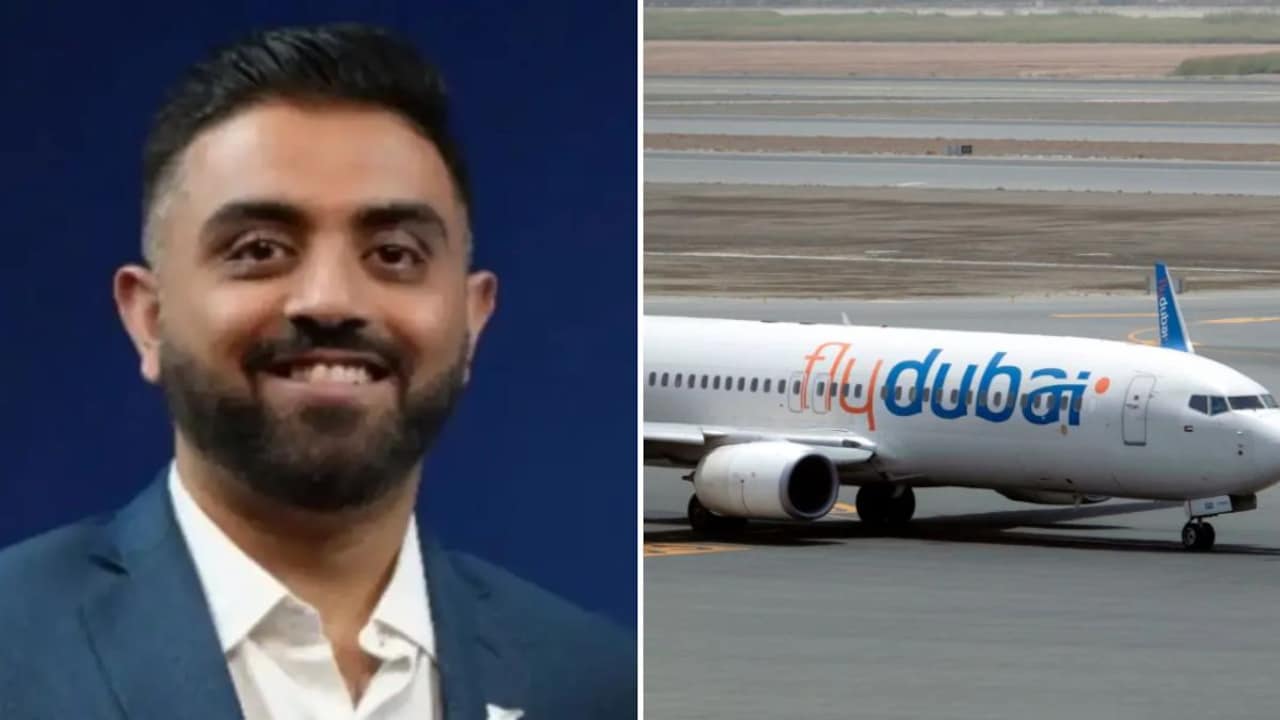
Commercial aviation security relies on a deeply entrenched defense-in-depth model that assumes mutual trust, rigorous psychological vetting, and physical barriers at the flight deck boundary. When that trust vector fails from within, the systemic vulnerabilities of the closed-cockpit era become starkly apparent. The incident aboard flydubai Flight 1073, involving an active physical assault by a co-pilot against Captain Smit Machchhar, provides a critical case study in internal threat vectors, the physics of rapid decompression and flight path destabilization, and the reliance on distributed human intervention when automated failsafes are bypassed.
The Threat Vector: Internal Actor Disruption
Traditional aviation security architectures, codified heavily after structural regulatory shifts in the early 2000s, were engineered to mitigate external threats—specifically, unauthorized non-crew boarding. Hardened flight deck doors, electronic locking mechanisms, and video monitoring systems were designed with a binary assumption: the cabin is a hostile variable, while the flight deck is a secure sanctuary.
An insider threat subverts this architecture entirely. When an attacking pilot initiates physical violence from within the flight deck, the security paradigm inverts:
- The Perimeter Paradox: The locked door, designed to keep intruders out, temporarily keeps external assistance locked away, creating a high-friction delay for off-roster flight crew or passengers attempting to intervene.
- Asymmetric Positioning: The attacker possesses equal systems knowledge, physical access to flight controls, and operational familiarity with emergency transponder protocols.
- The Cognitive Shock: Crew resource management (CRM) training trains personnel for procedural errors, environmental hazards, and mechanical failures, not sudden kinetic violence from a trusted peer.
The Mechanics of In-Flight Destabilization
During the confrontation on Flight 1073, public flight tracking and subsequent operational reports highlighted an abrupt altitude deviation—plunging thousands of feet in seconds—accompanied by emergency transponder code transitions (notably switching to general emergency 7700 and hijack code 7500).
The physical reality of a cockpit struggle at cruising altitude introduces immediate operational hazards:
- Control Column Interference: Unintentional or deliberate deflection of the control yoke or side-stick during a physical altercation disrupts the autopilot engagement envelope, triggering immediate attitude drops or structural G-force loads.
- Altitude Loss Dynamics: Modern commercial transports like the Boeing 737 respond rapidly to pitch inputs. A compromised flight deck environment risks exceeding operational flight load limits before stabilizing systems can engage.
- Communication Bottlenecks: While flight management computers log anomalies, the immediate priority shifts from ATC communication to physical compartmentalization and aircraft recovery.
Human Factors and Distributed Intervention
When automated flight deck security measures create a physical barrier to rescue, mitigation relies on secondary human assets. The successful recovery of Flight 1073 depended on a sequential breakdown of resistance:
- Defensive Kinetic Resistance: Captain Machchhar's immediate response—shielding vital areas from blunt force trauma while maintaining tactile awareness of the door release mechanism—prevented total incapacitation.
- Decentralized Crew Resource Management: Off-roster flight crew members and trained passengers traveling as occupants serve as an unpredicted redundancy layer. Their ability to breach the physical barrier under high-stress, high-G conditions bridges the gap when primary crew controls are compromised.
- Physiological Recovery Under Duress: Severe trauma and acute blood loss induce cognitive tunneling. The ability to retain situational awareness despite physical injury dictates whether an aircraft transitions from a controlled descent to a catastrophic outcome.
Systemic Implications for Regulatory Frameworks
The event forces a re-examination of global aviation protocols regarding cockpit occupancy rules. Current regulations mandate that two authorized personnel remain on the flight deck at all times, requiring a cabin crew member to step inside if a pilot exits. However, this rule assumes the threat originates outside.
To harden commercial aviation against internal kinetic disruption, safety management systems must evaluate:
- Enhanced Psychological Monitoring: Moving beyond static pre-employment evaluations toward continuous behavioral monitoring and peer-reporting frameworks that detect radicalization or acute psychological degradation.
- Access Control Overrides: Investigating secure, multi-factor emergency override mechanisms that allow trusted cabin personnel or remote ground-based operational control to intervene during verified cockpit incapacitation events without compromising standard anti-hijacking protections.
- Physical Layout Modifications: Assessing whether flight deck interior geometries can be modified to prevent a single individual from completely dominating physical access to flight controls and egress paths during a localized confrontation.
The margin between disaster and survival in modern aviation increasingly depends not just on engineered hardware, but on the capacity of human operators to improvise tactical defenses when institutional safeguards are breached from within.
Flydubai pilot, attacked by co-pilot mid-flight, hailed as a hero
This video provides an overview of the incident involving the flydubai flight and the heroic response of the crew.