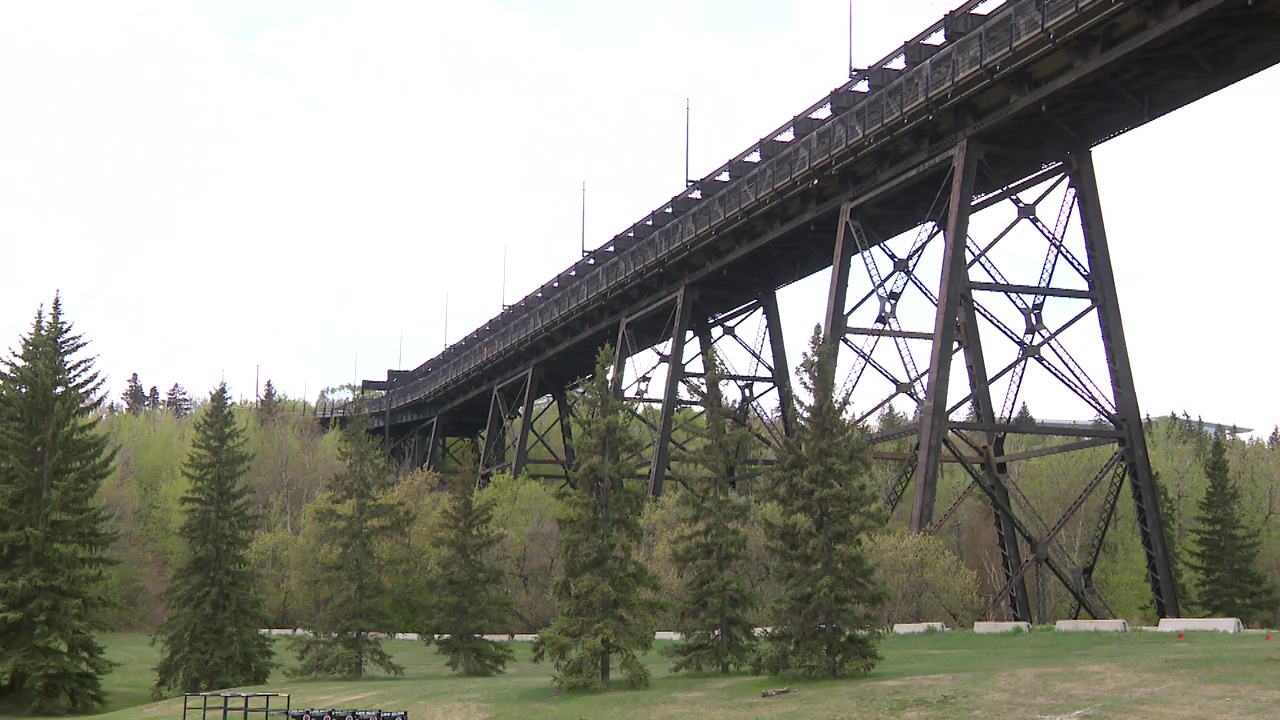
Municipal infrastructure management invariably collides with the reality of asset lifecycle limits. In Edmonton, Alberta, this threshold has been reached for two primary arterial links over the North Saskatchewan River: the High Level Bridge and the Low Level Bridges. A newly released municipal administration report establishes a definitive strategic pivot: the wholesale decommissioning and replacement of these century-old structures. This decision replaces the historical policy of periodic rehabilitation with an asset-replacement framework driven by escalating structural risk, exponential maintenance cost curves, and modern logistical demands.
To understand the mechanics of this shift, one must look past the sentimental value of these landmarks and evaluate the cold engineering and financial realities. The municipality manages an inventory of approximately 300 bridges. Applying long-term capital to assets that have structurally outlived their intended design life creates an unsustainable fiscal bottleneck.
The Economics of Structural Lifecycle Limits
Civil engineering standards baseline the structural life expectancy of modern municipal bridges at 75 to 100 years. The assets in question have significantly exceeded these theoretical constraints.
- The Low Level Northbound Bridge: Built in 1900 (126 years of operational service).
- The High Level Bridge: Built between 1910 and 1913 (113 years of operational service).
- The Low Level Southbound Bridge: Built in 1949 (77 years of operational service).
When an asset operates on borrowed time, its financial performance is governed by a punishing cost function. In the early stages of an infrastructure lifecycle, maintenance costs are predictable and minor. As structural fatigue accumulates, the frequency and capital intensity of interventions scale non-linearly.
The City of Edmonton’s updated engineering analysis reveals that a complete, long-term rehabilitation of the High Level Bridge to extend its operational capability for another 75 years would demand a capital expenditure exceeding $1 billion.
$$C_{\text{total}} = C_{\text{rehab}} + C_{\text{disruption}} + C_{\text{recurring_maintenance}}$$
When the cost of rehabilitation ($C_{\text{rehab}}$) approaches or eclipses the capital cost of building a modern, clear-span replacement, the asset has reached terminal economic obsolescence. Municipal administration directly concluded that continuing down the rehabilitation path represents a high-risk, fiscally irresponsible strategy. Major interventions would be required every 20 to 25 years, with each subsequent cycle yielding diminishing returns at a higher risk profile.
Technical Mechanisms Driving the Replacement Decision
The decision to decommission rather than repair is rooted in material degradation and functional misalignment with modern urban requirements.
Structural Fatigue and Material Loss
Decades of exposure to extreme thermal cycles, moisture, and de-icing chemicals have caused compounding micro-structural damage. Visual and technical inspections executed by city engineers highlight significant areas of material loss on critical cross members, structural steel truss elements, girders, and beams. While short-term stabilization and patch-repair cycles keep the crossings safe for immediate public use, they cannot reverse systemic metallurgical fatigue.
Geometric and Load Constraints
The High Level Bridge was originally engineered by the Canadian Pacific Railway for early 20th-century rail configurations and vastly lighter, smaller automotive profiles. Today, its lower deck accommodates two narrow lanes of southbound vehicular traffic flanked by restrictive shared pathways. The physical geometry introduces two operational bottlenecks:
- Vertical Clearance Limitations: The low overhead clearance results in frequent, highly disruptive impacts from over-height commercial trucks. These incidents compromise traffic flow and inject unplanned structural stress into the bridge frame.
- Load Limitations: The bridge can no longer sustain modern mass transit rail loads in active revenue service. This constraint effectively invalidates the structure as a viable corridor for expanding modern light rail transit (LRT) or high-speed rail links without prohibitive modification costs.
The Two-Decade Phased Master Plan
Removing these crossings without immediate mitigation would paralyze central commuter corridors, choke public transit routes, and severely restrict local commercial goods movement. To prevent gridlock, the city’s engineering report outlines a highly strategic, staggered, two-decade implementation plan. The blueprint ensures that replacement structures are fully constructed and operational before the legacy assets are taken offline.
Phase 1: The Low Level Bridge Matrix (2026–2030)
The Low Level crossings present a asymmetric problem. The older northbound bridge (1900) possesses a higher baseline structural resilience because it was over-engineered for heavy freight trains. The younger southbound bridge (1949) lacks this industrial reserve capacity and is deteriorating more rapidly.
- Interim Stabilization: Capital repairs on the southbound span concluded in late 2025, using sub-scaffolding, mechanical cleaning of truss corrosion, and targeted steel reinforcement. The northbound span will undergo a parallel, targeted rehabilitation starting in 2027 to stabilize it for the medium term.
- Capital Execution: Detailed design work for a new, multi-modal Low Level replacement bridge is scheduled to initiate immediately. The city aims to complete construction and bring the new crossing online by 2030.
- Decommissioning Protocol: Once the new bridge accepts traffic, vehicular patterns will shift permanently. The southbound structure will face total demolition. The historically designated northbound bridge will be legally protected from automotive stress and either repurposed exclusively for active pedestrian and bicycle networks or demolished, subject to future council ratification.
Phase 2: The High Level Bridge Matrix (2027–2039)
The High Level Bridge demands a longer runway due to its immense scale, municipal historic designation, and position within the city's skyline.
- Life Extension Window (2027–2030): The city will deploy short-term capital rehabilitation to guarantee the bridge remains safe and functional over the next decade. This prevents premature closure while engineering designs materialize.
- The Replacement Runway (2031–2039): Capital funding and planning for the new High Level crossing will run from 2031 to 2034, with heavy construction slated between 2035 and 2039.
- Regulatory Hurdles: Because the structure is a protected Municipal Historic Resource, Edmonton City Council must execute a formal legislative repeal of its heritage designation before any decommissioning or removal operations can legally advance.
Comparative Matrix: Legacy Restraints vs. Modern Standards
| Parameter | Legacy Infrastructure (High/Low Level) | Modern Replacement Standards |
|---|---|---|
| Design Life Horizon | Past terminal limit (100+ years) | 75 to 100 years (optimized materials) |
| Geometric Clearance | Highly restrictive; prone to truck impacts | Unconstrained vertical clearances matching modern logistics |
| Multi-Modal Capacity | Narrow, segregated paths; low active transport utility | Integrated, wide-span shared pathways for pedestrians and cyclists |
| Transit Adaptability | Incapable of supporting modern revenue rail | Engineered to support heavy multi-modal loads (Bus Rapid Transit/LRT) |
| Maintenance Risk Curve | Exponential cost increases; frequent partial closures | Predictable, minimized operational expenditure via clear-span engineering |
Strategic Play for Municipal Administration
Edmonton’s administration must treat this infrastructure transition not merely as a civil works challenge, but as a complex asset-portfolio optimization problem. Moving forward, the city council and engineering leadership must execute on three rigid operational directives.
First, lock in a ring-fenced capital allocation model for the 2027–2030 budget cycle specifically for the Low Level Bridge design phase. Staggering these mega-projects prevents simultaneous strain on provincial and municipal funding pools.
Second, immediately mandate that all preliminary design parameters for the High Level replacement crossing incorporate future-proof load ratings capable of carrying heavy inter-urban rail or light rail transit extensions. Building a simple vehicular bridge would repeat the short-sighted geometric errors of the past.
Third, proactively launch the legislative process to address the municipal historic designation of the High Level Bridge. Delays in repealing or modifying heritage bylaws will inevitably generate bureaucratic bottlenecks, dragging out construction timelines, compounding structural risk, and driving up interim maintenance costs on a dying asset.