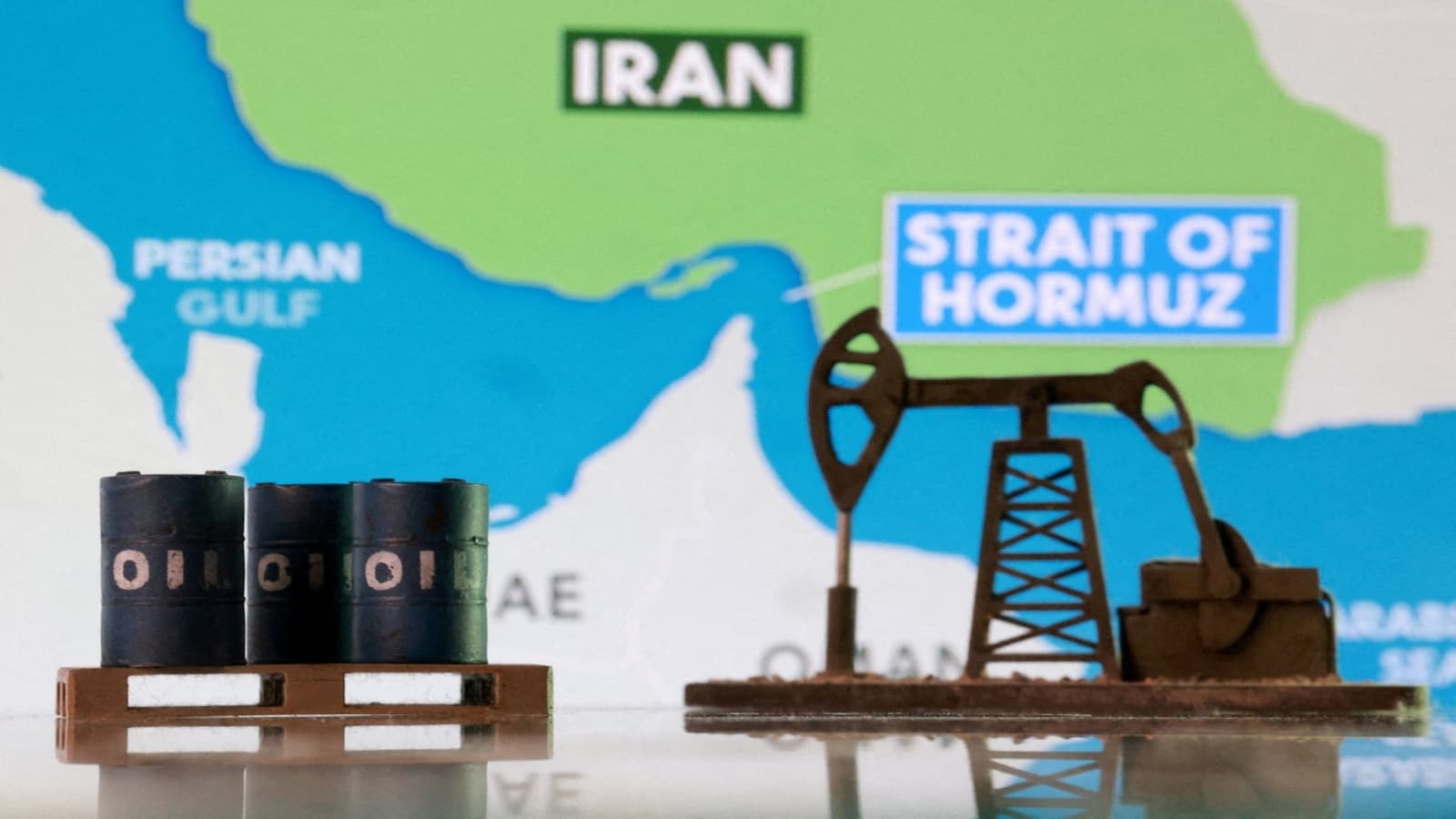
Commercial maritime operations within the Strait of Hormuz have reached a critical inflection point where baseline operational safety can no longer be guaranteed by standard maritime conventions. Following kinetic missile strikes attributed to Iran that damaged a Qatari liquefied natural gas (LNG) vessel and a Saudi-flagged crude carrier, maritime authorities upgraded the regional threat risk to severe. This systemic escalation has fundamentally shifted the risk-reward calculus for commercial fleet operators, triggering immediate course reversals for at least four major energy tankers—including three empty QatarEnergy LNG carriers and the Indian-flagged Very Large Crude Carrier (VLCC) Lila Vadinar, laden with 2 million barrels of Kuwaiti crude.
This dynamic is not merely an isolated security incident. It represents a structural bottleneck that alters global energy logistics, insurance underwriting math, and sovereign industrial supply chains. Understanding this disruption requires isolating the mechanical, financial, and logistical variables governing energy transit through the world's most critical maritime chokepoint.
The Microeconomics of Fleet Diversion: The Inbound vs. Outbound Cost Function
The decision to abort a transit sequence through the Strait of Hormuz is governed by two distinct operational equations, depending on whether a vessel is in ballast (empty, inbound) or laden (full, outbound).
For inbound ballast vessels, such as the QatarEnergy LNG carriers Al Ghariya, Duhail, and Al Ruwais, the primary risk is structural asset exposure relative to future contract fulfillment. The cost of idling a vessel outside the risk zone or rerouting it around the Cape of Good Hope is weighed against the probability of hull breach, total loss of vessel value, and the immediate voiding of hull and machinery (H&M) insurance policies. By remaining stationary or shifting toward safe anchorages in the Gulf of Oman or the Malacca Strait, fleet managers protect the physical asset, though they introduce severe delays into the liquefaction and loading cycles at terminals like Ras Laffan.
For laden outbound vessels, the cost function shifts aggressively toward capital preservation and time-value of cargo. The Indian-flagged Lila Vadinar executing a U-turn off the coast of Oman while holding 2 million barrels of Kuwaiti crude demonstrates the extreme threshold of this risk.
Total Laden Risk = Value of Cargo + Hull Replacement Value + War Risk Premium Surcharge
When maritime authorities declare a "severe" threat environment, the War Risk Premium—typically calculated as a percentage of the total hull and cargo value for a single transit window—can spike by several hundred percent within hours. For a VLCC carrying cargo valued at approximately $150 million to $180 million, the insurance surcharge alone can eclipse the operating margin of the voyage. If an underwriter refuses to cover the transit, the shipowner is legally and financially obligated to abort the run.
Structural Bottlenecks and Ballast Accumulation
The immediate logistical fallout of these course reversals is an asymmetrical accumulation of idle tonnage outside the chokepoint. The mechanism of this bottleneck functions through three cascading stages:
- Terminal Starvation: Export hubs inside the Persian Gulf, notably Qatar’s Ras Laffan and the UAE’s Das Island, rely on a continuous, tightly sequenced arrival of ballast vessels to clear inventory from shore tanks. When empty ships halt transit, shore-side storage capacity fills rapidly. If storage limits are reached, upstream production fields must throttle or halt extraction entirely.
- The Queue Build-Up: Analytics indicate that the ballast queue outside Ras Laffan has surpassed 10 ships in early July 2026, with more than 50 regional ballast vessels currently floating in holding patterns across the Middle East Gulf, India, and the Malacca Strait. To mitigate targeted risk, multiple operators have disabled their Automatic Identification System (AIS) transponders for periods exceeding 10 days, intentionally reducing visibility to avoid satellite and drone tracking.
- Macro-Volume Deficits: While isolated laden vessels such as the Mercury Hope, Tenjun, and Pertamina Pride managed to slip out of the strait by running dark or utilizing legacy transit windows, the aggregate outflow is severely depressed. Since the broader escalation began in late February, only 16 LNG cargoes from Ras Laffan and 10 from Das Island have cleared the strait. This volume represents a mere fraction of the historical 7 million metric tons monthly baseline average typically delivered by these export hubs.
Industrial Strain and Supply Chain Vulnerabilities
The geopolitical reality of the Strait of Hormuz is that its closure or severe impairment does not impact global markets equally. It targets specific importing economies with high structural dependencies on Persian Gulf energy lifelines. India represents the primary example of this vulnerability.
Prior to the current theater of conflict, India’s industrial infrastructure relied on the Strait of Hormuz for 40% of its crude oil imports, 60% of its LNG shipments, and 90% of its liquefied petroleum gas (LPG) inflows. The sudden closure of this transit corridor creates an immediate domestic supply deficit. The strategic response from Indian industrial actors highlights the severity of the bottleneck: Mangalore Refinery and Petrochemicals Ltd unilaterally cancelled a vessel charter contracted to load Iraqi crude.
This cancellation indicates that refiners are choosing to swallow contract penalties and supply shortfalls rather than absorb the compounding costs of uninsurable voyages or extreme transit delays.
Institutional Limitations of Maritime Security
The current crisis exposes the limits of international maritime defense frameworks. Standard naval escorts and convoy systems are designed to counter asymmetric piratical threats or low-intensity surface craft interventions. They are fundamentally unequipped to guarantee total security for sprawling commercial tankers against land-based ballistic missiles, anti-ship cruise missiles, and loitering munitions launched from deep within sovereign territory.
Furthermore, commercial ship operators face a severe legal and operational constraint: the spatial limitations of the Strait of Hormuz itself. The shipping lanes consist of a two-mile-wide inbound channel, a two-mile-wide outbound channel, and a two-mile separation zone. This narrow geometry strips large tankers of their tactical maneuvering space, transforming a 300-meter VLCC into a slow-moving, predictable target.
Given these spatial and military constraints, the global energy trade cannot rely on a rapid military resolution to stabilize transit economics. Instead, market participants must pivot toward systemic reallocation. Fleet managers should prepare for extended holding patterns outside the Gulf of Oman, factor in permanent 14-to-20-day transit extensions for alternative routing via the Cape of Good Hope, and aggressively diversify sourcing toward West African, North Sea, and US Gulf Coast energy alternatives to bypass the Hormuz chokepoint entirely.