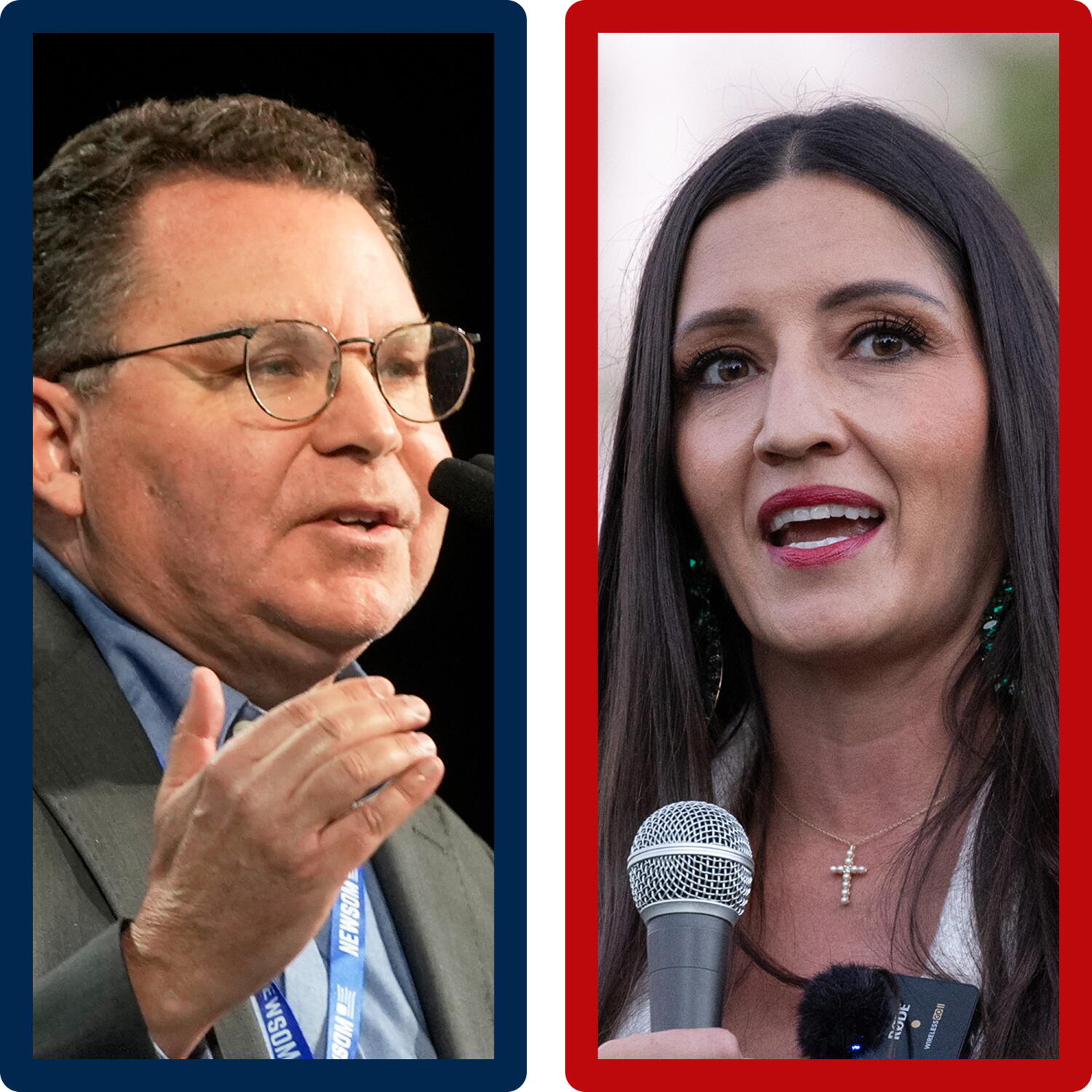
The 2026 California Superintendent of Public Instruction contest between San Diego Unified board president Richard Barrera and Chino Valley Unified board president Sonja Shaw was decided not by the ideological friction that dominated local headlines, but by an asymmetric collision of institutional capital, statutory restructuring, and top-two primary math. While standard election night coverage framed early returns as a simple horse race between a labor-aligned Democrat and a culture-war Republican, treating this contest through the lens of traditional electoral journalism misses the underlying mechanics. The race functioned as a case study in how institutional machinery neutralizes high-salience grassroots mobilization when an executive office is simultaneously stripped of its statutory authority.
To understand why Barrera established an immediate command in early November returns—eventually scaling to a roughly 18-point margin—analysts must separate the surface narrative from the operational variables that actually governed the electorate.
The Structural Realignment of a Nonpartisan Office
Historically, the California Superintendent of Public Instruction race operated as an intra-party proxy war. Because the office is constitutionally nonpartisan—meaning no party affiliation appears beside candidate names on the ballot—previous general elections frequently pitted two Democrats against one another, with battle lines drawn between traditional teachers unions and charter school advocates.
In the 2026 cycle, that historical equilibrium collapsed due to two structural shifts:
- The Plateau of Charter Expansion: Charter school enrollment growth flattened across California, leaving both district-run and charter-operated schools facing identical macroeconomic headwinds: declining overall enrollment, post-pandemic learning deficits, and state budget contractions. Without an existential regulatory fight over charter authorization, the donor coalition that previously funded moderate Democratic challengers largely exited the field.
- Primary Vote Splitting: In the June 2026 top-two primary, multiple Democratic state lawmakers entered the contest, fracturing the center-left electorate. Shaw, consolidating conservative voters around parental-rights and anti-LGBTQ school board policies, emerged as the top primary vote-getter with nearly 25 percent of the early count, while Barrera finished second at nearly 20 percent.
Standard political reporting treated Shaw's primary plurality as proof of statewide momentum. That interpretation ignored the denominator problem. A 25 percent ceiling in a fractured primary does not scale linearly in a binary general election within a state where registered Democrats outnumber Republicans by a wide margin. Once the Democratic field consolidated behind Barrera following the primary—signaled immediately by concessions and endorsements from rival Democrats like former Assembly Speaker Anthony Rendon—the race reverted to partisan fundamentals despite the absence of party labels on the ballot.
The Capital Asymmetry Framework
Election night early returns do not materialize organically; they are the downstream output of pre-election capital deployment, specifically targeting vote-by-mail ballots cast weeks before Election Day. Comparing direct candidate fundraising alone creates a distorted view of the financial battlefield.
- Direct Candidate Receipts: Barrera's campaign committee raised approximately $812,000, compared to Shaw's $595,000. On paper, this represents a manageable 1.36-to-1 financial advantage for the eventual winner.
- Independent Expenditure Deployment: The decisive variable was off-balance-sheet institutional spending. The California Teachers Association (CTA) deployed $8.4 million in independent expenditures to support Barrera.
When independent union expenditures are factored into the total capital equation, the resource ratio shifts from a competitive 1.36-to-1 margin to an overwhelming 15.4-to-1 imbalance. In a statewide electorate exceeding 11 million cast ballots, candidate-controlled funds barely cover basic compliance, staff overhead, and digital micro-targeting. Reaching low-propensity voters in a down-ballot, nonpartisan race requires institutional distribution networks—specifically mailers, slate cards, and union member-to-member outreach—that only multi-million-dollar independent expenditure committees can finance.
Shaw acknowledged this operational reality in her concession statement, noting her campaign lacked the "money or machinery" of her opponent. However, framing this purely as a financial deficit overlooks the strategic trade-off inherent in her campaign model. Shaw relied on earned media generated by high-conflict school board governance in Chino Valley. Earned media maximizes name recognition among highly engaged ideological voters at near-zero marginal cost, which is an optimal strategy for winning a low-turnout primary. In a high-turnout general election, earned media hits diminishing returns rapidly because swing and low-information voters rely on trusted institutional cues—such as union-backed voter guides—rather than daily political news cycles to navigate nonpartisan down-ballot contests.
The Governance Paradox Diminishing Executive Scope
The most critical analytical omission in routine race coverage is the mismatch between the intensity of the campaign and the shrinking statutory authority of the prize itself.
Prior to the November election, Governor Gavin Newsom signed legislation that fundamentally overhauled California's K-12 education governance structure. Under the restructured framework:
- Operational Control Transfers to an Appointee: Management of the California Department of Education—which oversees transitional kindergarten through 12th grade—shifts from the elected superintendent to a newly created, governor-appointed education commissioner.
- Policy Authority Concentrates in the Board: Primary regulatory and decision-making power resides with the 11-member State Board of Education, also appointed by the governor, aligning California with the governance models used by the majority of other states.
- The Superintendent Becomes a Bully Pulpit: Stripped of direct administrative control over the state agency, the elected superintendent's surviving statutory powers consist primarily of policy advocacy and ex-officio seats as a California State University trustee and a University of California regent.
This legislative restructuring created an acute strategic paradox for both candidates. Both Barrera and Shaw publicly opposed the governance overhaul during the campaign, arguing it disenfranchised voters and concentrated excessive power in the governor's office. Yet the campaigns continued to litigate local district culture wars—such as bathroom policies, curriculum controversies, and parent notification rules—as if the incoming superintendent would hold unilateral regulatory power to enforce or overturn those local board decisions.
In operational terms, voters were electing a chief advocate and higher-education board member rather than a chief executive officer of K-12 schools. For Barrera, this diminished scope actually lowers execution risk. Without direct administrative responsibility for a sprawling state bureaucracy struggling with declining enrollment and fiscal constraints, the office allows him to operate as a high-visibility ally to labor unions and local school boards without bearing direct operational blame for statewide standardized test score stagnation.
Mechanics of Early Returns and Vote-by-Mail Sequencing
Understanding why Barrera held an immediate, insurmountable lead in early returns requires examining California's ballot processing sequence rather than assuming uniform voter behavior across Election Day.
California conducts universal vote-by-mail elections, mailing ballots to every active registered voter weeks before Election Day. County election officials process and verify mail ballots upon receipt, allowing them to release massive batches of tabulated vote-by-mail returns immediately after polls close at 8:00 PM.
Three distinct behavioral mechanisms govern these early batches:
- Institutional Cueing on Down-Ballot Races: When voters fill out mail ballots at home, they frequently cross-reference party endorsements, slate mailers, and union voter guides to make decisions on nonpartisan offices. Because the CTA's $8.4 million expenditure saturated mail households with clear partisan and labor cues linking Barrera to mainstream Democratic priorities, early mail voters broke heavily in his favor before Election Day.
- Partisan Turnout Timing: Across recent California election cycles, registered Democrats have consistently returned mail ballots earlier in the voting window than Republicans, who disproportionately favor in-person voting or late drop-offs on Election Day. Consequently, the initial 8:00 PM reporting tranche skews toward early-returning mail ballots, locking in structural leads for candidates backed by organized labor and Democratic infrastructure.
- Ballot Drop-Off Dynamics: In statewide elections, a measurable percentage of voters cast ballots for top-of-ticket races like governor—where Democrat Xavier Becerra defeated Republican Steve Hilton by roughly 31 points—but leave nonpartisan down-ballot races blank. Barrera captured approximately 6.6 million votes compared to Becerra's wider statewide total, while Shaw captured roughly 4.6 million votes. The stability of Barrera's 59 percent to 41 percent share from early returns through final county tallies demonstrates that late-counted Election Day ballots mirrored the broader statewide partisan baseline rather than producing a late conservative surge.
Strategic Limitations of the Winning Coalition
While the 18-point victory validates the effectiveness of concentrated union expenditure in a nonpartisan race, relying on this playbook carries structural vulnerabilities for future statewide cycles and for Barrera's tenure.
First, spending $8.4 million on an office stripped of direct department management yields a declining return on political capital. Organized labor secured a friendly voice on the UC Board of Regents and CSU Board of Trustees, alongside a prominent statewide platform, but actual budgetary and regulatory leverage now sits with the incoming governor's appointed education commissioner and State Board of Education. Union leadership will have to expend separate lobbying capital to influence those gubernatorial appointees, meaning the superintendent investment buys messaging alignment rather than administrative control.
Second, the partisan polarization of a nonpartisan race creates long-term friction for local governance. By turning the superintendent contest into a binary referendum on nationalized cultural issues, both sides accelerated the nationalization of local school board elections. Notably, while Shaw lost statewide by 18 points, her husband Chris Shaw also trailed by 11 points in his bid for her open Chino Valley Unified school board seat, signaling that hyper-polarized branding carries localized backlash risks even in conservative-leaning districts.
The Next Operational Play for Education Stakeholders
For education policy strategists, district administrators, and advocacy organizations operating in California, the 2026 election results require an immediate reallocation of lobbying and engagement resources:
- Shift Influence Budgets Away from the Superintendent's Office: Stop treating the California Department of Education as an independently elected fiefdom. Direct regulatory advocacy, curriculum lobbying, and funding proposals toward the incoming governor's transition team, the newly created appointed education commissioner, and the State Board of Education, where actual statutory authority now resides.
- Target Higher Education Governance via the New Superintendent: Engage Richard Barrera specifically through his statutory leverage points as a UC regent and CSU trustee. Policy initiatives involving K-12 to higher-education alignment, teacher credentialing pipelines, and dual-enrollment funding represent the highest-leverage areas where his surviving formal votes carry binding institutional weight.
- Abandon Earned-Media-Only Strategies in Nonpartisan Statewide Races: Political consultants running insurgent campaigns in top-two primary systems must price in the post-primary consolidation cliff. Without a dedicated independent expenditure vehicle capable of funding statewide slate mailers and digital voter guides by September, winning a fragmented June primary merely sets up an insurmountable capital deficit in November.