The air in the negotiation room always smells the same. Stale coffee, cheap printer toner, and the heavy, suffocating weight of futures hanging by a thread. I have sat in rooms like that, watching diplomats shuffle papers while outside, the world keeps ending in installments. You can measure a crisis in kilometers of rubble, or you can measure it in the microseconds of hesitation before a mediator decides whether to pick up the phone or put it down.
Right now, that phone is sitting silent on a polished walnut table.
Mediators from Qatar, Egypt, and the United States spent months trying to stitch together a diplomatic miracle. They traded drafts in the dead of night. They argued over phrasing that sounded dry on paper but meant the difference between breathing and choking for millions. They reached what every diplomatic cable described as a critical juncture. A moment where the door was cracked open just enough to let a sliver of light through.
Then came the flash of light on the horizon.
The Weight of a Single Explosion
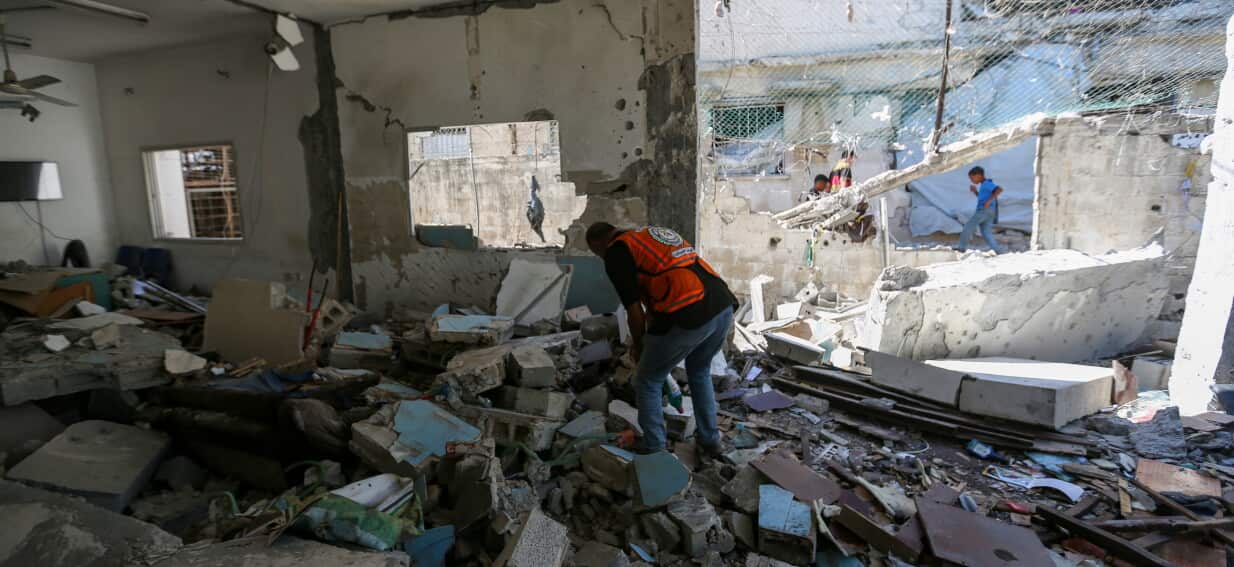
Consider what happens next: a missile arcs through a crowded sky, tearing through concrete and steel, and instantly vaporizes months of agonizing compromise. The official statements arrive like clockwork. Condemnations issued. Regrets expressed. Calls for restraint repeated like a broken liturgy. But words do not rebuild shattered neighborhoods, and they certainly cannot resurrect a shattered peace process.
When negotiators talk about peace efforts being undermined, they use sterile language. They talk about momentum stalling. They talk about diplomatic friction. But let us be entirely honest about what is actually happening in the dusty alleys of Gaza and the secure war rooms of Tel Aviv.
Trust is a fragile currency. It takes years to mint, seconds to burn, and is utterly impossible to recover once the ashes have cooled.
Imagine a fictional civilian named Tariq, standing in what used to be his kitchen. The walls are gone, replaced by a gray dust that cakes his eyelashes and coats his tongue. He does not read the international press releases. He does not track the delicate calculus of regional diplomacy or care about the shifting political survival strategies of leaders thousands of miles away. Tariq knows only one metric. Yesterday, the ceiling stayed up. Today, it is on the floor.
When strikes continue at a delicate, high-stakes moment, they send a very clear, unambiguous signal to the people on the receiving end. They say that peace is a luxury for later, and survival is the only currency of right now. And when the people under the bombs stop believing that peace is possible, the mediators lose their only remaining leverage.
The Mechanics of Sabotage
Diplomacy is not a straight line. It is a messy, violent tug-of-war between hope and habit. On one side are the international architects who understand that military escalation creates a self-fulfilling prophecy of endless war. On the other side are the immediate tactical demands of military commanders who view every pause as an enemy advantage.
Every time a strike hits during a critical phase of negotiations, it forces the mediators to start over from zero. It shifts the burden of proof entirely onto the party that was just hit, demanding they show restraint while their world burns.
History teaches us a harsh lesson about these cycles. They do not resolve themselves through exhaustion. They deepen through resentment. Each broken truce builds a thicker wall of bitterness, making the next attempt at dialogue even more improbable than the last. The mediators know this better than anyone. That is why their warnings are growing increasingly urgent, bordering on despair. They can see the cliff coming, and they can hear the engine accelerating.
Living on Borrowed Time
I remember the feeling of waiting for a quiet that never arrived. The nights stretch out infinitely when every distant rumble sounds like a death sentence. You learn to read the mood of a city the way a sailor reads the wind. You know when the talks are failing because the atmosphere grows heavy, electric, and terrifyingly silent just before the storm breaks.
The international community keeps looking for a magic formula, a master agreement that will instantly erase decades of trauma. But peace is not an event. It is a habit. And right now, everyone involved is out of practice.
The window is closing. Not metaphorically, but literally. Every hour of delay, every new crater in the earth, and every dismissive political statement pushes the region further into an abyss where diplomacy becomes nothing more than a historical footnote.
The mediators are still talking, whispering into phones, trying to hold the line against an avalanche. But the noise of the next strike is deafening. And until someone has the courage to break the rhythm of retaliation, the silence that follows will not be peace. It will simply be the quiet before the next catastrophe.