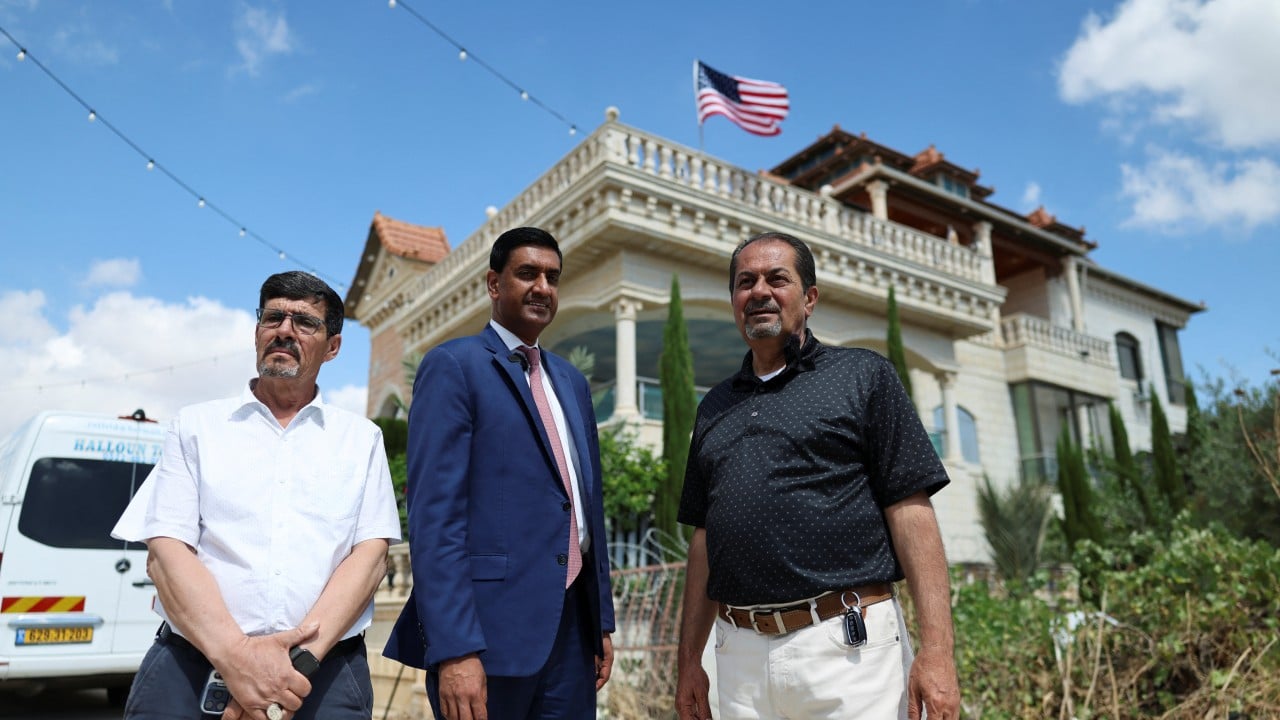
The physical detention of a sitting United States Congressman by armed civilian actors in a foreign territory highlights a profound breakdown in state-enforcement monopolies. When Representative Ro Khanna and his congressional delegation were blocked for over 90 minutes near the displaced Palestinian hamlet of Khirbet Zanuta, the event was widely reported as a diplomatic flashpoint. Beneath the media narrative lies an intricate operational reality: the systematic devolution of state security functions to non-state actors operating within a dual-track legal framework.
This event demonstrates how non-state actors exert coercive authority over foreign dignitaries backed by sovereign immunity. Analyzing this event requires evaluating the specific mechanisms of territorial control, the legal architecture of asymmetric jurisdiction, and the domestic political feedback loops that drive foreign policy realignments within the United States. Meanwhile, you can find other stories here: The Media Is Exploiting Political Tragedies for Clicks and Here Is the Damage It Causes.
The Three Pillars of Asymmetric Jurisdiction
Territorial control in the West Bank operates through a overlapping matrix of civilian, military, and administrative authorities. The encounter involving Representative Khanna provides a clear case study of these three distinct pillars working in tandem to enforce non-state sovereign claims.
1. Extralegal Coercion and Direct Action
The initial phase of the detention relies on civilian non-state actors executing direct enforcement mechanisms without prior state mandate. By surrounding the congressional delegation's vehicle and utilizing US-manufactured M4 rifles, the actors established immediate tactical dominance on the ground. To explore the complete picture, check out the recent article by TIME.
This operational layer depends on tactical ambiguity. Because the actors do not wear official uniforms yet possess military-grade weaponry, they create immediate friction for visiting foreign delegations. This forces foreign security details or diplomatic transport to pause and seek state intervention, effectively yielding immediate physical jurisdiction to civilian blockades.
2. Symmetrical Military Alignment
The second pillar is the immediate operational alignment between civilian blockades and local military units. When the Israel Defense Forces (IDF) arrived at Khirbet Zanuta, their initial response was not to dismantle the unauthorized civilian checkpoint, but to sustain the containment of the vehicles.
This behavior illustrates a structural breakdown in the standard hierarchy of state authority. Instead of asserting state monopoly over security and clearing public transit routes, the local military structure verified and extended the blockade erected by the non-state actors. This structural alignment effectively legalizes informal civilian enforcement actions in real-time.
3. Diplomatic Friction and Institutional Delay
The final pillar involves the bureaucratic friction required to resolve the detention. The release of the delegation was not spontaneous; it required structured escalation through the United States Embassy in Jerusalem and specific intervention by civil police units rather than tactical military personnel.
The 90-minute delay demonstrates that the protection typically granted by diplomatic status is highly vulnerable when encountering decentralized authorities. The administrative channels required to bypass a localized blockade are slow and resource-heavy, giving local actors a temporary veto over the movement of foreign officials.
The Operational Flow of Territorial Control
To understand why a foreign dignitary can be detained with relative impunity, one must trace the precise operational workflow that governs these encounters. The system relies on an intentional sequence of actions designed to shift accountability away from centralized government bodies.
[Phase 1: Civilian Interdiction] -> Non-state actors establish physical blockade using tactical weaponry.
                                    ↓
[Phase 2: Tactical Validation]   -> Military units arrive, securing the perimeter rather than dispersing blockades.
                                    ↓
[Phase 3: Administrative Friction]-> Bureaucratic delays occur while foreign embassies negotiate with state police.
                                    ↓
[Phase 4: Resolution & Reset]    -> Dispersal occurs without legal penalties, maintaining the operational status quo.
The sequence begins when civilian actors identify a high-value or politically sensitive target moving through disputed zones. By establishing a physical barrier, they force a localized crisis. When the military arrives, the operational protocol shifts from law enforcement to threat containment. The military treats the interaction as a localized dispute between two civilian factions rather than an illegal detention of individuals by armed actors.
This structural pivot transfers the burden of proof to the detained party, who must then engage international diplomatic assets to re-verify their basic freedom of movement. Once the state police finally intervene to clear the route, the non-state actors face no formal indictments or legal consequences. This lack of legal accountability ensures that the tactical mechanism remains fully reusable for future disruptions.
Structural Divergence and the Democratic Foreign Policy Crack
The ramifications of the West Bank encounter extend far beyond the immediate geography of Khirbet Zanuta. The incident acts as a catalyst accelerating a profound structural divergence within the domestic foreign policy apparatus of the United States Democratic Party. This division runs along clear ideological, generational, and tactical lines.
The Institutional Establishment Framework
The traditional leadership of the Democratic Party operates on a framework of strategic alignment and institutional continuity. This perspective views security assistance to foreign allies as a long-term geopolitical asset that must be insulated from localized human rights disputes.
The core assumption driving this model is that maintaining unconditional funding preserves leverage and ensures regional stability. Disrupting this supply chain is seen as an unacceptable risk to broader international alliances.
The Progressive Realignment Framework
The emerging faction, represented by lawmakers like Khanna, evaluates foreign policy through a lens of human rights accountability and direct resource conditionality. This framework treats foreign military aid not as an unconditional guarantee, but as a contractual lever that must be subject to strict oversight.
The operational goal of this faction is to eliminate the political protection historically granted to foreign security architectures. They achieve this by documenting systemic breakdowns in accountability firsthand and presenting those findings directly to domestic constituencies.
The tension between these two internal frameworks creates a clear bottleneck for US legislative strategy. While the institutional establishment seeks to maintain standard military assistance packages, the progressive wing leverages direct experiences of detention to build a data-driven case for restricting aid. This domestic friction is no longer a peripheral debate; it has become an central factor shaping primary elections and impacting voter turnout dynamics across key electoral states.
Systemic Risks and Strategic Limitations
Any strategy that relies on exposing these structural breakdowns through direct field observation contains inherent operational limitations. For policymakers and analysts evaluating these developments, several systemic realities must be addressed without relying on idealistic solutions:
- The Exposure Vulnerability: High-profile congressional visits provide undeniable media visibility, yet they offer no permanent structural protection for local populations once the delegation exits the territory. The temporary surge in diplomatic oversight recedes immediately upon the departure of the embassy personnel.
- The Impunity Equilibrium: The complete absence of legal indictments for non-state actors ensures that the underlying cost function for executing blockades remains near zero. Without tangible economic or legal penalties applied directly to the civilian actors, the systemic incentive to repeat these behaviors remains unchanged.
- The Leverage Deficit: Despite intense progressive rhetoric regarding the restriction of foreign aid, the legislative mechanisms required to alter bilateral funding agreements face deep structural resistance within the broader United States government. The institutional momentum favoring long-term defense contracts consistently outpaces short-term human rights critiques.
The Strategic Path Forward
To translate the diplomatic friction of this West Bank detention into actionable policy adjustments, the United States foreign policy apparatus must abandon purely rhetorical condemnation in favor of structural accountability mechanisms. The following operational playbook outlines the necessary steps to recalibrate diplomatic protections and resource distribution:
Formalize Direct Sanctioning Protocols on Non-State Actors
The United States must utilize existing executive frameworks to apply targeted financial sanctions directly against civilian organizations and individuals documented engaging in the unauthorized detention of US citizens. By freezing international assets and restricting access to Western financial systems, the US government can artificially inflate the economic cost of extralegal territorial enforcement, independent of the host nation's domestic judicial inaction.
Implement End-Use Monitoring on Tactical Small Arms
Because the weapons utilized in the detention were identified as American-made M4 rifles, the Department of Defense must trigger strict end-use verification protocols. Future security assistance shipments must be legally conditioned on the host country’s ability to prevent the diversion of military-grade small arms to civilian entities or unauthorized regional actors. Failure to maintain a verified chain of custody must result in an automatic, localized suspension of specific weapon supply lines.
Establish Independent Diplomatic Escort Mandates
The US Embassy in Jerusalem must alter its operational parameters for congressional oversight missions. Rather than relying on host-nation security frameworks that have demonstrated systemic alignment with civilian blockades, future delegations touring high-friction zones must be accompanied by independent, armed security details operated directly by the US Department of State's Bureau of Diplomatic Security. This establishes an uncompromised line of sovereign protection, removing the opportunity for localized actors to impose arbitrary administrative delays.
Executing these tactical adjustments shifts the geopolitical dynamic from passive observation to active enforcement. By targeting the financial assets of non-state actors and enforcing rigid compliance on weapon distribution networks, the United States can systematically dismantle the impunity framework that currently compromises its own diplomatic personnel. This operational pivot strips away the strategic leverage currently held by decentralized blockades, reinforcing state-level accountability in bilateral international relations.

.webp)