Beijing doesn't hand out seats on its top decision-making body by accident, and the promotion of General Zhang Shengmin to the Politburo sends a blunt message to every uniform in the country. If you've been watching the People's Liberation Army (PLA) shakeups over the past few years, you already know the surface story. Corruption scandals gutted the Rocket Force, toppled defense ministers, and left massive holes in the military's upper ranks.
Now the guy holding the disciplinary whip sits right inside the inner circle. Also making headlines in related news: What Happens When a British Tourist Dies Suddenly Abroad.
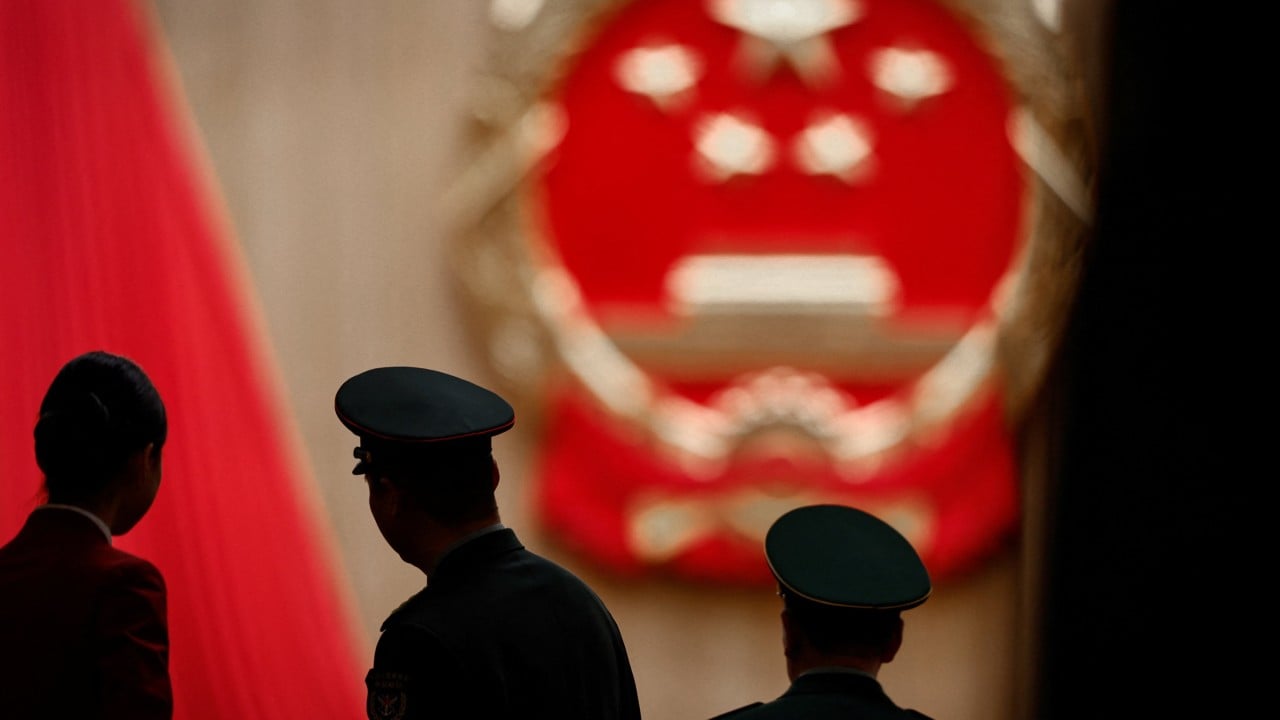
Most western headlines treat Zhang's elevation as a routine personnel shuffle or just another loyalty reward from Xi Jinping. That's a lazy reading. By moving the head of the Central Military Commission's (CMC) Discipline Inspection Commission directly into the 24-member Politburo, Beijing is permanently fusing political policing with supreme military command.
Who Is Zhang Shengmin and Why Does His Background Matter
To understand why this promotion carries so much weight, you need to look at where Zhang came from. Unlike frontline combat commanders who spent their careers obsessing over amphibious landings or missile trajectories, Zhang built his reputation inside the PLA's political commissar system and its anti-corruption apparatus. Further information on this are covered by Reuters.
Born in 1958 in Shaanxi province—Xi Jinping's ancestral home province, a detail China watchers never ignore—Zhang rose through the Second Artillery Corps, which later became the PLA Rocket Force. Let that sink in for a second. The exact branch of the military that suffered the most humiliating, sweeping corruption purges in recent Chinese history is the very service where Zhang spent decades building his network.
He knows where the bodies are buried. Literally and figuratively.
When Xi overhauled the military's disciplinary structure in 2017, he tapped Zhang to lead the newly empowered CMC Discipline Inspection Commission. Before those reforms, military graft investigators often reported to the very commanders they were supposed to police. It was a broken system that bred protection rackets, bribery for promotions, and fake readiness reports. Zhang was handed a mandate to break those networks apart, reporting straight to the top rather than sideways to fellow generals.
Why Putting an Anti-Graft Enforcer in the Politburo Changes the Game
Historically, the military seats on the Politburo go to the two vice chairmen of the Central Military Commission—typically operational commanders tasked with warfighting readiness and modernization. Putting the chief disciplinary enforcer in that room alters the balance of power inside Zhongnanhai.
Here is what changes immediately when the military's top investigator sits at the Politburo table:
- Direct access without filters. Disciplinary findings no longer pass through intermediaries before reaching the party's highest executive council.
- Institutionalized fear. Theater commanders and service chiefs now face a peer who outranks them politically and holds files on their procurement budgets.
- Permanent purge readiness. Anti-corruption isn't a temporary campaign anymore; it's baked into the highest tier of governance.
Honestly, you don't elevate your top internal affairs cop to the board of directors if you think the company is clean. You do it when you suspect the rot goes deeper than the last round of firings revealed.
The Rocket Force Mess and Procurement Rot
Let's look at the context that forced Beijing's hand. Starting in 2023 and rolling well into 2024 and 2025, an extraordinary wave of dismissals hit the PLA. Two former defense ministers—Wei Fenghe and Li Shangfu—were expelled from the Communist Party. Senior commanders of the Rocket Force vanished from public view before being quietly removed from the National People's Congress. Even executives at state-owned aerospace and defense conglomerates lost their posts.
The core issue wasn't just generals skimming cash for luxury villas. It was equipment fraud.
When billions of yuan flow into hypersonic missiles, nuclear silos, and stealth aircraft with zero independent media oversight, kickbacks become standard operating procedure. Substandard parts get approved. Maintenance budgets disappear into shell companies. For a leadership obsessed with building a "world-class military" capable of fighting and winning regional conflicts, discovering that your premier missile force has compromised hardware is an existential nightmare.
Zhang Shengmin was the point man cleaning up that disaster. His promotion confirms two things at once. First, Xi believes Zhang handled the fallout effectively without triggering an open mutiny among the officer corps. Second, the cleanup is nowhere near finished.
What People Get Wrong About PLA Loyalty
A common misconception among casual observers is that Xi Jinping purges generals purely because they are plotting a coup against him. That makes for dramatic cable news chatter, but it misses how the Chinese system actually works.
The real threat isn't a tank column rolling toward Beijing. It's passive resistance and systemic incompetence disguised as obedience.
When generals spend decades buying their ranks and selling contracts, their primary loyalty is to their patronage network, not to battlefield readiness. They tell Beijing what it wants to hear during inspections while pocketing procurement funds behind closed doors. Zhang's job—and the reason he now holds Politburo authority—is to smash those vertical patronage chains so that political reliability and actual combat capability align.
Still, there's an obvious catch. You can't run a modern military purely through terror and audits.
The Hidden Cost of Endless Investigations
Every security apparatus eventually runs into the same wall, and the PLA isn't immune. When officers know that any procurement decision, training accident, or personnel recommendation could trigger an investigation by Zhang's inspectors years later, they stop taking initiative.
Think about what happens on the ground when political survival outweighs operational risk:
- Decision paralysis. Mid-level commanders kick every minor choice up the chain of command rather than risk making a mistake.
- Box-checking culture. Units spend more hours studying political directives and filling out compliance forms than running realistic, unscripted combat drills.
- Talent drain. Sharp, independent-minded officers get sidelined in favor of cautious bureaucrats who never rock the boat.
If you're tracking China's military modernization, this tension is the single most important dynamic to watch. Promoting Zhang guarantees tighter political control and cleaner accounting books, yet it also risks suffocating the tactical flexibility modern warfare demands.
How to Track What Happens Next in Beijing
If you want to read the tea leaves accurately over the coming months, stop relying on breathless rumors on social media and watch the concrete institutional signals coming out of Beijing.
Watch the personnel announcements following major CMC plenary sessions to see which theater commands get hit with fresh rounds of removals. Keep an eye on the Central Commission for Discipline Inspection (CCDI) communiqués, where Zhang also serves as a deputy secretary—any shift in language from "investigating individual violations" to "rectifying systemic procurement flaws" signals another major sweep across the defense industry. Finally, pay attention to PLA Daily editorials; when the military's official newspaper starts running front-page pieces warning against "two-faced people" and "mountain-stronghold mentality," you know Zhang's team has just pulled the trigger on another high-ranking target.