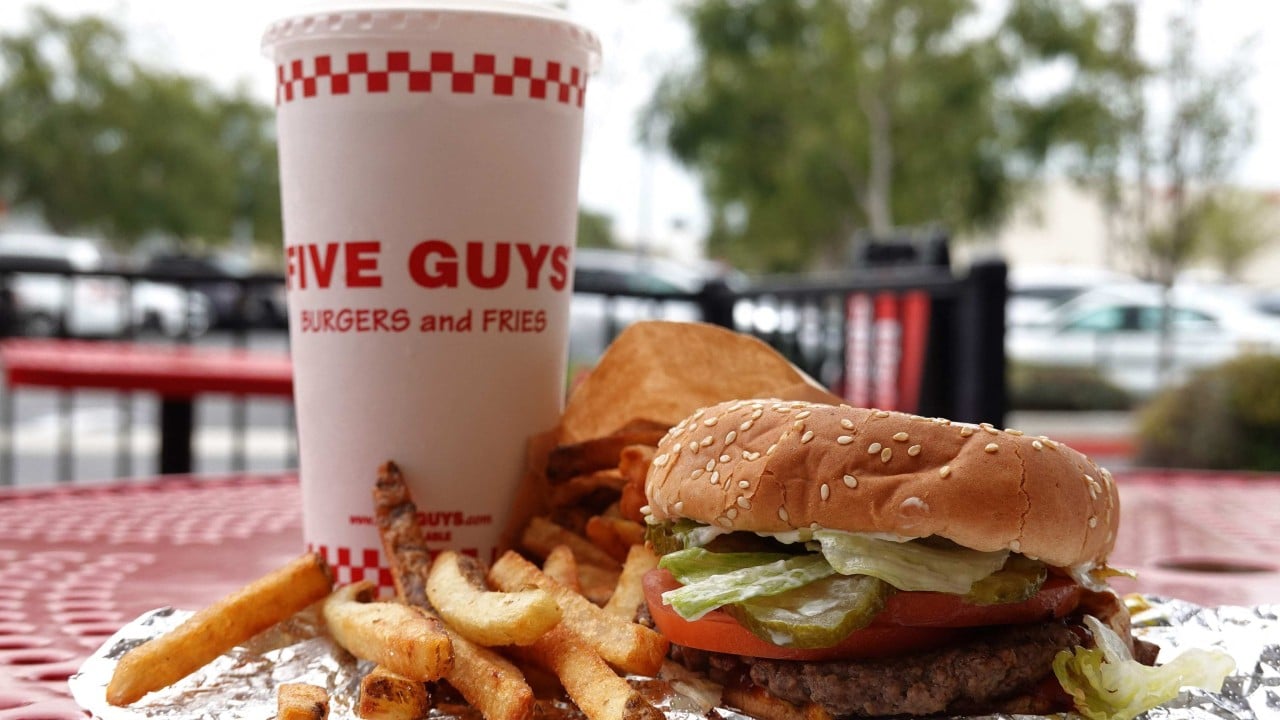
Selling greasy, customizable American cheeseburgers to a nation built on thousands of years of culinary tradition sounds like a tough sell. Doing it during a time when domestic consumer spending feels shaky sounds like commercial suicide. Yet, Five Guys is officially moving into Beijing, setting up shop on the second floor of Chaoyang Joy City.
It is not just them. A massive wave of American fast-food brands is currently hammering real estate deals across China's major cities. Popeyes is expanding its footprint in Beijing’s high-traffic commercial zones like Wangfujing and Zhongguancun. Brands like Wendy’s, Chili’s, and Texas Chicken are pushing hard to lock down their own slices of the pie.
Why the sudden rush? The answer is simple. The American domestic fast-food market is utterly suffocated. Inflation has hammered US household budgets, and domestic consumers are fighting massive pushback against soaring fast-food prices. In contrast, China's appetite for Western quick-service dining is growing. According to data from the Hongcan Industry Research Institute, the Western fast-food footprint in China reached a staggering 325,000 outlets, marking a steady 6.6% year-on-year climb.
If you think this is just about cloning an American menu and watching the cash roll in, you are dead wrong. The playbook has completely changed.
The Death of the Overseas Dictated Model
For decades, entering the Chinese market meant running corporate-owned stores completely managed from a glossy headquarters in Virginia or Illinois. You absorbed all the real estate losses. You carried the heavy operational volatility. If a location bombed, your global stock price took a dent.
Today, that old corporate strategy is dead.
The modern wave relies entirely on localized master franchising. Look at Subway's recent performance. For 28 years, Subway crawled through China, scraping together a measly 500 stores. Then they signed a massive master franchise deal with Furuishi Enterprise Development in Shanghai. Boom. They added nearly 500 new locations in just two years.
By partnering with local operators who actually understand regional real estate politics, supply chain logistics, and municipal regulations, American brands insulate themselves from risk. The local partners take on the financial brunt, while the parent company collects steady royalty checks.
The Blind Preference for Foreign Brands is Gone
You cannot just slap an American logo on a storefront and expect lines around the block anymore. Chinese consumers are incredibly sophisticated, intensely digital, and proud of local culinary options. The cultural cachet of "eating American" has evaporated.
If a brand wants to survive, it has to offer clear product differentiation or radical customization. Five Guys is leaning heavily into its signature identity: absolute freshness and complete control over the burger build. 15 free toppings, fresh-cut peanut oil fries, and high-quality beef. They aren’t trying to compete with low-cost localized options on price; they are framing themselves as an affordable luxury experience for first-tier city consumers who want exact control over what they eat.
They are also throwing local diners a bone. Alongside the classic bacon cheeseburger, expect regional menu experimentation like their localized Spicy Cheeseburger to cater directly to local palates.
How to Navigate This Shift
If you are an investor, operator, or brand strategist watching this retail migration, don't look at it as a monolithic trend. The market is splitting into two distinct battlefields.
First, you have the value players. McDonald's and KFC have already won the hyper-localized, high-efficiency volume game. Trying to beat them on price or speed is a losing strategy.
Second, you have the premium segment. This is where Five Guys and Shake Shack live. If you want to play in this space, your focus must be entirely on experience and product integrity.
To win in the current environment, you need to abandon the idea of a universal corporate identity. Find a regional master franchisee with deep pockets and existing retail relationships. Let them tweak the menu, digitize the ordering experience through local apps, and pick the shopping malls. Focus on maintaining your core ingredient quality, and let the local experts handle the boots on the ground.


