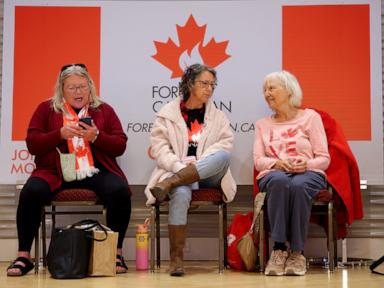
On October 19, 2026, roughly three-quarters of participating Alberta voters rejected starting the constitutional process toward separation from Canada, yet a quarter of ballots still backed initiating that path—proving that a decisive federalist tally does not neutralize underlying fiscal and political friction.
Standard coverage of the vote treats the result as a simple binary: unity triumphed, and secession failed. That framing misses the structural mechanics of the plebiscite. Voters were not casting a final verdict on nationhood; they were deciding whether to authorize the legal machinery for a future binding provincial referendum under the Canadian Constitution, alongside a multi-question ballot touching on immigration controls and provincial jurisdiction. Treating a preliminary procedural vote as a permanent cure-all confuses ballot outcomes with durable political equilibrium.
To analyze what actually happened—and where pressure builds next—this breakdown deconstructs the referendum's structure, separates verified facts from educated hypotheses, maps the cost-benefit trade-offs driving Alberta voters, and lays out a tactical roadmap for managing post-referendum tension.
Deconstructing the Referendum Structure and Ballot Mechanics
Competitor reporting typically flattens complex constitutional plebiscites into a horse-race narrative: federalists versus separatists, Ottawa versus Alberta. A more rigorous reading starts with how the question was framed and what the ballot actually bundled.
Official Elections Alberta results show that on Question 10—asking whether Alberta should remain a province of Canada or commence the constitutional process for a binding provincial referendum on separation—74.95% (1,556,316 votes) selected remaining in Canada, while 25.05% (520,233 votes) chose commencing the process. Turnout reached 67.4%, outpacing the 60.5% recorded in the 2023 provincial general election.
Those numbers carry three structural nuances that surface-level summaries gloss over:
- Two-stage procedural filter: A vote to start the legal process is not a final exit vote. In constitutional politics, many citizens who feel acute frustration with federal policy still draw a sharp line at triggering formal secession steps that carry immediate economic and legal uncertainty.
- Bundled sovereignty and migration questions: The referendum did not sit in a vacuum. Voters also weighed questions on provincial control over immigration levels, prioritization of economic migration, and eligibility rules for provincially funded services such as health care and education—issues tied to rapid population growth and perceived strain on public capacity.
- A minority floor with organizing power: Roughly one in four ballots in favor of starting the separation process is too small to carry a constitutional exit project, yet large enough to sustain activists, fundraise, and pressure governing coalitions.
Facts Versus Educated Hypotheses
Separating confirmed records from analytical inference keeps the diagnosis sharp.
Known facts include the October 19, 2026 vote date, the 67.4% turnout figure, the 74.95% to 25.05% split on initiating the constitutional separation process, the presence of additional ballot questions on immigration and provincial service eligibility, and public statements from federal and provincial leaders following the count.
Educated hypotheses explain why those numbers landed where they did. One plausible hypothesis is that external trade friction and cross-border pressure—including tariff disputes and sovereignty rhetoric from Washington—raised the perceived risk of internal constitutional fracture, nudging hesitant voters toward institutional stability. A second hypothesis is that many voters who backed tighter provincial rules on migration and public services saw autonomy within Confederation as a more practical lever than outright exit. Both hypotheses align with the observed split, though neither is proven solely by aggregate vote totals.
The Three Pillars of Alberta Voter Calculus
Why did roughly three in four voters reject starting a separation process even where dissatisfaction with Ottawa is vocal? Voter decisions in resource-intensive, open economies can be modeled across three competing pillars: Economic Risk Exposure, Institutional & Legal Friction, and Identity & Regional Autonomy.
Economic Risk Exposure
Alberta's economy is heavily trade-exposed and closely tied to cross-border market access, infrastructure corridors, and investment confidence. Initiating a formal separation process introduces immediate risk premia: currency and fiscal uncertainty, potential friction over cross-border trade rules, and questions about capital investment horizons while constitutional status remains contested.
For a voter weighing household income, mortgage rates, or energy-sector employment, starting a multi-stage exit process looks like adding domestic volatility on top of external trade headwinds. Even voters who believe federal policies penalize resource producers or strain local infrastructure can rationally conclude that staying inside Canada preserves more predictable market access than launching a constitutional rupture.
Consider a mid-career tradesperson or small-business owner in a regional hub. They may resent federal regulations or feel rapid population growth stretches local clinics and schools. Yet when asked to authorize the legal machinery of separation, they may view constitutional ambiguity as a direct threat to credit conditions, supply chains, and retirement savings—tipping their ballot toward remaining in Canada despite real grievances.
Institutional and Legal Friction
Secession in a federal system is not a single click; it is a sequence of legal thresholds, negotiation mandates, and intergovernmental rules. Under Canadian constitutional jurisprudence, clarity of question and clarity of majority matter, and any move toward separation implicates federal-provincial powers, Indigenous rights and treaties, public debt allocation, and physical assets.
That complexity creates a high bar for voters. A citizen does not need to be a constitutional scholar to recognize that starting a formal separation track triggers years of legal contestation before any practical benefit could materialize. High transaction costs act as a natural brake on fringe or protest impulses when a ballot asks voters to initiate a formal process.
Identity and Regional Autonomy
Grievance and national identity are not mutually exclusive. Polling and post-vote commentary around the referendum point to a dual reality: deep frustration with perceived federal overreach or under-recognition coexists with strong attachment to Canada and practical support for stronger provincial autonomy inside the federation.
A useful distinction separates exit secessionism from autonomist regionalism:
- Exit secessionism seeks full political independence from Canada.
- Autonomist regionalism demands greater provincial control over levers like immigration selection, resource development, and public service eligibility while keeping federal membership intact.
The 2026 ballot showed that while exit secessionism remains a minority position, autonomist demands resonate broadly enough to shape provincial policy agendas and intra-party debates.
Cause-and-Effect Chains Standard Coverage Misses
Articles that stop at "unity won" often miss the second- and third-order effects already forming beneath the headline.
First, a large federalist margin can mask persistent intra-party strain. When a quarter of voters back starting a separation process, hardline factions inside conservative or regional movements gain a concrete metric to argue that softer autonomy tactics are too slow. Instead of disappearing, that 25% becomes an organizing base for leadership challenges, party splits, or single-issue mobilization in future elections.
Second, defeating the separation question does not resolve service-capacity bottlenecks. Rapid population growth puts measurable pressure on housing, classrooms, healthcare wait times, and entry-level labor markets. If Ottawa and Edmonton treat a "Remain" vote as proof that fiscal and migration tensions have vanished, service bottlenecks will fester—feeding the exact alienation that separatist organizers exploit.
Third, external geopolitical pressure cuts both ways. External tariff threats or sovereignty disputes can rally voters around national unity in the short term. Over a longer horizon, however, prolonged trade friction that hurts regional exporters can reignite arguments that federal trade policy fails regional interests unless Ottawa delivers tangible market relief and infrastructure progress.
Strategic Playbook for Federal and Provincial Decision-Makers
A 75% vote to remain in Canada buys political runway, not permanent immunity from regional friction. Decision-makers who want to turn a referendum result into durable stability face clear operational choices—each with real trade-offs and no silver bullets.
- Treat the 25% pro-process vote as a diagnostic signal, not a fringe footnote. Map support geographically and demographically rather than dismissing every dissenting ballot as ideological extremism. Identifying where economic anxiety, service strain, or political alienation clusters allows targeted policy fixes before grievances harden into permanent anti-system voting. Limitation: Over-indexing on vocal activists can alienate moderate swing voters who backed unity and expect mainstream governance.
- Negotiate concrete administrative and fiscal deliverables on capacity pressures. Where provinces seek greater say over immigration alignment, credential recognition, or infrastructure funding tied to population growth, Ottawa and provincial capitals can pursue targeted intergovernmental agreements rather than zero-sum constitutional warfare. Measurable progress on permitting, market access, and public-service funding reduces the practical appeal of exit. Limitation: Intergovernmental deals require compromise on jurisdiction and budgets, which both federal and provincial actors often resist for domestic political reasons.
- Pair national unity messaging with verifiable economic execution. Speeches about solidarity carry credibility only when backed by reliable trade strategy, energy and corridor execution, and fiscal predictability. Voters judge stability by real wages, investment flows, and public-service delivery over multi-year cycles. Limitation: External shocks—such as shifts in U.S. trade policy or global commodity prices—lie partly outside Canadian control, meaning execution can cushion blows without eliminating them.
The sharpest strategic move now is to treat October 19, 2026 as a containment window, not the end of the file: use the federalist mandate to deliver concrete economic, infrastructure, and public-service improvements quickly, because if tangible grievances go unanswered while external economic pressure persists, a 25% procedural minority can expand in the next cycle.



