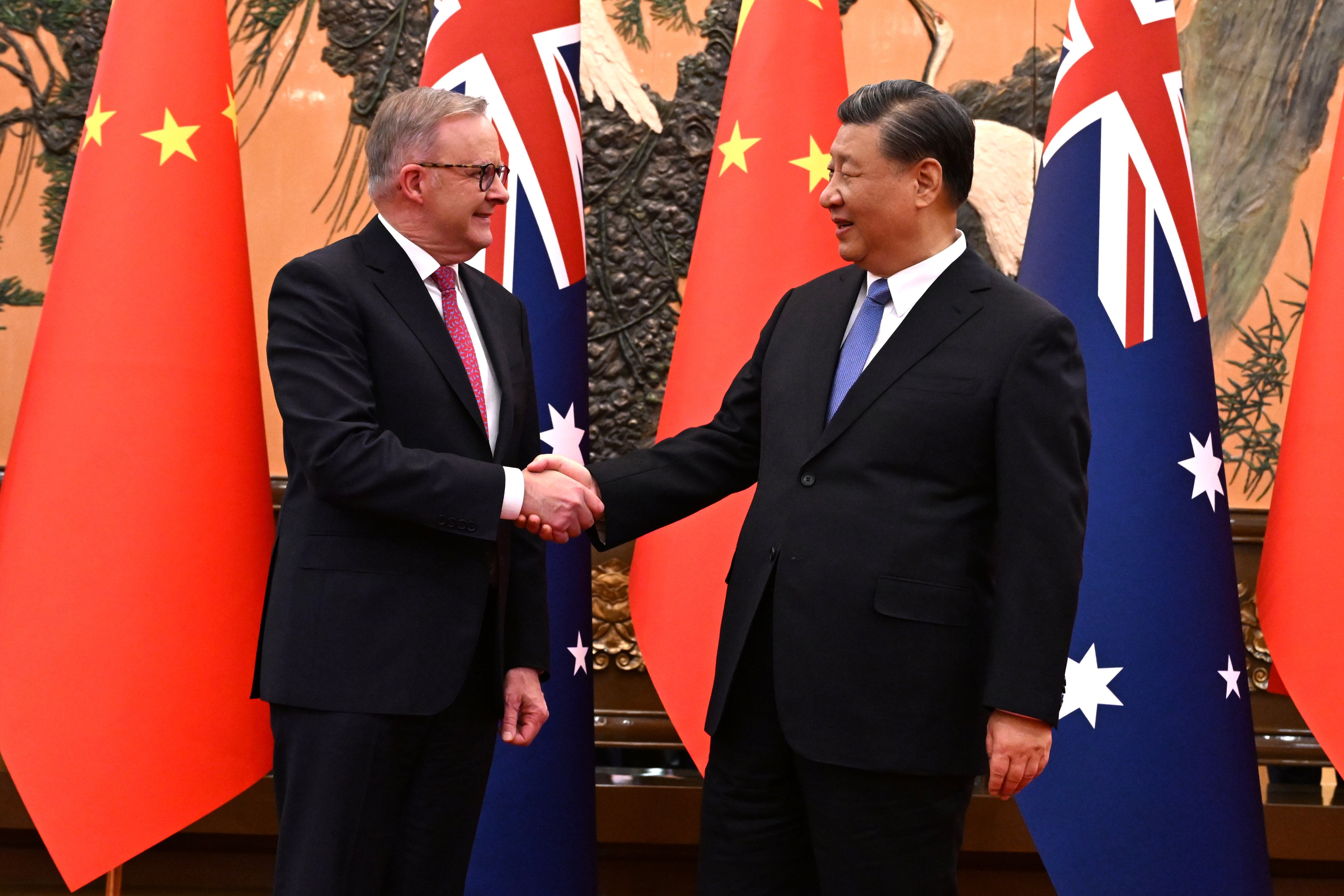
Anthony Albanese is flying to Brunei and Malaysia under the guise of "shoring up fuel supply," but the premise is a ghost story told to a nation that refuses to wake up. The mainstream media is dutifully reporting this as a strategic masterstroke for Australia’s energy security. It isn't. It is a desperate, late-stage scramble for scraps in a market that Australia chose to abandon years ago.
While the official narrative focuses on "securing partnerships" and "diversifying supply chains," the cold reality is that Australia has systematically dismantled its own refining capacity, leaving it entirely at the mercy of Asian middle-men. You cannot "secure" fuel from a neighbor when you have no place to store it and no way to process it yourself. Albanese isn't buying security; he’s buying a subscription to volatility. Meanwhile, you can find other stories here: Why India and New Zealand Indo-Pacific Security Dialogue Matters Now More Than Ever.
The Refining Myth and the Death of Lytton
For decades, the "lazy consensus" in Canberra was that domestic refining was an inefficient relic of the past. We were told that the "just-in-time" delivery model from Singapore and Malaysia was cheaper and more efficient. That theory worked until it didn't.
Look at the wreckage. Australia used to have eight major refineries. Now, we are down to two—Ampol’s Lytton in Brisbane and Viva Energy’s Geelong refinery. These are the last lungs of a gasping industry. When Albanese lands in Bandar Seri Begawan, he isn't negotiating from a position of strength. He is there because Australia’s liquid fuel stocks are a joke, often hovering just above the International Energy Agency’s (IEA) 90-day mandate only because we count oil currently sitting on ships in the middle of the ocean. To explore the complete picture, check out the recent article by USA Today.
Brunei and Malaysia are not "partners" in the way the press release suggests. They are competitors and sellers who know exactly how desperate the Australian market is. Malaysia’s Petronas and Brunei’s energy giants operate on a profit motive, not a "regional stability" motive.
Why the 90-Day Stockpile is a Lie
The IEA requires member countries to hold oil stocks equivalent to at least 90 days of net imports. Australia has historically struggled to meet this, often relying on "tickets"—essentially options to buy oil from other countries in an emergency.
- Tickets aren't fuel: You can't run a truck on a legal contract.
- Geography is destiny: Even if we "own" oil in a tank in the United States or a ship near Brunei, getting it to a Sydney bowser during a regional conflict is a logistical nightmare.
- Refining bottleneck: Even if we secure crude oil, our two remaining refineries cannot process enough to keep the country moving. We are importing refined product—diesel, jet fuel, and gasoline—which is far more sensitive to supply chain disruptions than raw crude.
The ASEAN Pivot is a Smoke Screen
The government talks about the "Southeast Asia Economic Strategy to 2040" as if it’s a new frontier. It’s actually a surrender. By pivoting so heavily toward Malaysia and Brunei for fuel, Albanese is doubling down on the very vulnerability that critics have warned about for years: the South China Sea.
If you are worried about fuel security, the last thing you do is increase your reliance on sea lanes that are the most contested waters on the planet. To suggest that getting more fuel from Malaysia "shores up" our supply is like saying you’ve improved your home security by moving all your valuables into a shed in the middle of a high-crime neighborhood.
Imagine a scenario where regional tensions flare. The tankers coming out of the Malacca Strait don't care about a memorandum of understanding signed in 2024. They go to the highest bidder or the biggest naval power. Australia is neither.
The Cost of the "Clean Energy" Distraction
The obsession with the "Net Zero" transition has created a massive blind spot in the current decade's security. We are treating liquid fuels like a sunset industry that we can just manage until the last EV rolls off the line. This is a dangerous delusion.
Diesel is the lifeblood of the Australian economy. It moves the food, it runs the mines, and it powers the military. You cannot "transition" a M1 Abrams tank or a road train in the Kimberley to a battery overnight. By failing to invest in sovereign refining and domestic storage, the government is effectively betting the entire nation’s 2026-2035 functionality on the hope that nothing goes wrong in the Indo-Pacific.
The Real Math of Fuel Security
Let’s look at the numbers the government avoids. Australia’s daily consumption of refined petroleum products is roughly 1 million barrels.
- Domestic Production: Negligible in the global context.
- Refining Capacity: Covers less than 25% of our needs.
- Imports: Over 90% of our fuel is imported, with the vast majority coming from or through the very region Albanese is visiting.
Securing a "commitment" from Brunei for more crude doesn't solve the fact that we have nowhere to put it. Our storage infrastructure is antiquated and undersized. We are essentially a mansion with a ten-gallon fuel tank in the backyard, asking the neighbors if they can hold onto some gas for us.
The Brunei Paradox
Brunei is a tiny, oil-rich autocracy. Its economy is almost entirely dependent on hydrocarbons. While the PM's visit might secure some "diplomatic alignment," Brunei's primary customers are in North Asia. China and Japan have much deeper pockets and much more significant infrastructure investments in the region than Australia does.
In a crunch, do we really believe a handshake in 2026 holds more weight than a decade of Chinese infrastructure spending?
Australia’s strategy relies on the "rules-based order"—a phrase that is increasingly becoming a euphemism for "we hope people play fair even when they're winning." In the energy market, no one plays fair. They play for keeps.
Stop Asking for "Partnerships" and Start Building Tanks
The "People Also Ask" sections of the internet are filled with questions like "Is Australia's fuel supply at risk?" and "How much oil does Australia have?" The honest answer is: we have enough to last a few weeks if the ships stop coming, and the government’s plan is to ask for more ships.
That is not a plan. It’s a prayer.
If the Albanese government were serious about fuel security, this trip would be the secondary story. The primary story would be a massive, multi-billion dollar investment in:
- Mandatory Domestic Storage: Forcing distributors to hold 90 days of actual physical product on Australian soil, not "on the water."
- Refinery Modernization: Upgrading Geelong and Lytton to handle a wider variety of crude and produce higher-grade fuels.
- Sovereign Shipping: Australia has almost no fuel tankers under its own flag. We are entirely reliant on foreign-owned vessels.
Without these three pillars, a trip to Brunei is just a high-carbon photo op.
The Myth of the "Reliable Middle-Man"
Malaysia is often touted as a "reliable" source. But Malaysia is also a country that must balance its own internal needs with its export commitments. During the 2022 energy crunch, we saw countries across the globe—from Indonesia with palm oil to India with wheat—shut down exports to protect domestic prices.
What makes anyone think fuel will be different? If the price of diesel spikes in Kuala Lumpur, the Malaysian government will not prioritize a contract with Canberra over the stability of its own streets. They will turn off the tap. And Australia, having outsourced its brains and its bared steel to the "global market," will have no recourse.
The Inevitable Crisis
I have seen this movie before. I’ve watched industries outsource their core competencies to "reduce overhead," only to find that the "overhead" was actually their insurance policy against extinction. Australia has outsourced its energy sovereignty.
We are currently in a period of "false stability." Prices are high but the product is flowing. This has lulled the Canberra bubble into thinking that "diplomacy" is an adequate substitute for "infrastructure." It isn't. You can't ship diplomacy in a tanker. You can't refine a communique.
Albanese is heading to Southeast Asia to sign papers that offer the illusion of safety. He is looking for fuel in a region that is becoming increasingly volatile, for a country that has forgotten how to look after itself.
The "fuel security" mission is a performative dance. It satisfies the 24-hour news cycle and allows the government to check a box. But when the next major maritime disruption happens—and it will—the people at the Brisbane and Geelong refineries will look at the empty docks and wonder why we spent billions on submarines to protect sea lanes, but not a cent on the actual fuel those sea lanes are supposed to carry.
Australia isn't shoring up its supply. It’s just begging for a longer leash.