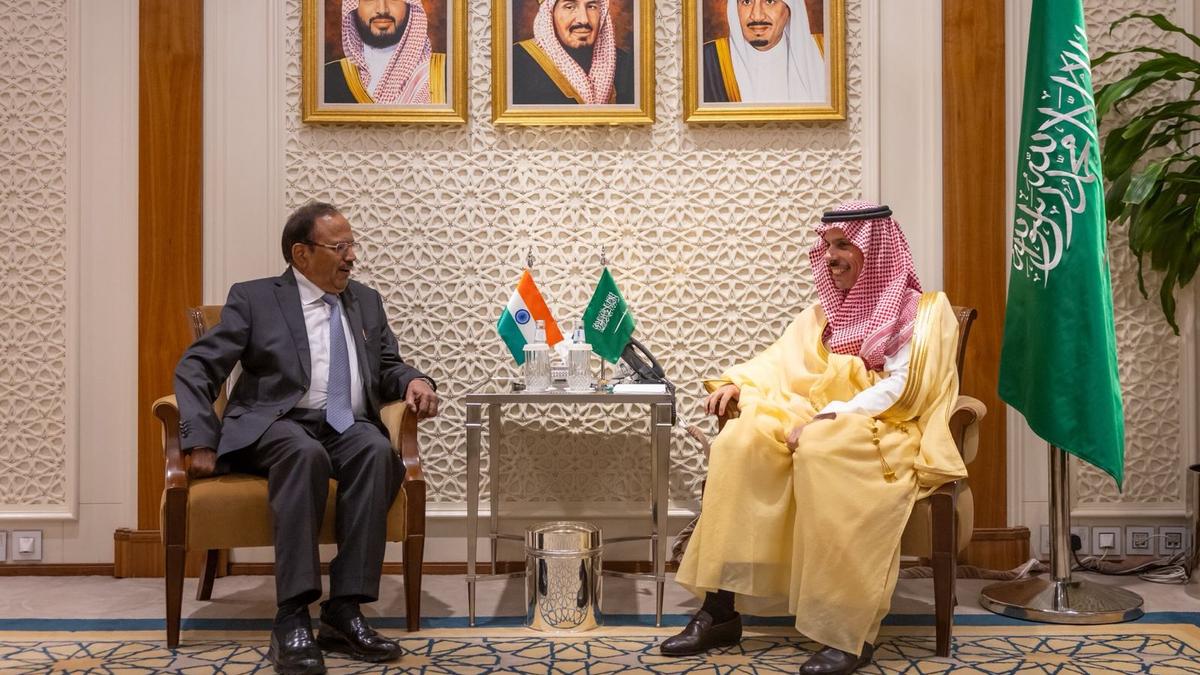
National Security Adviser Ajit Doval didn't just wake up and decide to fly to Riyadh on April 19, 2026. He went because Prime Minister Narendra Modi told him to. When the MEA says a visit happened on "instructions," they aren't just being formal. They're signaling that India's stakes in the Gulf have hit a fever pitch.
West Asia is currently a mess. You've got the US-Israel conflict with Iran breathing down everyone's neck, a fragile two-week ceasefire set to expire on April 22, and energy supplies choked by a double blockade at the Strait of Hormuz. India isn't just a bystander here. With 10 million citizens living in the Gulf and a massive reliance on Saudi crude, New Delhi is feeling the heat. Doval’s mission was simple: keep the bridges open before the ceasefire ends and everything potentially goes south.
The Real Reason Behind the Riyadh Sprint
Most people think these diplomatic trips are just for the cameras. They aren't. Doval’s one-day surprise visit was a high-stakes balancing act. He didn't just meet his counterpart, Musaed Al-Aiban. He sat down with the heavy hitters: Energy Minister Prince Abdulaziz bin Salman and Foreign Minister Prince Faisal bin Farhan.
Why does this matter? Look at the timing. India’s energy security is currently under threat. Iran’s restrictions on shipping through the Strait of Hormuz, combined with the US "double blockade," have basically parked global oil tankers in a parking lot they can't leave. India is one of the world's biggest crude importers. If the Saudi taps don't keep flowing—or if the routes stay blocked—petrol prices back home won't just rise; they'll explode.
Managing the Pakistan Factor
There’s another layer here that the official MEA briefings touch on lightly. Last year was rough for India-Saudi ties. We saw a Saudi-Pakistan defense pact in September 2025, and before that, the Pahalgam terror attack in April 2025 forced PM Modi to cut a previous Saudi trip short.
Riyadh has been cozying up to Islamabad on defense, which naturally makes New Delhi jumpy. Doval’s job in Riyadh was to remind the Saudi royals that India is their long-term strategic bet, not just a customer. It's about ensuring that Saudi Arabia’s "Vision 2030" and India’s "Viksit Bharat 2047" stay aligned, even when Pakistan tries to wedge itself into the middle.
Security Beyond the Boardroom
You can't talk about Doval without talking about security. The regional instability isn't just about big wars; it’s about the "gray zone" stuff.
- Maritime Threats: Indian-flagged vessels have been taking fire recently. Foreign Secretary Vikram Misri already flagged this with Tehran, but you need Riyadh’s help to secure the wider Persian Gulf.
- Intelligence Sharing: With the US-Israel-Iran triangle on the verge of another flare-up, knowing what the other side is thinking is gold. Doval and Al-Aiban aren't just swapping pleasantries; they're swapping data.
- The Diaspora Safety: 11 lakh Indians have already scrambled back home. Thousands of flights are being coordinated. If the conflict escalates after the April 22 ceasefire deadline, that evacuation becomes a nightmare.
What Happens When the Ceasefire Ends
The current ceasefire is a thin sheet of ice. It’s supposed to end this Wednesday. If talks between the US and Iran fail—efforts that Saudi Arabia, Egypt, and Turkiye have been pushing—we're looking at a return to active strikes.
Doval’s visit is part of a larger "Gulf blitz." Think about it. External Affairs Minister S. Jaishankar was in the UAE just a week ago. Energy Minister Hardeep Puri was in Qatar on April 9. This isn't random. India is shoring up its neighborhood before the storm hits. We're trying to play the "constructive voice," but honestly, it’s about survival and stability.
The Economic Grip
Beyond the oil, there's the money. India and the Arab League are doing over $240 billion in trade. Saudi Arabia alone has committed $100 billion in investments. You don't let a relationship like that drift because of a regional skirmish.
Doval's meetings confirmed that both sides want to protect these investments regardless of the "regional situation." That's code for: "We won't let the Iran conflict tank our joint infrastructure projects." It’s a pragmatic, cold-eyed approach to diplomacy.
Practical Steps for the Coming Week
If you’re tracking this for business or travel, the next 48 hours are "wait and see."
- Monitor the Ceasefire: If April 22 passes without an extension, expect immediate volatility in oil markets.
- Watch the Airspace: While flights from Riyadh and Dubai are still moving, Qatar's airspace is only "partially open." If you have family in the region, keep their travel docs ready.
- Check Energy Stocks: The outcome of Doval’s talks with Prince Abdulaziz bin Salman will dictate how India manages its strategic reserves in the short term.
India is doing what it does best: talking to everyone and committing to no one. Doval’s trip was the final check-in before the West Asian clock hits zero.


:strip_icc()/pic2513216.jpg)