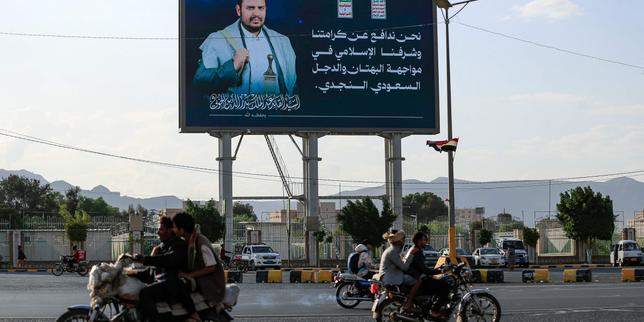
Most people outside the Middle East only learned Abdul Malik al-Houthi's name when missiles and drones started flying across the Red Sea. Yet he has led Yemen's Houthi movement, formally known as Ansar Allah, since September 2004. That's more than twenty years of insurgency, civil war, regional escalation, and survival.
Here's the catch: almost nobody sees him in person. He doesn't hold press conferences on sunlit balconies or walk crowds like a traditional politician. Instead, he speaks through pre-recorded television broadcasts from an undisclosed location, projecting calm, deliberate authority over millions of people in northern Yemen.
Calling him a mere "rebel leader" misses the point. Over two decades, Abdul Malik al-Houthi turned a localized Zaydi revivalist group from rugged Saada into the dominant power in much of Yemen and a major headache for global shipping and neighboring states.
How a Young Mountain Insurgent Took Over
Abdul Malik al-Houthi wasn't born expecting to run a wartime movement. Born in May 1979 in Saada Governorate, he grew up as the youngest of eight brothers in a prominent Zaydi family led by religious scholar Badreddin al-Houthi. His older brother Hussein was the charismatic firebrand, a former parliamentarian who built the ideological backbone of what became the Houthi movement.
When Yemeni government forces killed Hussein in 2004, the movement was cornered and outnumbered. Abdul Malik was just 25. Honestly, nobody outside his tight circle bet on him lasting long.
Six rounds of brutal fighting—the Saada wars between 2004 and 2010—tested whether the group would fold or harden. It hardened. By the time his father died in 2010, Abdul Malik had consolidated military, tribal, and religious command. He went from reluctant successor to undisputed boss.
What makes his rise tricky to read is how he adapted without losing his core base. During the 2011 Arab Spring protests against President Ali Abdullah Saleh, Abdul Malik tapped into everyday anger over corruption, fuel prices, and foreign strikes. Later, he struck a tactical alliance with his former enemy Saleh before turning the tables and seizing Sanaa in late 2014 and early 2015. That wasn't luck. It was cold-eyed opportunism paired with fierce internal discipline.
Living Reclusively as a Survival Strategy
Secrecy isn't a personality quirk for Abdul Malik al-Houthi. It's basic operational survival.
Over the past two decades, he has faced relentless military pressure—from Yemeni state campaigns and Saudi-led coalition airstrikes to direct clashes with American and Israeli forces and renewed regional confrontation. Staying off the grid makes him a hard target. Even senior officials and foreign observers rarely know his exact whereabouts at any given moment.
In my view, his televised speeches do more work than public appearances ever could. By speaking slowly, using measured religious and anti-imperialist framing, and keeping a physical distance from day-to-day street politics, he sets himself above petty squabbles. When he speaks, followers treat it as direction from the top.
Still, total centralization carries a real risk. Analysts at institutions like the Arab Center Washington DC and regional observers have pointed out that relying on a tight inner circle forged in early combat creates cohesion during war, yet can make governance rigid and vulnerable if leadership is ever disrupted. You get speed and loyalty, sure, but you also get concentrated fragility.
Ideology, Zaydism, and the Iran Connection
If you reduce Abdul Malik al-Houthi to "just a Zaydi tribal chief" or "just an Iranian puppet," you'll get surprised every time. Both labels miss crucial pieces of how the movement actually works.
Historically, Zaydism is a branch of Shia Islam unique in many ways from Twelver Shiism, which dominates Iran. For centuries, Zaydi imams ruled parts of northern Yemen, creating a distinct local identity rooted in Saada and the surrounding highlands.
Under the Houthis, that heritage blended with sharper revolutionary concepts and fierce anti-American, anti-Israeli slogans. Over time, ties with Iran and Hezbollah deepened, bringing training, weapons transfers, and technical know-how. Yet analysts who study Yemen closely emphasize that Houthi power has local roots too—tribal networks, local grievances, and coercive control inside Yemen—even when regional backing boosts their reach.
Let's be clear about what's disputed, though. Tehran and the Houthis routinely push back against claims that Iran micromanages every Houthi decision, while Western and regional governments view Iranian material support as central to the group's missile and drone capabilities. Both realities can coexist: shared strategic enemies don't erase local Yemeni ambitions.
From Local Insurgency to Regional Flashpoint
For years, outsiders treated Yemen's war as a tragic sideshow. That illusion broke hard once Houthi forces expanded their reach toward the Bab el-Mandeb Strait and escalated attacks tied to regional wars, including strikes hitting commercial shipping, Israel, and Saudi targets.
Suddenly, a movement born in northern Yemeni mountains was disrupting global trade routes and drawing retaliation from major military powers. Consider the scale of what that means:
- Control over key corridors near the Red Sea and Bab el-Mandeb lets the group pressure international shipping and regional rivals far beyond Yemen's borders.
- Wartime taxation, customs fees, and economic extraction in Houthi-held areas help sustain the movement despite severe economic strain on ordinary Yemenis.
- Framing regional conflict around Palestinian solidarity has helped rally supporters and distract from grinding domestic hardship, even as critics and human rights groups document severe crackdowns, arrests, and restrictions on dissent.
It's a stark contrast. Millions of Yemenis face staggering economic and humanitarian hardship, while the movement under Abdul Malik al-Houthi projects outward military reach and tight internal grip.
Common Misconceptions That Trip People Up
When people try to make sense of Abdul Malik al-Houthi, a few lazy assumptions pop up again and again.
First, people assume he's a figurehead. He isn't. Since surviving the Saada wars and succeeding his father, he has sat at the center of religious messaging, strategic posture, and inner-circle loyalty.
Second, folks often treat northern Yemen as monolithic. Even inside Houthi-controlled territory, rule relies on a mix of ideological mobilization, co-optation, economic control, and coercion—and tribal dynamics have faced heavy pressure as central authority tightened.
Third, some observers assume airstrikes alone will make the movement fold. History hasn't backed that up so far. Mountain terrain, decentralized launch tactics, and a leadership structure built for clandestine survival have kept Ansar Allah standing through years of bombardment.
How to Follow This Story Without Getting Lost
If you want to track Abdul Malik al-Houthi and Yemen's trajectory clearly, skip sensational rumors about his health or secret bunkers unless backed by solid reporting. Rumors of his death or whereabouts have circulated repeatedly over the years without reliable proof.
Start by reading primary policy and conflict analysis from established researchers—such as Arab Center Washington DC for regional political and economic dynamics, Britannica's Houthi movement overview for historical context, and reporting from major wire services like Reuters or AP when new strikes or diplomatic moves happen. Watch three things closely: whether Red Sea and regional escalations widen or pause, how negotiations with Saudi Arabia and rival Yemeni factions shift, and how economic conditions inside Sanaa and Houthi-held provinces affect everyday life. Those signals tell you far more than any rumor ever will.