Close your eyes. Listen to the room.
Somewhere outside your window, a car engine turns over. A dog barks twice. The floorboards beneath you creak under an invisible, settling weight. Your lungs expand, drawing cool air across the moist lining of your passages, while your heart beats a steady, indifferent rhythm that has kept time since before you had a name.
You did not command any of this. You did not reach down into the dark machinery of your chest to pull the rope on your heart. You did not manually calculate the air pressure required to inflate your lungs.
Instead, you simply sat here, and a vast, silent factory hummed along in the dark behind your eyes.
For most of human history, this factory was a locked vault. We knew it was there because we could feel its tremors—the sudden spike of panic when a shadow moved too fast, the sharp flash of a remembered summer afternoon, the slow, gray fog of grief that settles after a loss. We could touch the outside of the vault. We could feel the hard bone of the skull, cool and smooth beneath our fingertips. But what lived inside? Magic, ancient philosophers whispered. Humors, said the physicians. Electricity trapped in jelly, whispered the modern anatomists.
Then came the quiet revolutionaries.
Imagine sitting in a laboratory in the mid-twentieth century, surrounded by the smell of ozone and vacuum tubes, looking at a squiggling line on a roll of thermal paper. That line represents the voice of a single cell. Not a heart cell, not a lung cell, but a neuron. A tiny, branching star floating in an ocean of salt water. When that cell fires, it speaks in a crackle of voltage—a millivolt whisper lasting a fraction of a millisecond.
For decades, science listened to those whispers one at a time. It was like standing in the middle of a roaring, sold-out stadium, pressing your ear against a single plastic seat to understand the plot of the play. You could hear a squeak. You could hear a groan. But you could never hear the symphony. You could never understand how the roar built, how the wave traveled from section to section, how ten thousand individual voices suddenly became one single, unified shout of Yes.
The breakthroughs that eventually capture the world's highest honors—the Nobel Prizes that pierce the veil of our most complex organ—do not happen in a flash of Hollywood lightning. They happen in the quiet, grinding persistence of men and women who spent thirty years staring through microscopes until their eyes watered, trying to coax secrets out of dead tissue and living circuits.
Consider what it takes to map a thought.
To map a thought, you have to catch a ghost in a net. You have to find the molecular switches—the tiny gates no larger than a few atoms across—that snap open and shut to let sodium and potassium rush across a cell membrane. These are the ion channels. They are the gatekeepers of your consciousness. When they fail, you seizure. When they clog, your mind stutters. When they are understood, entire fields of medicine shift on their axis.
Think about the last time you learned something new. Say, riding a bicycle for the first time as a child.
Your shins were bruised. Your palms were scraped raw against the unforgiving asphalt. Every time you climbed onto the saddle, your body leaned too far to the left, and gravity reminded you of its laws with a sudden, breathless jolt. That was not just learning. That was physical architecture being hammered into place inside your head.
Every repetition forged a microscopic pathway. Proteins folded. Dendrites reached out like blind roots in dark soil, seeking contact with neighboring cells. Synapses—the microscopic gaps where chemical messengers leap across an abyss—thickened and strengthened. What felt like an impossible, frustrating struggle against physics was actually your brain physically remodeling itself, carving canyons into the landscape of your gray matter so that water could flow more easily next time.
By the time you were an adult, you could ride that bike down a crowded street while thinking about what to make for dinner, entirely unaware of the millions of electrical impulses firing in precise, choreographed sequences to keep you upright.
That is the true miracle of the nervous system. It hides its own machinery. It automates the miraculous so you can worry about paying your taxes or wondering if you left the stove on.
Yet, for all its elegance, this machinery is terrifyingly fragile.
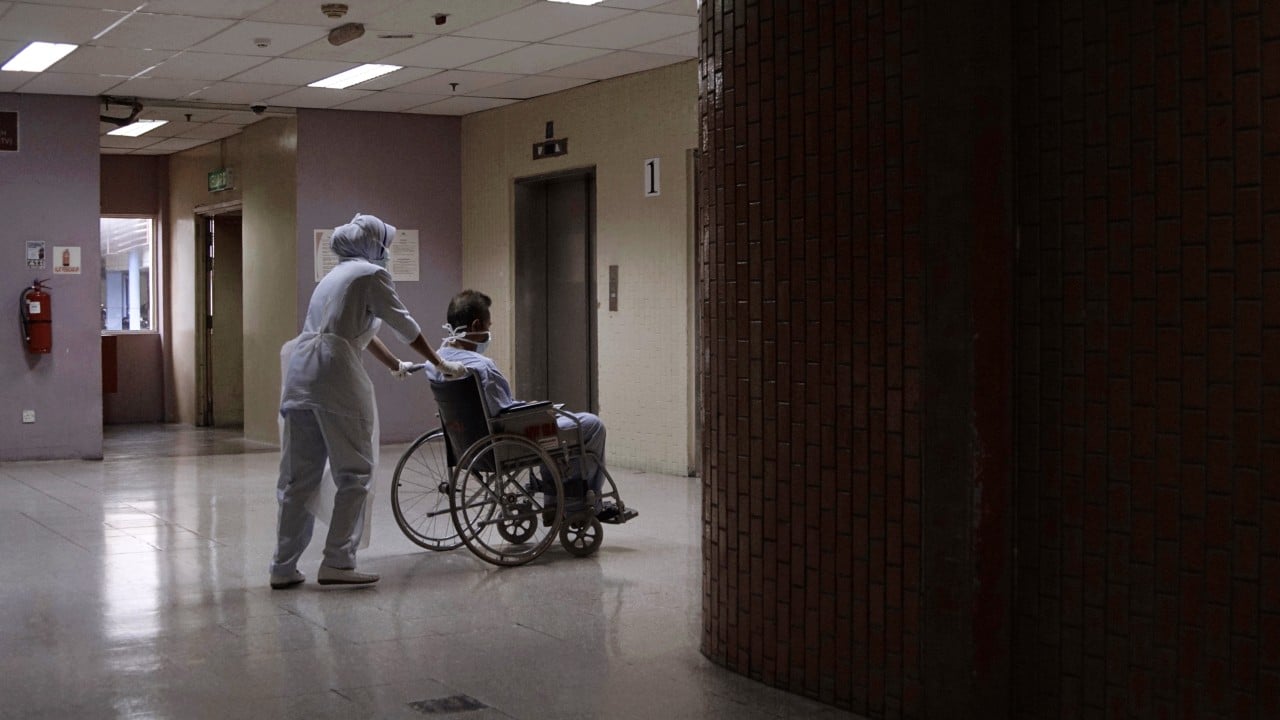
I once sat beside a hospital bed where a man tried to remember his wife’s name. He was sixty-two. His hands were strong, calloused from decades of working with wood. He looked at the woman sitting in the vinyl chair—the woman who had chosen him, fought with him, grown old with him—and his eyes held the blank, flat panic of a stranger staring at a locked door.
"Mary?" he asked, his voice shaking.
She smiled, though her chin trembled. "Close, love. It's Martha."
"Martha," he repeated, tasting the word like a foreign fruit. He tried to lock it away. He tried to force his neurons to wrap around it, to build a bridge across the chasm where a stroke had blown out the middle span. But the bridge was gone. The cells that held the memories of forty years together were quiet, dark, and unresponsive.
That is why we study the brain. Not out of abstract scientific curiosity, but because every tragedy of identity, every creeping shadow of dementia, every shattering blow of depression is a mechanical failure in the most complex machine in the known universe. When we unlock how ion channels open, how neurotransmitters bind to receptors, how neural circuits sustain memory, we are looking for the owner's manual to the human soul.
The scientists who unlocked these inner workings did not do so by guessing. They did it by inventing tools that let them see the invisible.
Imagine trying to watch a hummingbird’s wings with the naked eye. You see only a blur, a shimmering ghost suspended in the air. To see the wings, you need a strobe light—flashing so fast that it freezes the motion into a series of still photographs, revealing the intricate, figure-eight physics of flight.
In neuroscience, the strobe light was genetic engineering paired with laser optics. Researchers learned how to make specific neurons glow with bioluminescent proteins harvested from jellyfish. When a cell fires, it lights up like a distant star in a pitch-black sky. Suddenly, instead of listening to a single plastic seat in the stadium, scientists could look down from the rafters and watch the entire crowd wave in glowing, coordinated patterns.
They saw memories forming in real time as mice navigated mazes. They saw the electrical storm of a seizure sweeping across the cortex like a prairie fire. They watched the brain heal itself, and they watched it tear itself apart.
What they found is both humbling and magnificent.
You are not a fixed object. You are a process.
The person who woke up this morning is not biologically identical to the person reading these words right now. The proteins in your synapses have turned over. New connections have formed based on the sentences you have just processed. Old, unused connections have withered away through a ruthless, quiet process of cellular pruning.
Your mind is a garden that constantly weeds itself.
And here lies the profound responsibility of understanding this machine. For centuries, we treated mental illness as a failure of character, a weakness of will, a spiritual failing. We locked the afflicted away in dark rooms, blaming them for the misfiring of their ion channels.
Now, as the inner workings are laid bare, that cruelty is exposed for what it was—ignorance of the highest order. Depression is not a bad attitude; it is a breakdown in chemical signaling circuits that can be mapped, targeted, and treated. Addiction is not a simple moral choice; it is a deep, structural hijacking of the brain’s reward pathways, where the physical architecture has been remodeled to crave poison as if it were water.
When we look at the Nobel-winning discoveries that reveal these mechanisms, we are not just looking at plaques and diplomas. We are looking at the disarmament of ancient shames. We are looking at the tools that will eventually allow us to restore memory to the aged, movement to the paralyzed, and peace to the tormented.
The work is far from finished. Every answer we find opens ten new questions, each more dizzying than the last. How does a collection of physical cells generate subjective experience? Why does the taste of coffee or the sound of a cello chord feel like something from the inside, when outwardly it is nothing more than chemical gradients and voltage drops?
We do not know yet. We may not know for a very long time.
So sit back down in your chair. Let the floorboards creak. Let your heart beat its steady, unbidden rhythm in the dark.
Inside your skull, eighty-six billion silent witnesses are working right now, keeping the lights on in the universe. They have been whispering since the day you were born, and long after we have turned the page on this brief moment in history, they will keep right on talking—patient, mysterious, and profoundly alive.