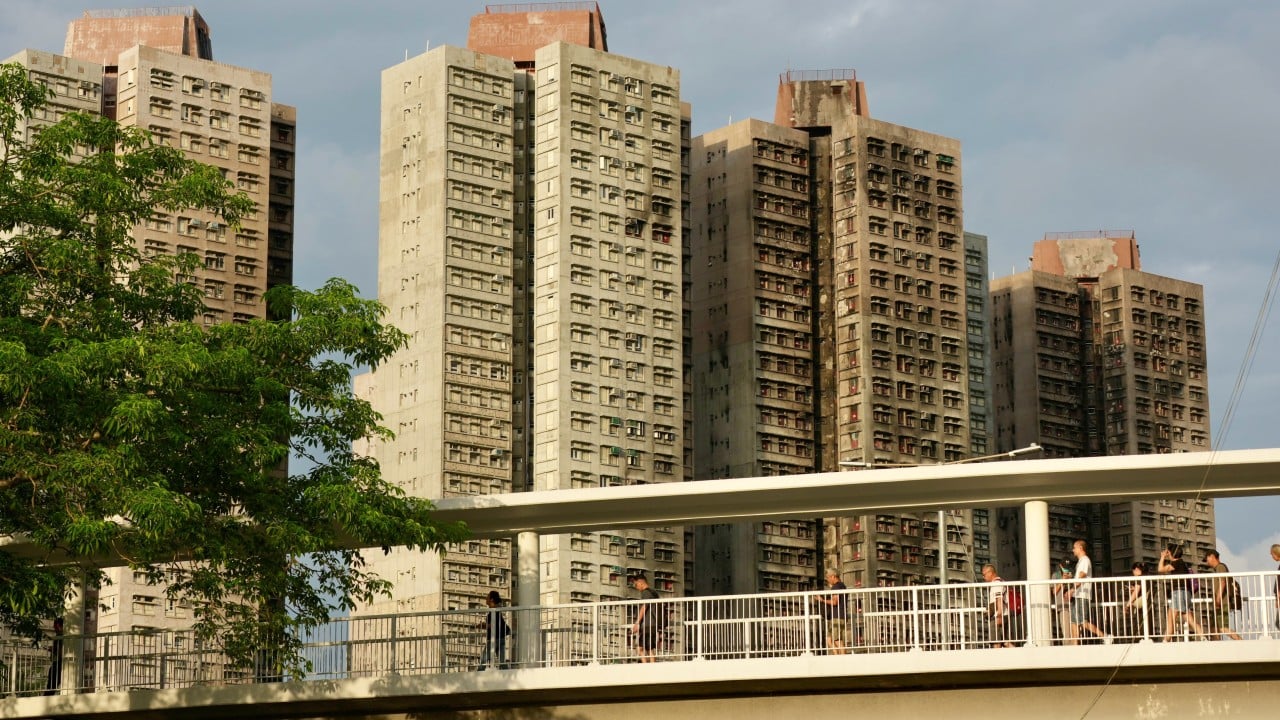
The clock is running out for the final few holdouts at Hong Kong's fire-ravaged Wang Fuk Court. With nearly 98 percent of households accepting the government's multi-billion dollar acquisition offer, a stubborn group of roughly 45 owners is still holding the line.
Authorities drew a hard line as the final deadline ticked down to 5 pm on Monday. Deputy Financial Secretary Michael Wong made it crystal clear that no extensions are coming and the price tags won't budge. For most residents of the Tai Po housing estate, the buyout provides a path forward after the devastating blaze last November that claimed 168 lives. Yet, a small fraction of homeowners are refusing to sign, and their reasons reveal deep fissures in how people value property, memory, and personal rights in the city. If you enjoyed this piece, you should check out: this related article.
The Financial Reality Behind the Buyout
The government rolled out a massive HK$7.8 billion total expenditure plan to acquire flats across all eight blocks, including the unburned Wang Chi House. Under the scheme, owners receive either HK$8,000 or HK$10,500 per square foot depending on land premium status.
Property experts like former Hong Kong Institute of Surveyors president Vincent Ho pointed out that these figures are remarkably generous. The rates sit roughly 30 percent above pre-fire valuations for the four-decade-old estate, vastly outperforming what owners could pull on the open market today. For another look on this story, check out the recent update from TIME.
Despite the financial upside, the final 45 holdouts aren't playing a game of corporate brinkmanship for a bigger payout. They are digging in their heels for reasons that defy spreadsheet logic.
Why Some Owners Refuse to Sell
Talk to the remaining holdouts, and money rarely comes up first. Many are grieving homeowners who don't want a cash settlement or a lottery ticket for a new flat elsewhere—they want their community back.
Some residents have stated they are willing to shoulder repair costs out of pocket if authorities would just let them rebuild and return. Others, like retired owners who have already relocated across the border to Guangdong, view the compulsory clearance of their title deeds as an assault on private property rights. For them, holding out is a matter of principle. They would rather risk future legislative devaluation than voluntarily surrender a home that no amount of government compensation can replace.
What Happens to the Non-Participants
The government's stance leaves very little room for negotiation. Officials warned that anyone who fails to return their acceptance letter by the deadline will simply be treated as a non-participant.
Their properties will drop off the special acquisition track and revert to standard market mechanisms. If authorities eventually move ahead with compulsory statutory acquisition down the road, compensation will rely strictly on post-disaster market valuations. Because the charred estate currently holds a fraction of its original worth, those holdouts face the very real prospect of walking away with pennies on the dollar compared to the current buyout offer.
Housing Bureau officials are spending the final hours dispatching engagement teams to knock on doors and catch the remaining owners before the portal closes. For the vast majority, the nightmare of Tai Po is transitioning into a bureaucratic resettlement process involving Home Ownership Scheme flats and transitional housing. For the final 45, it is a lonely stand against an irreversible tide.