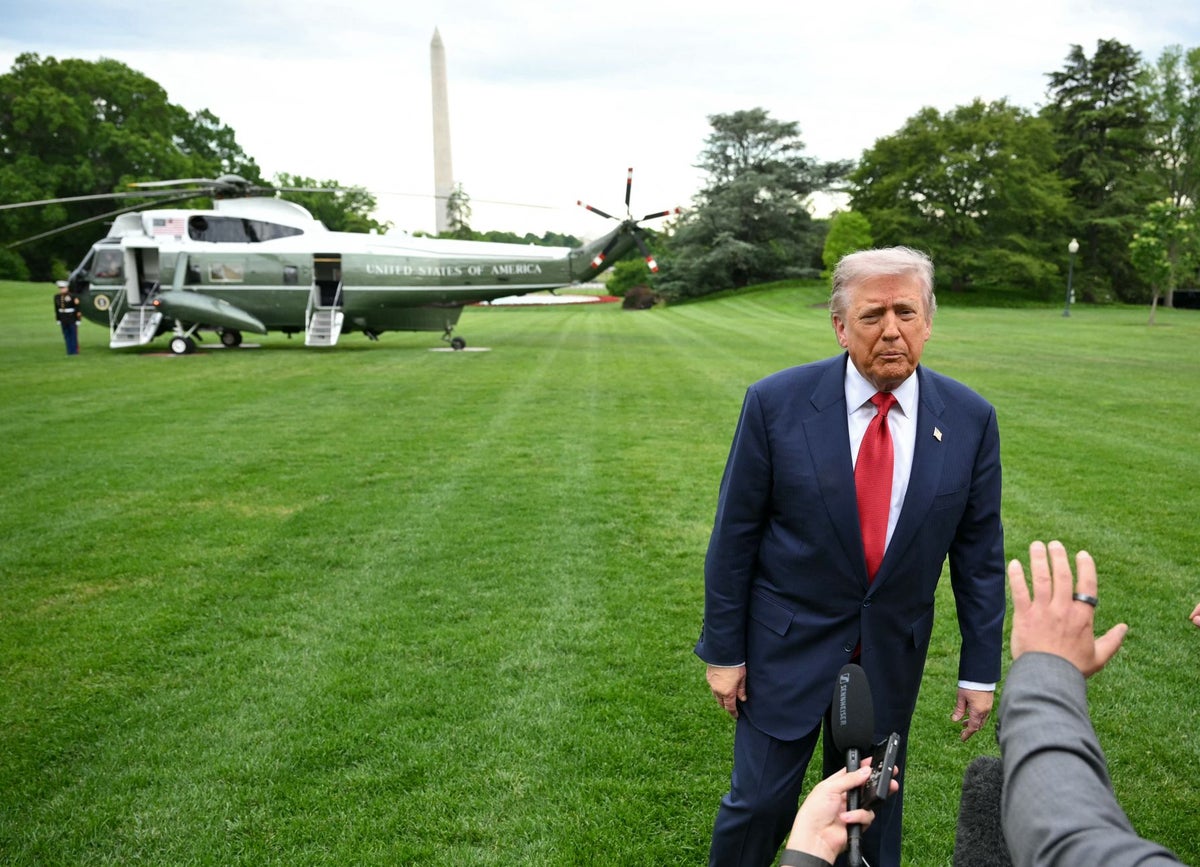
The White House South Lawn is about to lose its green. Plans are moving forward to construct a permanent concrete helipad on the historic executive grounds this summer, a decision driven by an expensive engineering oversight involving the nation's newest presidential helicopter fleet. The $215 million VH-92A Patriot, built by Sikorsky and Lockheed Martin to replace the aging Marine One fleet, features downward-facing exhaust ports that emit temperatures hot enough to instantly scorch and destroy the historic turf. Rather than reworking the multi-billion-dollar aircraft design, the administration is choosing to alter the landscape of the executive mansion.
The move highlights a quiet, years-long struggle between modern military procurement and historical preservation. While initial reports framed the upcoming construction as a simple cosmetic upgrade or a personal preference, the reality stems from a deep technical failure in the presidential transport modernization program.
The Downdraft Dilemma
For decades, the iconic image of Marine One landing on the South Lawn relied on a low-tech workaround. Crew members rushed onto the grass to place small, heavy disks beneath the wheels of the older VH-3D Sea King to absorb the physical impact and protect the lawn.
The VH-92A Patriot changed the equation entirely. The issue is not the weight of the aircraft, but the thermodynamic signature of its twin General Electric CT7-8A6 engines. When the helicopter hovers or touches down, the massive thermal output shoots directly down onto the ground.
[Engine Exhaust] ---> Direct Downward Heat ---> Scorched Subsoil
                                           ---> Damaged Historic Turf
Engineers have spent nearly a decade trying to redirect this heat. Defense contractors attempted to design exhaust deflectors and algorithmic engine idling sequences to cool the undercarriage during landings. None of it worked well enough to save the grass. The sheer force and temperature of the exhaust consistently kill the turf roots, turning the South Lawn into a patchwork of dead brown soil within seconds of touchdown.
Because the Pentagon cannot easily re-engineer the entire exhaust architecture of a certified, nuclear-hardened presidential aircraft, the ground must adapt to the vehicle.
A History of Presidential Earthmoving
Modifying the White House grounds to suit the personal or logistical needs of a sitting president is not unprecedented, though the scale of recent changes has accelerated. The modern executive mansion is a living fortress that has frequently been altered by its occupants.
- Dwight D. Eisenhower brought the helicopter age to the executive mansion, initiating the regular use of the South Lawn for rapid transit in 1957.
- Richard Nixon authorized structural reinforcements to the underground facilities beneath the lawn to handle heavier military hardware.
- Gerald Ford installed the outdoor swimming pool, changing the recreational layout of the South Grounds.
The current project joins a list of major structural overhauls to the estate. The complete demolition of the East Wing to make way for a 90,000-square-foot state ballroom featuring high-grade bulletproof glass has already drawn intense scrutiny and preservationist pushback. Pouring a permanent concrete landing pad on the South Lawn represents a definitive shift from temporary tactical adaptation to permanent architectural transformation.
The Cost of Staying Grounded
The financial reality of the VH-92A fleet makes a concrete pad the path of least resistance for the government. The program cost billions to develop, and each individual airframe represents a massive capital investment.
Leaving the helicopters restricted from landing at the executive mansion defeats the operational purpose of the fleet. Currently, the aircraft can support regional travel outside the capital, but true executive readiness requires point-to-point transit directly from the Commander-in-Chief's back door.
A temporary, roll-out landing mat was proposed by retired military pilots as a compromise. This option would use heavy-duty, heat-resistant composite tiles assembled before a flight and removed immediately after departure. However, logistics personnel flagged the labor-intensive setup and storage requirements as a liability during unannounced, high-speed evacuations.
A permanent concrete pad ensures 24-hour operational availability without requiring a ground crew to manually assemble a landing zone under duress.
Architectural Integrity Versus Modern Security
Preservationists argue that adding a permanent slab of concrete to the South Lawn permanently alters the open, park-like aesthetic designed by landscape architects over the last two centuries. The view from the south has long been preserved as a symbol of an accessible, elegant executive estate.
Military planners look at the same space and see a high-risk transport hub. The modern threat environment requires heavy armor, advanced missile defense systems, and extreme engine outputs. The delicate, historic topsoil of the nineteenth century cannot withstand the physical realities of modern executive protection.
The construction scheduled for this summer will permanently codify this shift. The South Lawn will no longer be an occasional, carefully manicured landing zone. It will become an active, structurally reinforced heliport embedded directly into the historic heart of Washington.