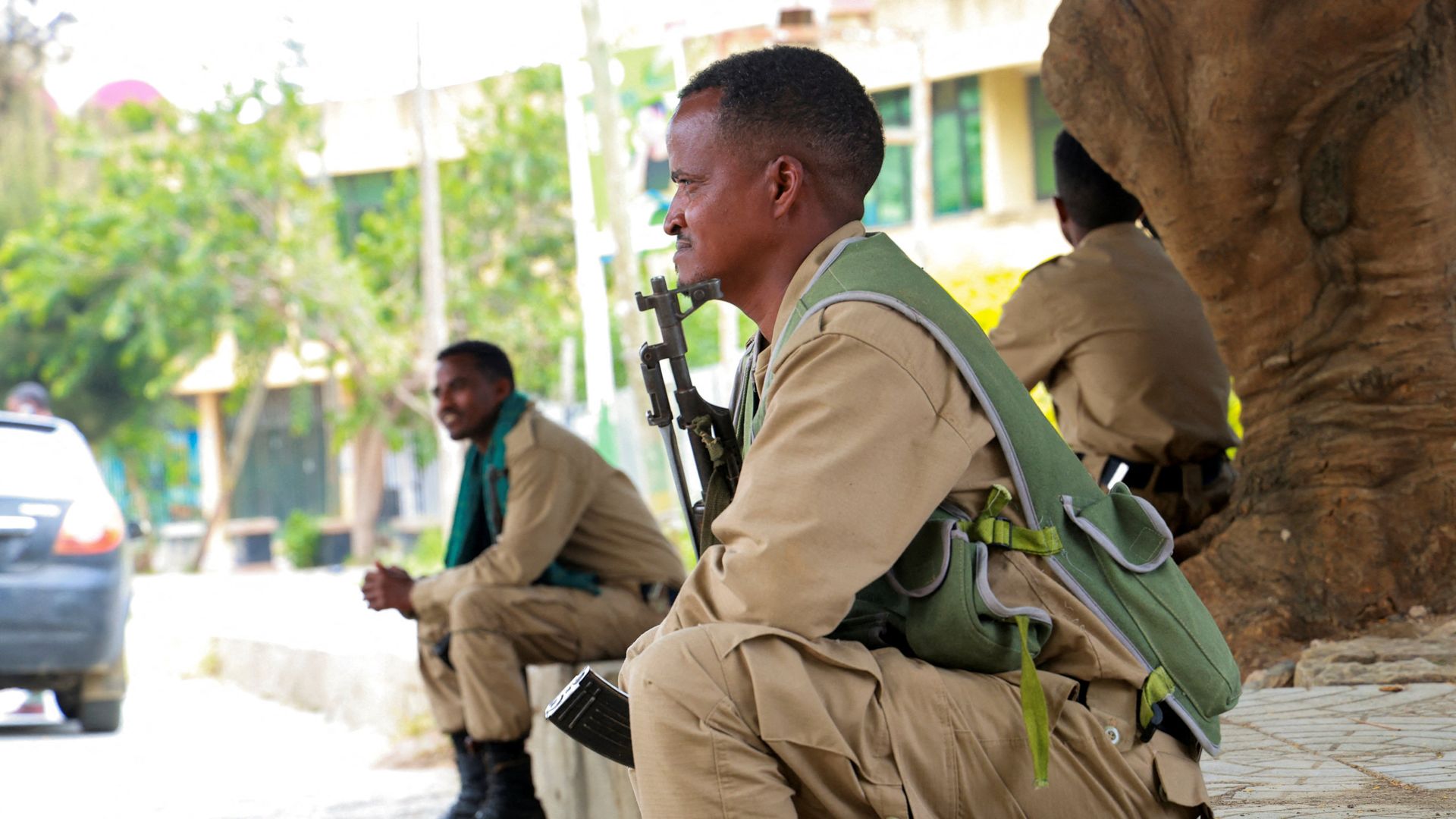
The headlines are weeping over a shattered piece of paper. According to the mainstream foreign policy consensus, the Pretoria Agreement signed in November 2022 was a sacred covenant, a masterclass in diplomacy that brought two years of devastating bloodshed in northern Ethiopia to a screeching halt. And now, supposedly, renewed fighting has reduced that monumental accord to dust.
It is a clean narrative. It is also entirely fictional. If you found value in this article, you might want to read: this related article.
The 2022 Pretoria Agreement did not shatter because peace broke down. It shattered because it was never a peace deal to begin with. It was an armistice disguised as a settlement, a tactical pause designed to let exhausted combatants catch their breath, rearm, and recalibrate. Treaties built on unaddressed structural collapse do not hold; they simply buy time.
If you want to understand why northern Ethiopia is bleeding again, you have to stop mourning a document that was legally and practically bankrupt from day one. You have to look at the structural mechanics of regional hegemony, federal overreach, and unresolved territorial disputes that international mediators preferred to sweep under a diplomatic rug just to claim a Nobel-adjacent victory. For another look on this event, see the recent coverage from BBC News.
The Anatomy of a Diplomatic Illusion
Let us look at how the consensus formed. When federal forces and Tigrayan leadership inked the cessation of hostilities in South Africa, Western capitals popped champagne. Analysts rushed to type out essays about democratic resilience and African solutions to African problems.
They missed the fundamental flaw in the architecture. Pretoria dealt with the symptoms while preserving the disease.
The agreement forced a silencing of the guns without settling the core contest over contested lands, specifically western Tigray, and without establishing a permanent, depoliticized framework for the distribution of state power and security guarantees. When two heavily armed factions agree to stop shooting while leaving their core existential disputes entirely unresolved, you do not have peace. You have a countdown.
I have watched diplomats negotiate ceasefires across fractured states for over a decade. They operate under a desperate psychological bias: the urgent need for a headline. They need a signing ceremony. They need a photo of two weary men shaking hands across a polished mahogany table. Once the ink dries, the international community packs its bags, declares victory, and moves on to the next crisis, abandoning the local actors to manage the impossible math of a botched transition.
Pretoria was classic crisis management theater. The federal government under Abiy Ahmed needed breathing room to stabilize an economy gasping for hard currency and manage multi-front insurgencies elsewhere in the country. The Tigray People's Liberation Front needed time to reconstitute leadership, bury their dead, and figure out how to feed a population pushed to the brink of famine.
Neither side entered that room to surrender its long-term strategic objectives. They entered to reload.
Dismantling the Victimhood Narrative
The lazy consensus loves a simple binary: an oppressive center crushing a defenseless periphery, or a heroic state defending its territorial integrity against an insurrectionist cabal. Both versions are garbage.
The reality on the ground is a brutal multi-sided security dilemma where every faction perceives its own total destruction as the alternative to military dominance. When critics scream about the violation of international humanitarian law, they are right. When they act surprised that the combatants are violating it, they are being willfully naive. War in the Horn of Africa is not governed by Geneva conventions once the survival of political elites is on the line.
Consider the question of disarmament. The core premise of the Pretoria deal was the demobilization of Tigrayan forces in exchange for the restoration of services and international aid. But in a neighborhood where state authority is fragile and ethnic federalism has turned citizenship into a weapon, giving up your rifle is not a gesture of peace. It is suicide.
When you strip away a marginalized or threatened population's capacity for self-defense without guaranteeing absolute institutional protection—protection that the central government has repeatedly proven incapable or unwilling to provide—you guarantee that the first sign of institutional drift will trigger a return to arms. That is not a failure of implementation. That is a failure of logic by the negotiators who drafted the terms.
The Regional Spillover Nobody Wants to Talk About
Northern Ethiopia does not exist in a vacuum. You cannot analyze a resurgence of hostilities in Tigray or neighboring regions without factoring in the shifting tectonic plates of the entire Horn.
Eritrea's role in this equation is the elephant that every Western think tank tries to ignore because it complicates their tidy talking points. Asmara’s leadership views the survival of a militarized TPLF as an existential threat to its own security architecture. When Pretoria was signed, Asmara was sidelined, glaring at a deal that left its bitterest enemies intact just across the border.
Imagine a poker game where two players make a side arrangement to split the pot while the guy holding a shotgun under the table is completely ignored. That was Pretoria. The renewed fighting is simply the shotgun going off.
Regional dynamics in the Horn are zero-sum. A strong federal state in Addis Ababa striving for centralized authority inevitably clashes with regional nationalisms that date back half a century. You cannot paper over that fundamental constitutional contradiction with vague language about transitional justice and disarmament timelines.
The Cost of Professional Optimism
The most dangerous people in international relations are professional optimists. They are the ones who look at a fragile truce, brand it a permanent settlement, and then express shock and dismay when the underlying structural violence reasserts itself.
By treating the 2022 deal as a holy writ that was merely broken by bad actors, the international community has handicapped its own ability to respond intelligently. They keep looking for who threw the first punch, as if identifying the trigger mechanism explains the explosion.
The trigger does not matter. The pressure cooker does.
Until regional elites, federal authorities, and international partners stop pretending that a ceasefire is a political solution, northern Ethiopia will remain locked in this devastating cycle. A true political settlement requires brutal honesty about borders, resource sharing, accountability, and the limits of state power. It requires admitting that ethnic federalism as currently practiced is an engine of perpetual friction.
Do not ask why the peace deal failed. Ask why anyone intelligent enough to read a map ever believed it could succeed in the first place. Stop reading the press releases from Addis Ababa and Washington. Look at the logistics, the troop movements, and the unhealed scars of land claims that date back generations.
The war never ended. We just stopped watching for a little while.